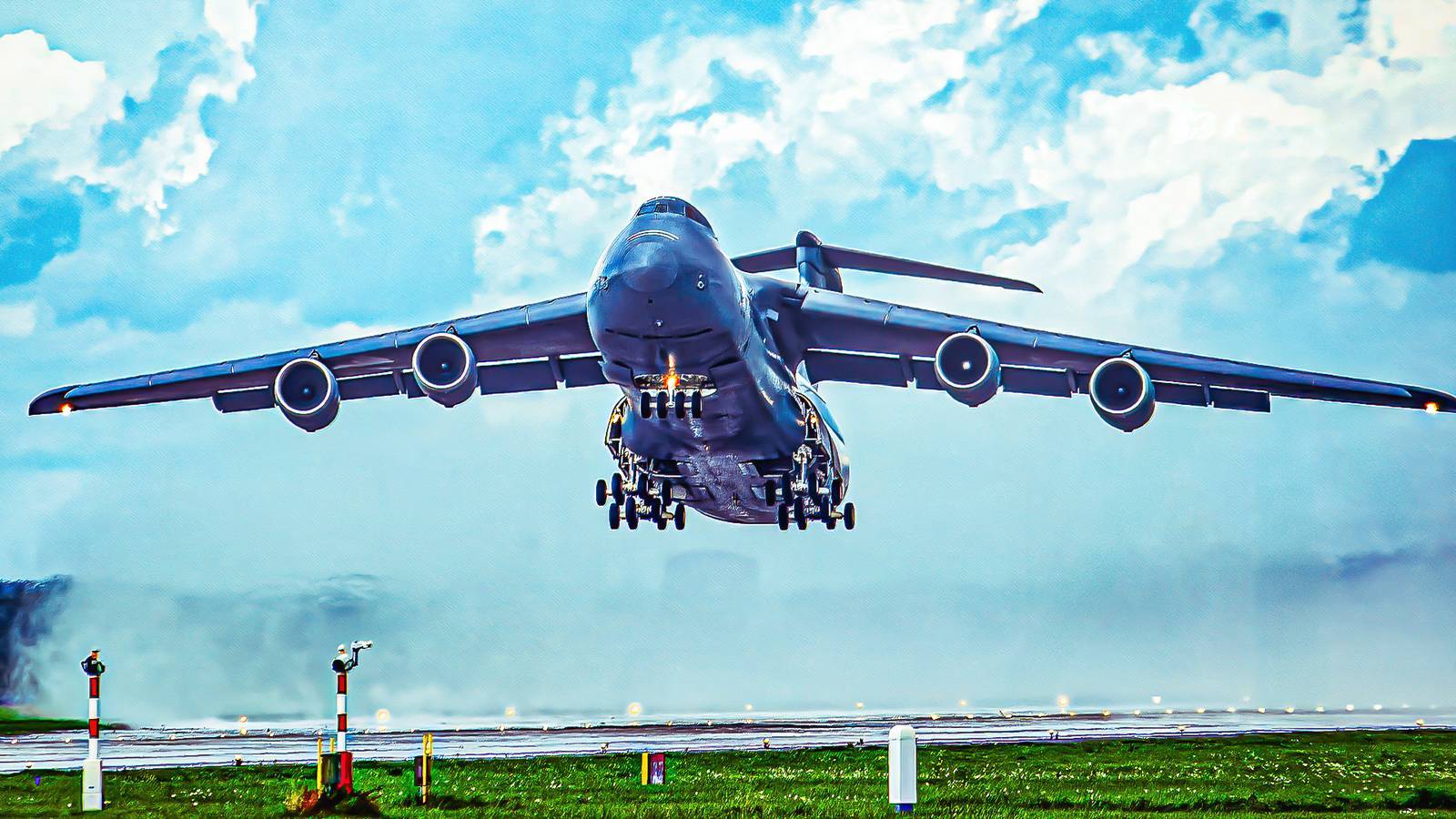
The Lockheed C-5M Super Galaxy is a behemoth of modern aviation, capable of lifting 840,000 pounds into the sky, yet it operates with a standard crew of only seven people. This lean team, consisting of two pilots, two flight engineers, and three loadmasters, manages a cargo compartment 143 feet, 9 inches (43.8 meters) long and systems that have been continuously updated since the aircraft’s 1960s origin. While the Air Force maintains this seven-person baseline as a standard, the reality of global military logistics often requires more hands on deck, as evidenced by a 2020 mission that departed with twelve crew members to complete a complex, multi-week deployment.
The Anatomy of a Seven-Person Crew
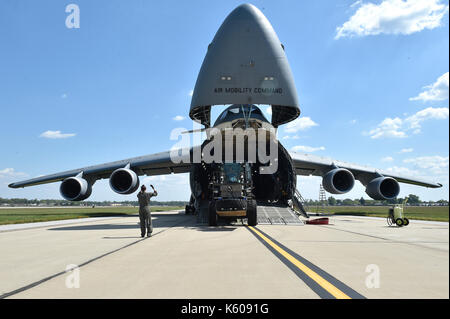
The standard complement for the C-5M is dictated by the specific demands of operating one of the world’s largest transport aircraft. According to the Air Mobility Command fact sheet, the pilots focus on steering and flight control, while the flight engineers perform a role that has largely vanished from commercial aviation: monitoring the aircraft's complex systems. The loadmasters, who make up the largest group on the flight, are responsible for the physical and mathematical rigors of balancing the massive payload. Their work involves everything from weight-and-balance calculations to managing the nose-to-tail loading systems that allow the C-5M to transport oversized equipment like M1 Abrams tanks or multiple Apache helicopters.
The reliance on flight engineers remains a defining feature of the C-5M experience. Unlike the C-17 Globemaster III, which operates with a crew of just three, the Galaxy’s cockpit design reflects its 1960s heritage. Even with modern flat-panel displays and diagnostic systems capable of tracking over 7,000 test points, the flight engineers are essential for assessing engine performance and fuel consumption based on real-time atmospheric data.
When a Mission Demands Twelve
While seven is the standard, it is not a hard ceiling. In January 2020, a C-5M mission designated REACH 190 departed Dover Air Force Base with a total of twelve crew members. This expanded team included an additional pilot, extra loadmasters, and a flying crew chief from the 436th Aircraft Maintenance Squadron. This staffing decision proved vital when the mission encountered a series of challenges, including a mechanical issue with the weather radar and a medical emergency involving a passenger on the troop deck.
The crew spent four and a half days at Barksdale Air Force Base before an unscheduled return to Dover to fix an inoperative weather radar. Then, climbing through 18,000 feet, a pressure-door warning lit up the pilot, co-pilot, and flight engineer displays.
The presence of additional personnel provided the redundancy necessary to manage these crises without compromising flight safety. When the pressure-door warning triggered, the flight engineer was able to confirm cabin pressure stability while the pilots executed the necessary descent procedures. Simultaneously, the increased number of loadmasters allowed for dedicated care for the passenger suffering a seizure, enabling the aircraft commander to focus on diverting to Memphis to secure a long enough runway for the 770,000-pound aircraft. The mission was successfully completed, but it highlighted the intense human coordination required to keep these legacy airlifters operational under duress.
The Future of Heavy-Lift Logistics
Maintaining the C-5M fleet is an ongoing challenge for the Air Force. As of early 2026, the fleet faces a mission-capable rate of 37%, a significant drop from 49% in fiscal 2024. Despite these readiness issues and rising maintenance costs, the service plans to keep the aircraft in the inventory until 2050. The rigorous training required for these crews—often taking up to two years for pilots and 18 months for loadmasters and engineers—means that institutional knowledge is a precious, finite resource.
The Air Force is currently evaluating the requirements for a Next Generation Airlifter intended to eventually replace both the C-5 and the C-17. While the current fleet remains, as one official noted, the only aircraft capable of performing the C-5’s unique heavy-lift mission, the evolution of crew sizes remains a key metric for future defense planning. Whether the next generation of aircraft will require the same human investment or move toward the highly automated, smaller-crew models seen in newer transports remains the central question for the future of Air Mobility Command.