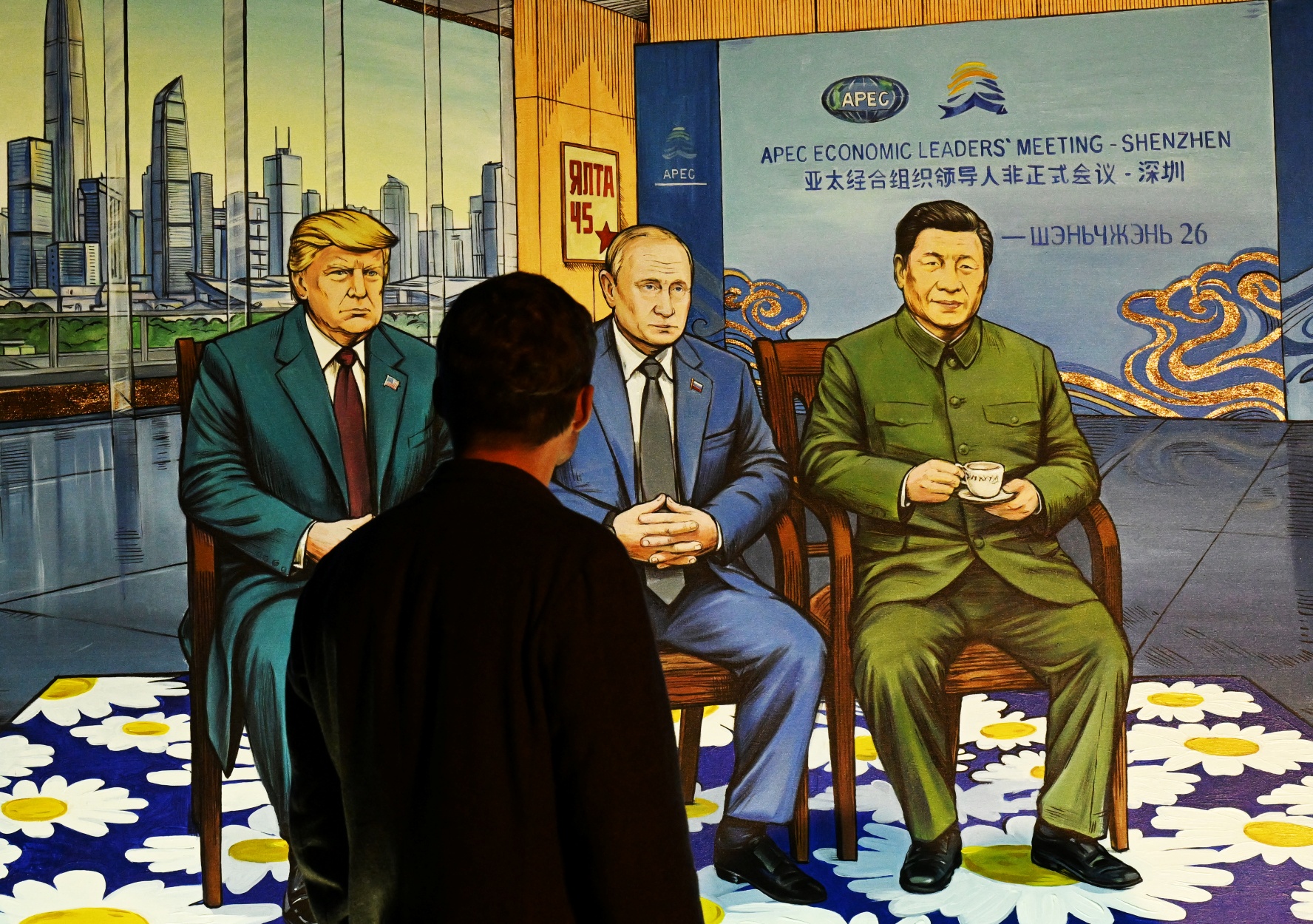
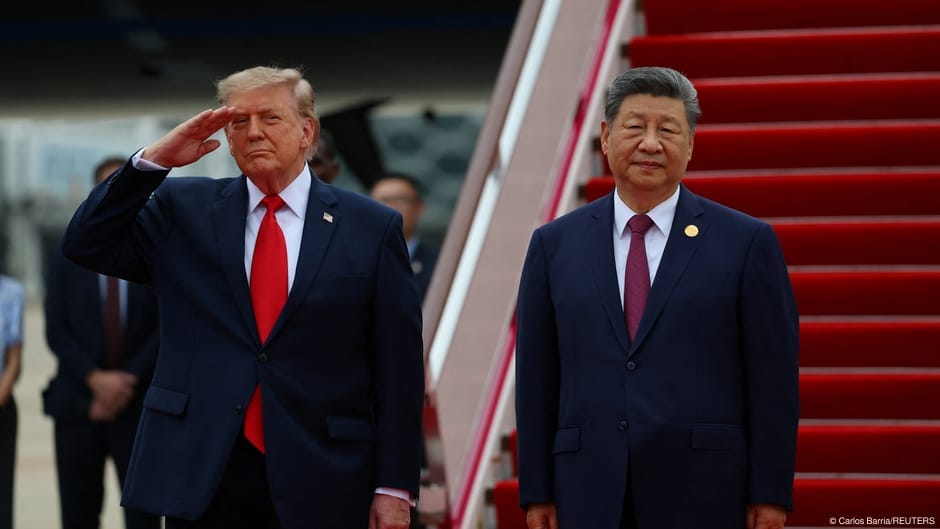
President Donald Trump arrived in Shenzhen on Wednesday. He was greeted on the tarmac by Chinese President Xi Jinping before a trilateral summit.
The meeting includes Russian President Vladimir Putin. It is the centerpiece of the 33rd Asia-Pacific Economic Cooperation (APEC) Leaders’ Meeting.
Xi appeared at the airport to greet a foreign dignitary at a landing for the first time in more than a decade. This gesture of hospitality reciprocated Trump’s reception of the Chinese leader in Washington this past September. The summit brings 21 economies to Shenzhen.
The three-way gathering draws comparisons to the 1945 Yalta Conference. Officials and experts urge caution regarding the scale of the moment.
Trump’s Asia Trip Will Bring Him to the Table With Xi and Putin https://t.co/9eBLD4lypa
Zhiqun Zhu, director of the China Institute at Bucknell University, said all three leaders may claim victory. The event will likely feature more pomp than substantive agreement.
Ali Wyne of the International Crisis Group said the meeting showcases how Trump and Putin “seek to curry favor with President Xi.”
President Trump's trilateral summit with Chinese President Xi Jinping and Russian President Vladimir Putin has the makings of an unpredictable spectacle – and that's exactly what has U. S. allies anxious. My story on @axios https://t.co/sDYY70NwCg
The White House and Kremlin confirmed the meeting to discuss nuclear arms stockpiles. Expectations for major breakthroughs remain low.
President Trump said he intends to discuss the war in Iran. He also stated his goal of reaching a three-way agreement on nuclear arms. The U.S. has maintained that it will avoid discussing Ukraine.
From my @FT colleagues, on the upcoming trilateral meeting in Shenzhen: Moscow has made no secret of its desire to create a “new, modern-day Yalta” to reflect its aims in Europe. But a person close to the Kremlin said China’s reluctance to take a hands-on role in the Ukraine…
Pentagon estimates suggest Beijing possesses more than 600 nuclear warheads. The U.S. and Russia each hold more than 5,000.
Mao Ning, spokesperson for the Chinese Foreign Ministry, said the presidents would have an “in-depth exchange of views on safeguarding world peace and enabling strategic stability.”
Rick Hoehne of the Atlantic Council’s Scowcroft Center for Strategy and Security said the meeting is a system where powerful nations decide the fate of smaller ones.
International observers watch the optics of the Shenzhen meeting.
Wu Xinbo, dean of the Institute of International Studies at Fudan University, said the personal receptions reflected a focus on “respect, fairness, and reciprocity.”
Analysts remain divided on the outcome. Craig Singleton of the Foundation for the Defense of Democracies said Xi is projecting confidence. He said Xi is seeking to show that Beijing can manage Washington on its own terms.
The world watches the summit. We don’t know if the meeting will produce more than a protocol-driven exchange of statements, or as one observer noted, “a choreographed dance of global superpowers.”
Earlier coverage: Trump Arrives in Shenzhen for APEC Summit Amid Tech Outages