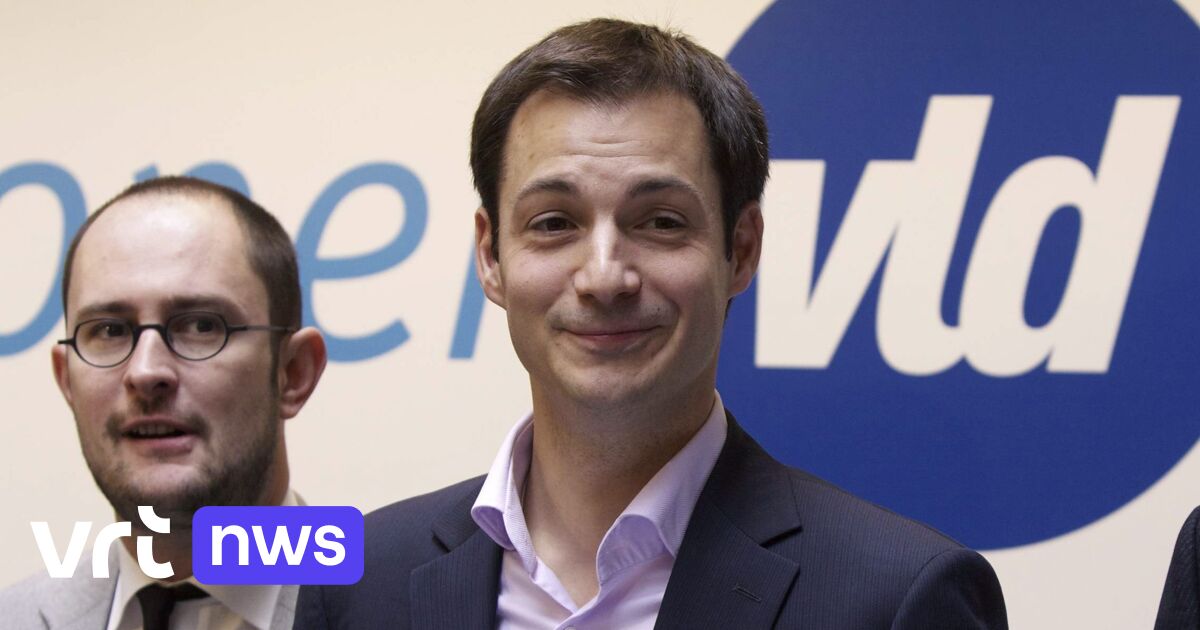
Bart De Wever informed King Philippe that multi-party coalition talks remain deadlocked over federal budget targets, prompting a hard year-end ultimatum that threatens to collapse the government.
Achtereenvolgende strubbelingen aan de onderhandelingstafel leidden tot nieuwe waarschuwingen van de premier en de coalitiepartners. De Wever said that if the parties fail to reach an accord before the start of 2027, the administration can no longer govern effectively, meaning an end to its existence.
The sovereign expressed regret over the lack of meaningful progress while encouraging leaders to prioritize the general interest and avoid a prolonged crisis. Behind the impasse lies a fundamental clash over taxes and social welfare protections within the Arizona coalition comprising N-VA, CD&V, MR, Les Engagés, and Vooruit. The prime minister said that it is impossible within the core cabinet to reach an agreement on the budget table he drew up to sanitize public finances because the balance therein is not accepted by Vooruit.
MR vice-premier David Clarinval confirmed that the Flemish socialists rejected the premier’s new proposal. De Wever had earlier offered his resignation to King Philippe at the beginning of the month, but the monarch instructed him to try again.
The prime minister said that agreement must be reached before the beginning of 2027 or provisional credits will take effect, leaving the government managing current affairs only without a 2027 budget agreement, an ongoing billion-euro trade deficit, and no budgetary control to end the year 2026.
Vooruit Draws Red Lines in Public
Socialist party Vooruit escalated the standoff by convening a public press presentation to outline non-negotiable demands. Party leader Conner Rousseau insisted that any viable budget package must protect wage indexation and introduce an extra contribution from high net worth individuals. In a mail to party members, Rousseau said that the administration must stop dipping into the pockets of workers and pensioners.
Rousseau told the public that if those two demands are not met, the other four parties should search for an alternative majority with someone else, adding that as long as such an alternative majority does not exist, his party loyally executes the coalition agreement.
“Holding a press conference 24 hours later with demands that you really ought to formulate at the table is not going to bring us any closer to an agreement,” Sammy Mahdi told VRT CANVAS.
Sammy Mahdi, CD&V chairman
CD&V president Sammy Mahdi voiced strong frustration over the public maneuver, saying in an interview on VRT CANVAS that negotiations belong at the bargaining table rather than through media broadcasts, while adding that a collaboration with Anders would be completely unworkable and equivalent to elections.
Vooruit minister Rob Beenders said after the party bureau meeting that his faction is compromise-willing and has put forward ten proposals for discussion, while federal parliamentarian Jan Bertels said that a signal before the weekend is necessary.
Reactions to Public Demands and Political Impasse
CD&V leader Sammy Mahdi expressed strong astonishment and frustration regarding the communication tactics used by Vooruit, saying in an interview on VRT CANVAS that party leaders have a strict duty to negotiate at the bargaining table rather than through press events.
MR president Georges-Louis Bouchez responded on X by saying that his party negotiates at the table instead of via the media, insisting that such political games must come to an immediate halt. Groen chair Jeremie Vanhoye said that it took the Vooruit president two years to discover he joined a right-wing government.
PVDA president Raoul Hedebouw dismissed the stance adopted by the socialists as entirely hypocritical. Meanwhile, PS president Paul Magnette threw his support behind Vooruit on X, asserting that the demands represent basic fairness and equity for citizens while criticizing the government for exploiting retirees and laborers.
Vlaams Belang chairman Tom Van Grieken compared the ongoing political crisis to a poor Netflix series that the country does not need, and called directly for new elections.
Vooruit Leaders Defend Communication as Deadline Nears
Vooruit president Conner Rousseau defended his party’s public communication by saying in an email to members that they have fought for years to improve the lives of ordinary citizens.
Federal parliamentarian Jan Bertels argued that the party is simply being honest with the population and that continuing to run in circles for weeks serves no purpose. Bart De Wever warned that provisional budget rules will take effect unless a final agreement is secured by the end of the year, which would leave the administration unable to govern effectively.

Friction Across Coalition Partners and Labor Protests
The public ultimatums drew sharp pushback from liberal partners. Anders president Frédéric De Gucht reacted in Villa Politica by saying that Rousseau should not place the ball in their camp.
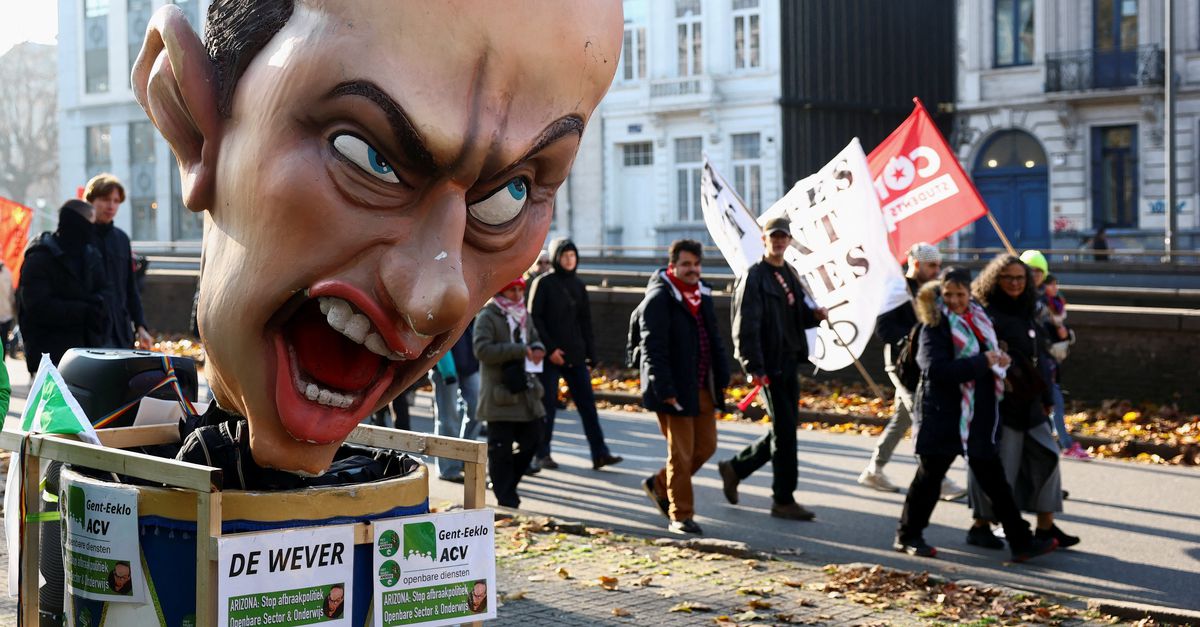
Meanwhile, trade unions staged widespread demonstrations in Brussels involving 70,000 participants, where ABVV labor federation supported the red lines drawn by Vooruit to defend household purchasing power, and ACV president Ann Vermorgen warned against political postponement with a social bill.
Prime Minister Bart De Wever (February 2025–present) faces a structural constraint that distinguishes his leverage from predecessors: the Arizona coalition’s five-party composition (N-VA, CD&V, MR, Les Engagés, Vooruit) requires unanimous consent on budget measures, preventing him from forcing compromises through bilateral deals or royal intervention alone.
With upcoming weekend sessions scheduled, prime ministerial pressure mounts on all five party leaders to determine whether a compromise remains possible before provisional monthly budget credits take effect in January. De Wever announced plans to speak directly with the five party leaders of his coalition partners because discussions within his cabinet among the ministers did not yield further progress.