Senate Republicans met behind closed doors in Washington following a midterm wipeout that cost the party its majority, setting off an intraparty fight over the direction of the caucus and leadership elections.
Ron Johnson Threatens Walkout Over Rushed Vote
Sen. Ron Johnson, R-Wis., threatened to walk out of the conference if colleagues proceeded with leadership elections, calling the rapid schedule obnoxious
after a November 5, 2026, election in which Democrats flipped at least seven seats to secure a 54-seat majority.
pic.twitter.com/h3bEe3TzBl
— Post by @SenMcCormickPA on X
Johnson gathered signatures from four other Republican senators to force a morning conference meeting to debate a delay. He told reporters that holding elections so quickly without a post-mortem was unacceptable.
After that stunning defeat, we just can’t continue on business as usual. I mean … that kind of defeat demands change.
Sen. Ron Johnson, R-Wis., via The Daily Beast
Joining Johnson on the petition letter were Sens. Mike Lee of Utah, Ted Budd of North Carolina, Rick Scott of Florida, and John Kennedy of Louisiana. The group argued in their letter that holding leadership elections without engaging in a robust discussion would constitute political malpractice.
Additional lawmakers weighed in on the procedural battle as lawmakers gathered at the Capitol. Sen. Kevin Cramer, R-N.D., acknowledged seeing the signatures on the letter while noting that debate was necessary even if leadership positions remained unchanged. Sen. Josh Hawley, R-Mo., pointed to Medicaid cuts, closeness to data centers, and an abandonment of working-class voters as contributing factors to the electoral outcome.
Sen. Jim Banks also voiced support for delaying the vote, stating that a Tuesday election came too soon after the losses. Outside commentators and officials including Alex Bruesewitz and Cleta Mitchell criticized the existing Senate leadership on social media platforms like X, while influencer Scott Presler urged constituents to contact their senators to demand a postponement.
Republican Senators supporting a delay of the Senate leadership vote: ▪️Sen. Ron Johnson ▪️Sen. Rick Scott ▪️Sen. Mike Lee ▪️Sen. Ted Budd ▪️Sen. John Kennedy ▪️Sen. Dave McCormick ▪️Sen. Jim Banks Call your Senators to postpone the vote: 202-224-3121 (Where is everyone… pic.twitter.com/nnAbRJ4jB8
— Post by @ScottPresler on X
President Donald Trump remarked that the decision rested with Republican senators, describing John Thune as a very fine man while expressing a desire for greater legislative output.
Rick Scott Withholds Support From John Thune
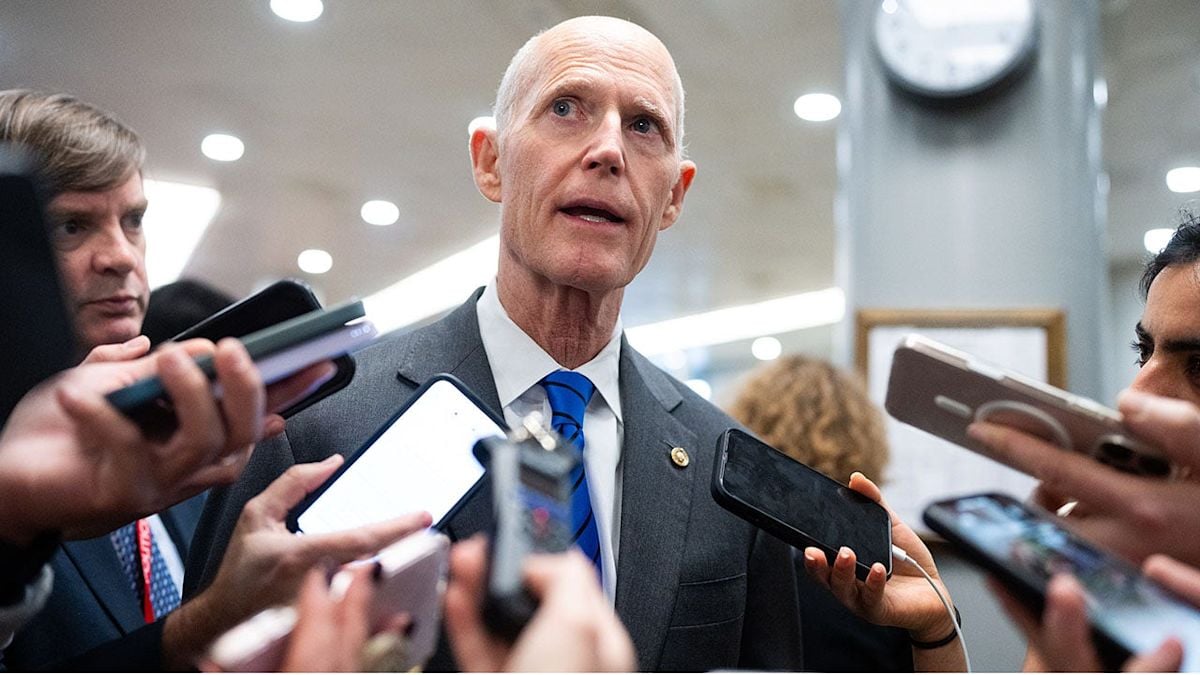
Sen. Rick Scott, R-Fla., withheld his endorsement for Senate Majority Leader John Thune, R-S.D., demanding a detailed plan for passing legislation during the lame-duck session before committing his vote.
My statement on the upcoming Senate Republican leadership race: pic.twitter.com/0ZgXRxmGRQ
— Post by @SenatorBanks on X
I don’t want to put the cart before the horse. I mean, I think the first step is what do we want to accomplish? And then anybody, including John Thune, if they want to be that, the first thing I have to say is, ‘Do they want to do that?’
Sen. Rick Scott, R-Fla., via Fox News
Scott stated he wants candidates to specify how they plan to balance the budget, ban stock trading for lawmakers, pursue permitting reform, pass the National Defense Authorization Act, and enact the SAVE America Act.
Scott previously ran for Republican leadership twice, challenging Mitch McConnell in 2022 and seeking the replacement post in 2024. When asked if he wanted anyone else to enter the race, Scott remarked that he would not subject anyone else to that position.

Thune Defends Schedule as Leadership Showdown Looms
Thune is running unopposed for another term and defended moving forward with the schedule, though he acknowledged the caucus needs to evaluate its losses.
Speaking to reporters in Washington, Thune stated he anticipated a very engaged conversation
during the closed-door conference meeting.
Sen. Shelley Moore Capito, R-W.Va., chair of the Senate Republican Policy Committee, remarked that she had seen similar procedural requests before and did not expect them to change the outcome of the vote.
Republican Senate rules stipulate that conference leadership elections take place at the beginning of each new Congress or within one week thereafter, with Congress traditionally convening on January 3 of odd-numbered years following the Twentieth Amendment’s ratification in 1933. Historically, Senate Republicans elected their leaders when the new Congress convened rather than immediately following a general election, though recent cycles have seen internal voting scheduled shortly after Election Day.
Senate conservatives are pushing to pump the brakes on GOP leadership elections after last week's devastating losses. Sen. Ron Johnson secured five signatures on a letter to conference chair Tom Cotton demanding a delay, arguing that rushing to vote Tuesday morning without a… pic.twitter.com/BoOGIaWGQ6
— Post by @foxnewspolitics on X
Republican Senators Cite Policy Missteps for Midterm Defeats
Other Republican senators pointed to broader policy missteps during the midterm cycle. Sen. Josh Hawley, R-Mo., cited Medicaid cuts, proximity to data centers, and a turn away from anti-abortion priorities as key factors in the electoral defeat.
Meanwhile, races in Alaska and Mississippi remained uncalled, leaving the final size of the incoming Democratic majority uncertain as lawmakers prepare to confirm remaining judicial nominees before January 3, 2027.