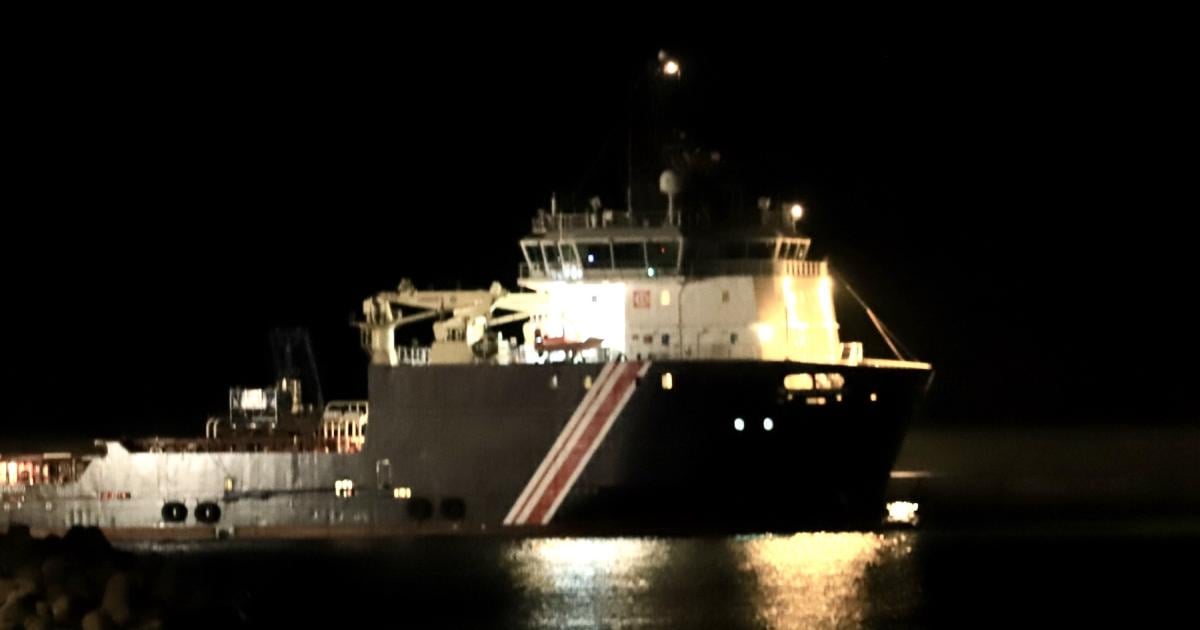
The French research vessel Abeille Marengo departed the port of Heraklion on Tuesday evening, heading toward international waters southeast of Karpathos to begin seabed surveys for the Great Sea Interconnector electrical link between Greece and Cyprus as announced by project developers.
Launch From Heraklion Port
Weighing anchor shortly after 6:00 p.m., the 73.2-meter vessel built in 2009 set a course for the Karpathos-Kasos strait. The ship will initially conduct equipment calibration over roughly a 24-hour period before starting formal scanning operations along the planned cable route.
Minister of Environment and Energy Stavros Papastavrou informed the Hellenic Parliament that the departure proceeded under a valid NAVTEX broadcast issued by the Greek state pursuant to international law. The Heraklion station of the Hellenic Navy Hydrographic Service established NAVTEX 1411/26 on November 6, maintaining operational validity through March 6, 2027.
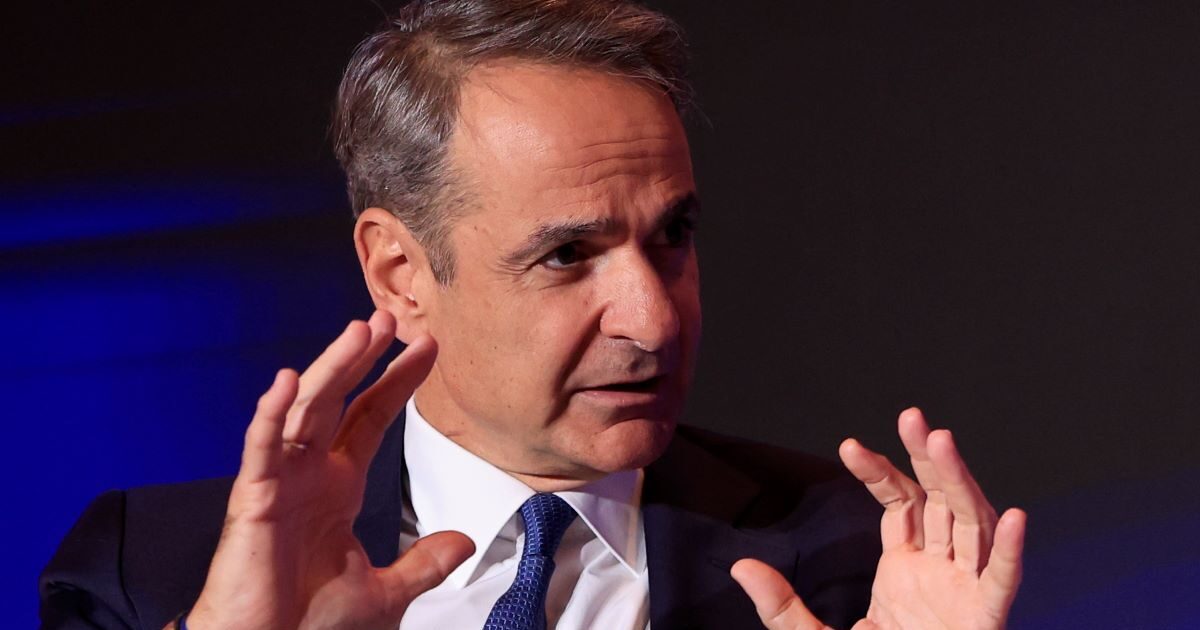
Prime Minister Kyriakos Mitsotakis, speaking at the «Greece Talks» conference organized by travel.gr and «Proto Thema» on Tuesday, November 10, 2026, estimated that the voyage would conclude without turbulence while emphasizing that Greece is prepared for all eventualities.
Under the request filed for the operations, the Abeille Marengo is required to notify the Hydrographic Service, Submarine Command, and Naval Aviation Command of the Hellenic Navy at least 72 hours prior to commencing work, as well as daily throughout the duration of the tasks.
Subsea Survey Equipment and Oversight
To map the complex seabed morphology, the expedition utilizes advanced diagnostic instruments. The onboard suite includes multibeam echosounders, side-scan sonars, magnetometers, and underwater cameras for geotechnical sampling and core drilling.
Local port authorities and passing vessels received instructions to maintain a one-nautical-mile buffer zone around the research craft. Patrol units from the Hellenic Coast Guard and Hellenic Navy units provide discrete monitoring across the operational area throughout the mission.
Diplomatic Friction Over French Note
The project’s resumption spurred intense political debate in Athens over a diplomatic note sent by France to Turkey. Prime Minister Kyriakos Mitsotakis addressed the controversy during the Greece Talks
conference, maintaining that only Greece and Cyprus authorized the research vessel’s route.
Permit for bathymetric survey works for the laying of the cable was requested exclusively from the competent Greek and Cypriot authorities. No permit has been requested nor will be requested from Turkey
Kyriakos Mitsotakis, Prime Minister
Government officials rejected claims from opposition parties that the French communication implied recognition of foreign maritime claims. Government Spokesperson Pavlos Marinakis emphasized the purely informational nature of the correspondence:
The written notification of Turkey by France does not constitute a permit request, as the opposition claims, but was exclusively informational in character. Neither a permit request, nor a consent request. On the contrary, a permit request was submitted by the French company solely to the Greek and Cypriot authorities, recognizing their rights in the region
Pavlos Marinakis, Government Spokesperson
Deputy Minister of Foreign Affairs Tasos Hatzivasileiou reiterated that the sole permit for the work was granted by Greece, noting that the French communication followed Greek authorization and aligns with customary practices for notifying coastal states.
Meanwhile, former Foreign Minister Nikos Kotzias disputed the government’s stance in a public post, questioning whether prior diplomatic steps conformed fully to the provisions of the United Nations Convention on the Law of the Sea (UNCLOS).

Parliamentary Clash Between Government and Opposition
Opposition leaders challenged the administration during a parliamentary session on Monday.
Energy Minister Stavros Papastavrou countered that opposition arguments risked damaging national interests, asserting that the interconnector project successfully ends Cyprus’s energy isolation by connecting it directly to Europe.
He noted that the project is backed by European funding and features a majority French corporate stakeholder alongside a French primary supplier. Parliamentary spokesman Dimitris Kairidis also defended the government’s position during the floor debate, pointing out that diplomatic notes are standard instruments exchanged routinely among governments.
Mitsotakis Remains Prepared for Maritime Boundary Disputes
Prime Minister Mitsotakis stated that the government remains prepared for all eventualities while expressing confidence that the survey run will proceed smoothly. He stressed that critical infrastructure projects like electrical and telecommunications interconnections should remain isolated from broader maritime boundary disputes, referencing past instances where Greece successfully defended its sovereign rights in the field during the summer of 2020.