As the 25th anniversary of the anthrax attacks approaches, researchers warn that emerging technologies create fresh biological vulnerabilities.
White Powder Spills from a Letter in the Hart Building
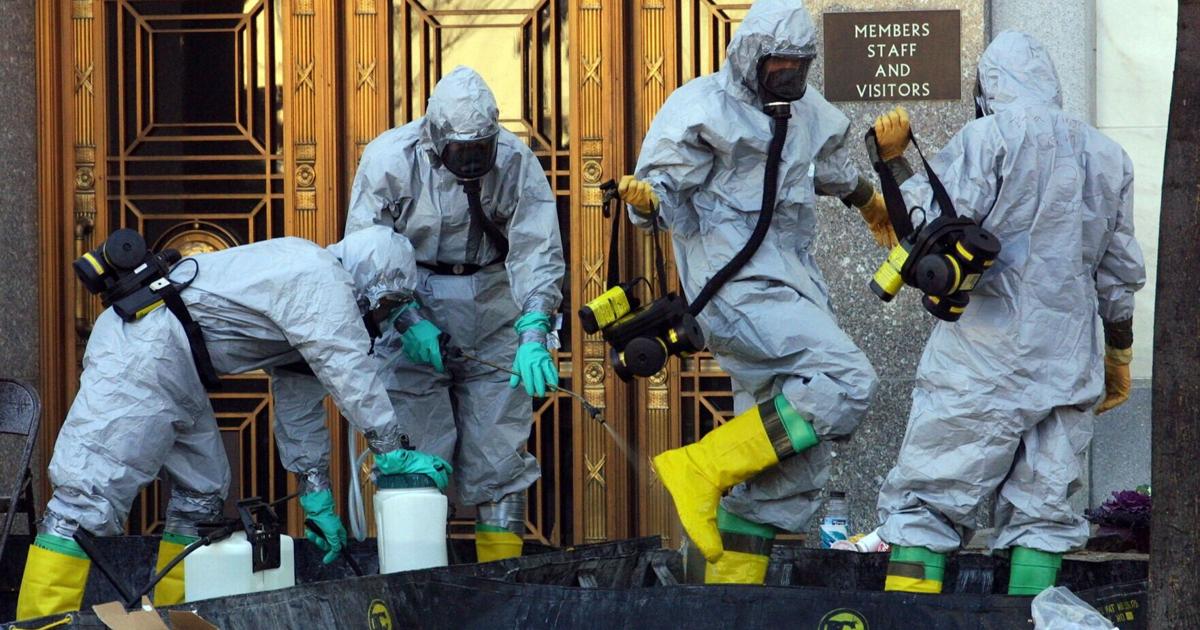
When David Malet arrived at his job on Capitol Hill on Oct. 15, 2001, some semblance of normalcy was just starting to return after the 9/11 terrorist attacks. Fear and unpredictability flooded back that very afternoon inside the workspace of then-Senate Majority Leader Tom Daschle, where Malet was employed as a research assistant. An intern opened a letter purportedly from a fourth-grade class, and white powder spilled out.
“Capitol Police had already responded to a couple of false alarms already,” Malet said, so it was hard to tell if the letter was just “another practical joke.” “There wasn’t an immediate lockdown protocol” as first-responders arrived, he recalled.
While the ventilation system was shut down, personnel in other sections of the facility kept working. The answer came soon: It was the deadly bacteria that causes anthrax.
Two postal workers died after the letter to Daschle passed through a mail sorting facility in Washington, D.C., along with another anthrax-filled envelope that was addressed to then-Sen. Patrick J. Leahy, D-Vt., but never reached its destination. In the end, five people were killed and at least 17 sickened in the 2001 anthrax attacks.
Discovered among 280 crates of congressional mail placed under quarantine following the opening of the initial anthrax-laced envelope sent to Senate Democratic Majority Leader Tom Daschle, another letter was found addressed to Sen. Patrick Leahy, D-Vt. Featuring a Trenton, N.J., postmark, the envelope was intercepted at a remote screening center established following the discovery of the Daschle letter on Capitol Hill.
Daschle and Bush Respond to the Crisis
Having spent a decade leading Senate Democrats as a representative from South Dakota, Daschle had monitored media reports concerning anthrax mailings sent to NBC facilities in New York and surmised “it wouldn’t take much for Congress to be another target.”
“But I was really surprised it was me,” he said. “You’re never ready for something like that.”
After attending a medical appointment that morning, Daschle reached his office slightly behind schedule and learned about the event from his chief of staff. At the time, the majority leader spoke daily with then-President George W. Bush.
When asked to rate the country’s level of preparedness on a scale from one to 10, Daschle said that he would assign the nation “about a two.”
Dachle described the period afterward as “chaotic, confusing, anxious.” He recalled “people being asked to put their anthrax-exposed clothing in a black garbage bag and bring it into the Capitol for proper disposal.”
Decontamination and Antibiotic Regimens in Congress
Lines snaked into the halls as people waited for nasal swabs. More than two dozen tested positive for exposure. By Oct. 17, the Hart Building was shut down for decontamination. It didn’t reopen until January.
“Senators offered up their office space to other senators who were displaced temporarily. Republicans and Democrats did that together, both ways,” Daschle said.
Many on the Hill spent months on antibiotics, including the broad-spectrum fluoroquinolone known as Cipro. “They gave the toughest thing they possibly could,” Malet said, citing lingering effects he attributes to Cipro. “I definitely started having some internal bleeding issues … which still show up once in a while, 25 years later, in my digestive system.”
Someone ordered a pizza the day of the attack, sneaking the delivery person through a back staircase as Daschle’s staff waited to hear what they should do. “It wasn’t until later that somebody realized, ‘Oh no, that guy could have been exposed and could have exposed other people,’ and they had to find him and retrace his steps and give him medication,” Malet said.
Washington on Edge and Permanent Security Changes
Future Republican Sen. Todd Young of Indiana was a young staffer who worked with then-Sen. Richard Lugar, whose office was in Hart. Speculation gripped the country, and for Young, the overriding feeling was “a nation on edge, and it was certainly a Washington D.C. area on edge.”
Before joining Lugar’s staff, he completed service in the U.S. Marine Corps, yet reflecting on that period, he observed that his most perilous era might have been his time as a local congressional aide.
Compared to the very graphic and dramatic images of 9/11, this was less notable, he said. “But it just added to an atmosphere of anxiety and consternation, and a desire for answers among the American people to some pretty hard questions related to how the homeland was being protected.”
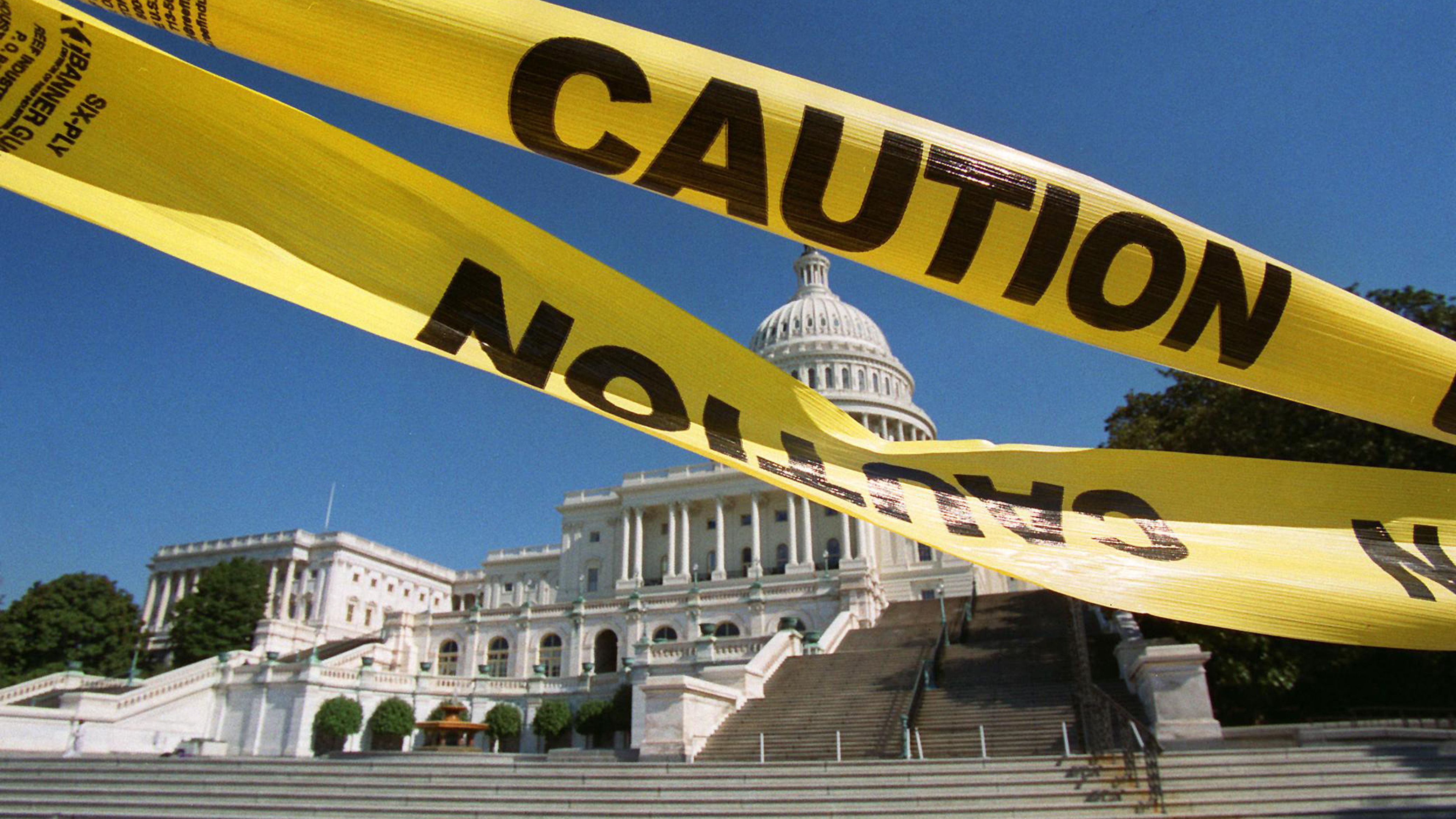
Investigators subsequently traced the origin of the anthrax spores to Army laboratory biodefense specialist Bruce Ivins, who took his own life in 2008 as federal prosecutors prepared to file formal charges. The incident brought permanent changes to the Capitol complex. Mail is now sorted offsite, and signs outside senators’ offices warn against direct deliveries.
Congress Authorizes Project BioShield and PAHPA to Address Gaps
Following the anthrax incidents, lawmakers acknowledged that additional safeguards were necessary to defend the United States against biological hazards, as highlighted by Congress recognized that further measures were needed. In 2004, Congress authorized Project BioShield to hasten work on medical countermeasures against infectious diseases impacting national security. In 2006, Congress enacted the Pandemic and All-Hazards Preparedness Act (PAHPA), addressing vital gaps in U.S. emergency preparedness and response capabilities.
PAHPA also established the Administration for Strategic Preparedness and Response (ASPR) to coordinate internal Department of Health and Human Services efforts and bridge federal and state responders. Congress updated and reauthorized PAHPA with bipartisan support in both 2013 and 2019, but allowed these authorities to lapse in 2023.
State Department Verifies Active Biological Weapons Programs
The maintenance of active biological weapons programs by Russia and North Korea has been verified by the State Department, which also expressed apprehension regarding parallel initiatives underway in China and Iran.
Marking the 25th anniversary of the anthrax incidents, the CSIS Bipartisan Alliance for Global Health Security convened a panel discussion on October 7, 2026, during which prominent public health security authorities analyzed the 2001 emergency and contended that modern biological defenses have degraded.
Young went on to chair the National Security Commission on Emerging Biotechnology, and Daschle serves on the Bipartisan Commission on Biodefense at the Atlantic Council.
Daschle suggested that artificial intelligence leaves the country more exposed to a fresh strike, or to emerging hazards that did not exist during the original crisis.