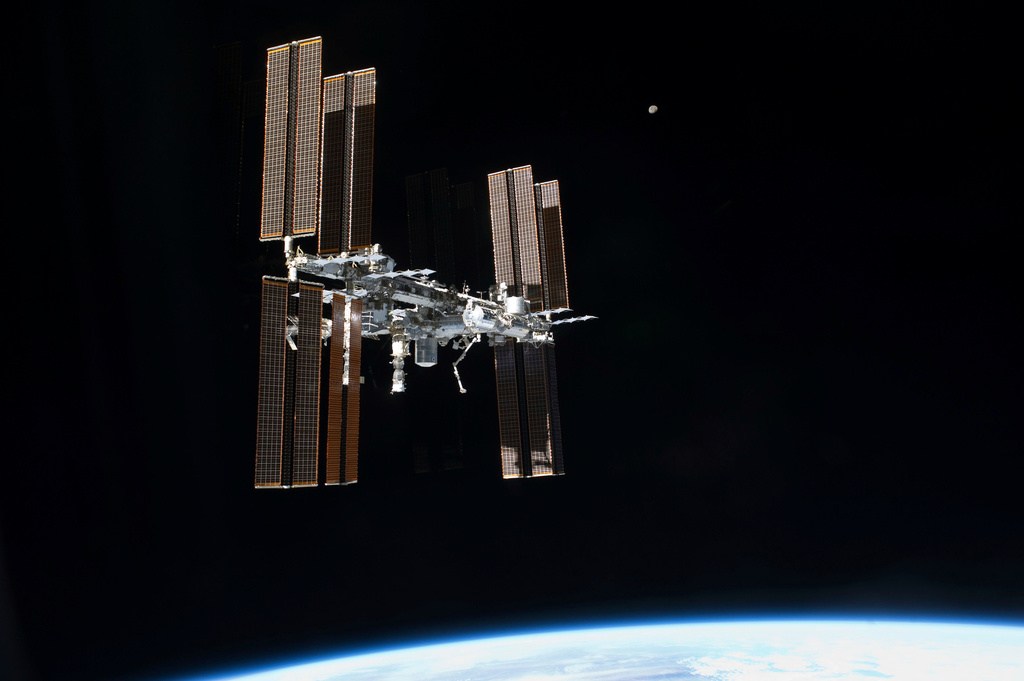
An astrophysicist warns that a large object striking the International Space Station would destroy its infrastructure, as debate grows over unverified footage of a mysterious disc near an uncrewed SpaceX cargo capsule.
SpaceX Dragon Docking Footage Sparks UFO Claims
A recent NASA livestream of a SpaceX Dragon cargo ship docking with the International Space Station captured an unidentified object flying nearby on October 15. The launch video shows a bright disc or small sphere moving past the orbiting laboratory shortly after the broadcast began. Scott Waring, who runs the website UFO Sightings Daily, later claimed that the disc-shaped object came within 82 feet of the station’s panels.
Waring estimated the object was roughly 23 feet across. He asserted in a YouTube video that the object exhibited bizarre flight characteristics.
Do you see how they’re moving very oddly? Moving like no aircraft we’ve ever seen or spacecraft. It doesn’t conform to physics the way humans expect things to. The way it moves is bizarre,
Scott Waring, UFO researcher
Waring also stated that another object appeared to move erratically around the approaching Dragon spacecraft. He expressed surprise that station operators and flight controllers made no public statement about the objects. Waring remarked that the crew on board the DragonX said nothing about it, nor did NASA control or the station itself.
NASA Reports Routine Cargo Delivery Without Mentioning Objects
While the video footage circulated online, NASA made no mention of any UFO or near-collision event. The agency reported that the SpaceX Dragon flew the mission uncrewed and docked autonomously, delivering more than 6,300 pounds of science experiments, supplies, and roll-out solar arrays to the station.
Independent analysts emphasized that visual recordings alone make distance and trajectory difficult to judge accurately. A bright object crossing a camera’s field of view can appear much closer than it actually is when reliable reference points are missing. There is no independently confirmed evidence that the object was an extraterrestrial spacecraft or that it threatened the orbiting laboratory.
Astrophysicist Avi Loeb Analyzes Collision Risks
Addressing the claims, astrophysicist Avi Loeb, who chairs the White House UAP Science Advisory Council, told NewsNation that verifying an object’s distance is essential to calculating its speed. Loeb explained that scientists determine distance using radar systems or by observing the same object from multiple angles. He noted that SpaceX provided no tracking data alongside the video.
Loeb warned that any large impact in low Earth orbit would prove catastrophic for orbital infrastructure due to extreme relative velocities. Objects in this environment travel roughly 10 times faster than a bullet, moving between 15,700 and 17,900 miles per hour, according to NASA’s Orbital Debris Program Office.
The speed by which objects are moving relative to each other is about 10 times faster than a bullet. Any impact would destroy any infrastructure that is out there.
Avi Loeb, astrophysicist
How the Space Station Monitors Debris and Executes Maneuvers
The U.S. Space Surveillance Network routinely monitors objects larger than 10 centimeters to protect crewed space assets. NASA guidelines dictate that the space station executes an avoidance maneuver when tracked debris is projected to pass within a few miles and the collision probability exceeds one in 10,000. Critical U.S. components on the station feature specialized shielding built to withstand particle impacts up to approximately one centimeter across.
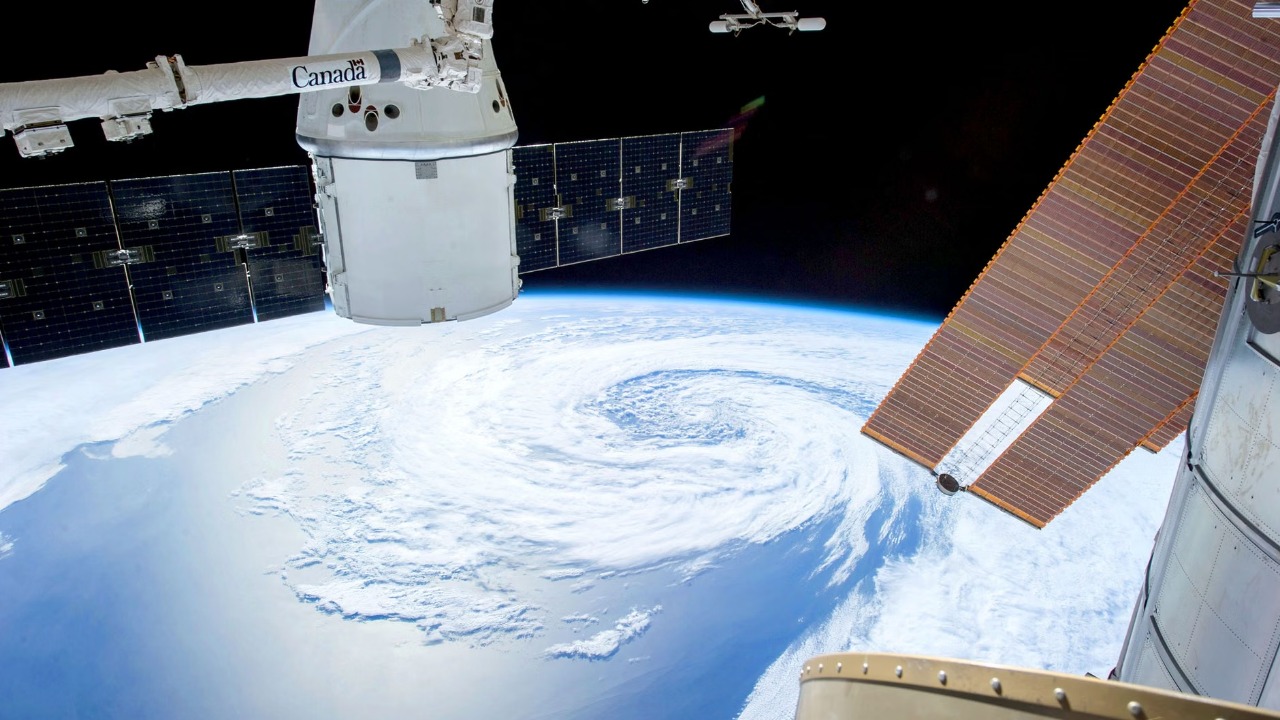
Station operators have completed 41 collision avoidance maneuvers since 1999 to steer clear of cataloged hazards. There is no report that operators detected an immediate threat or performed an evasive burn during the October 15 cargo delivery.
Researcher Acknowledges Unproven Claims
Despite suggesting the object was large enough to cause severe structural damage if a strike had occurred, Waring acknowledged that he cannot definitively prove the footage depicts extraterrestrial technology.
Maybe I’m wrong. Maybe this isn’t a UFO. But for me, this just confirms that intelligent life is out there.
Scott Waring, UFO researcher