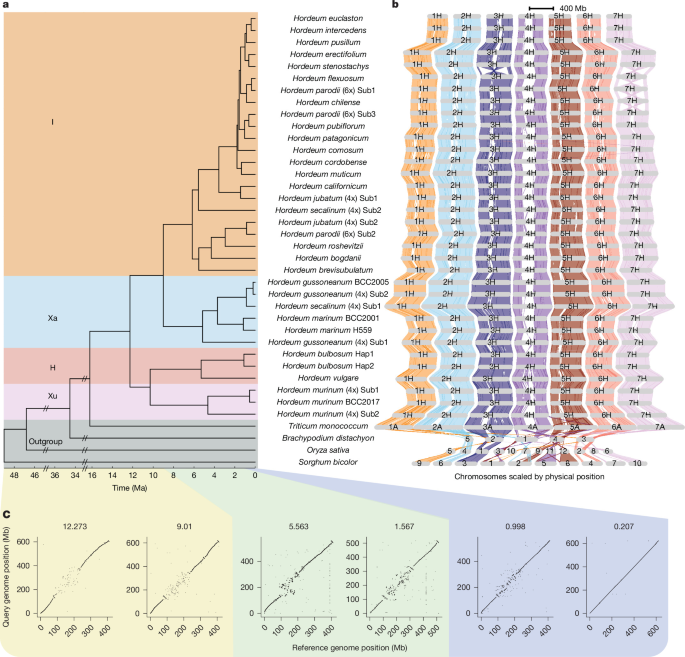
An international team coordinated by the IPK Leibniz Institute has characterized genomic diversity across the agriculturally important genus Hordeum, comparing 27 plant accessions across 25 species in Nature.
The resource spans all recognized diploid species and selected polyploids, using high-quality genome assemblies that resolve the genetic material at the level of individual chromosomes to map structural and regulatory evolution across wild and cultivated barley.
While the DNA sequences that encode proteins are highly conserved across species, many regulatory regions evolve more rapidly. These regions determine when, where and to what extent genes are active.
“Our findings show that the genomes of closely related plant species differ not only in their genes, but also in the DNA sequences that regulate gene activity,” explains Dr. Martin Mascher, who coordinated the study at the IPK.
Mascher added that the genomes of wild barley species offer new opportunities to understand the evolution of important traits and investigate previously unexplored genetic diversity.
The analysis of flowering time, a trait that plays an important role in determining yield, illustrates the potential effects of these differences. Winter barley requires a prolonged period of cold before it can flower. Some wild Hordeum species, however, can flower without this cold stimulus.
Chromosome structure also changes substantially over the course of evolution. Particularly striking is that central chromosome regions undergo much more extensive structural change than outer regions. The team discovered large-scale rearrangements and inversions, stretches of DNA in reverse orientation, near the centromeres, which help chromosomes segregate during cell division.
Researchers compared genomes across the Hordeum genus (cultivated barley and its wild relatives) to reveal how chromosome rearrangements, gene exchange between species and the movement of genetic material from other grasses shaped its evolution.
CMS is naturally occurring system used in plant breeding to block self-pollination and enable controlled cross-pollination, which is an essential step in hybrid seed production. Dr Melonek said
The newly published resource extends this approach across the genus Hordeum, providing a comprehensive view of barley’s evolutionary history and that of its wild relatives.
Further functional studies and breeding trials are needed to determine whether and how individual variants can be used in cultivated barley.
The study, titled Structural and regulatory evolution across the genus Hordeum, was published in Nature in 2026 with DOI 10.1038/s41586-026-11332-7.
The results could support the development of more efficient hybrid breeding systems in wheat and barley.
Image credit: Dr Francisco Pinera Chavez/ANU /University Release.


