SpaceX Starship Successfully Returns to Texas Launch Pad After Orbit
SpaceX successfully brought a Starship spacecraft back to its launch pad in Texas on Saturday, completing its 15th uncrewed test flight after 14 orbits around the Earth.
SpaceX Starship Successfully Returns to Texas Launch Pad After Orbit
SpaceX successfully brought a Starship spacecraft back to its launch pad in Texas on Saturday, completing its 15th uncrewed test flight after 14 orbits around the Earth.
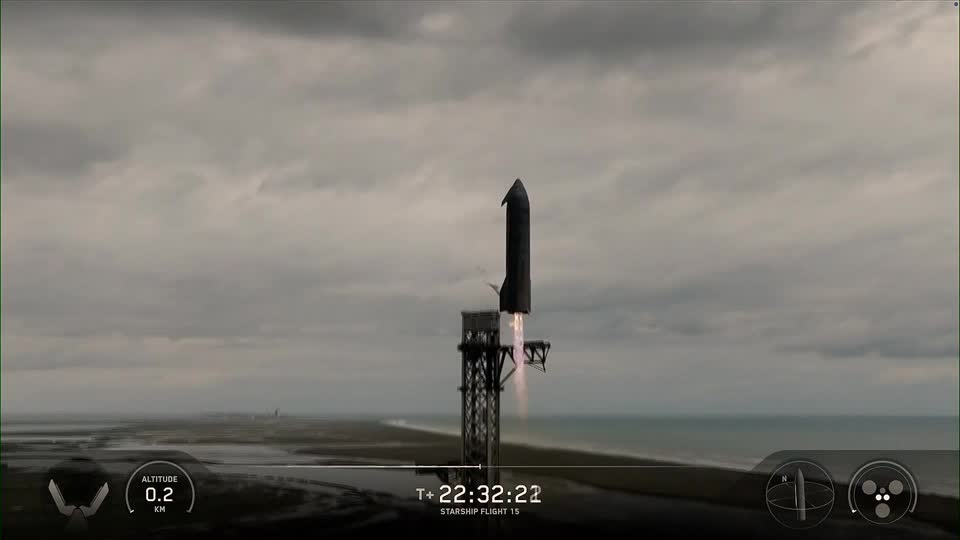
The spacecraft lifted off from the Starbase launch site in Texas on Friday for a mission lasting about 22 and a half hours. The Starship released 26 advanced Starlink internet satellites into orbit at an altitude of about 265 kilometers. The upper stage initiated its re-entry over the Pacific Ocean, descending through dense clouds above the Texas coast.
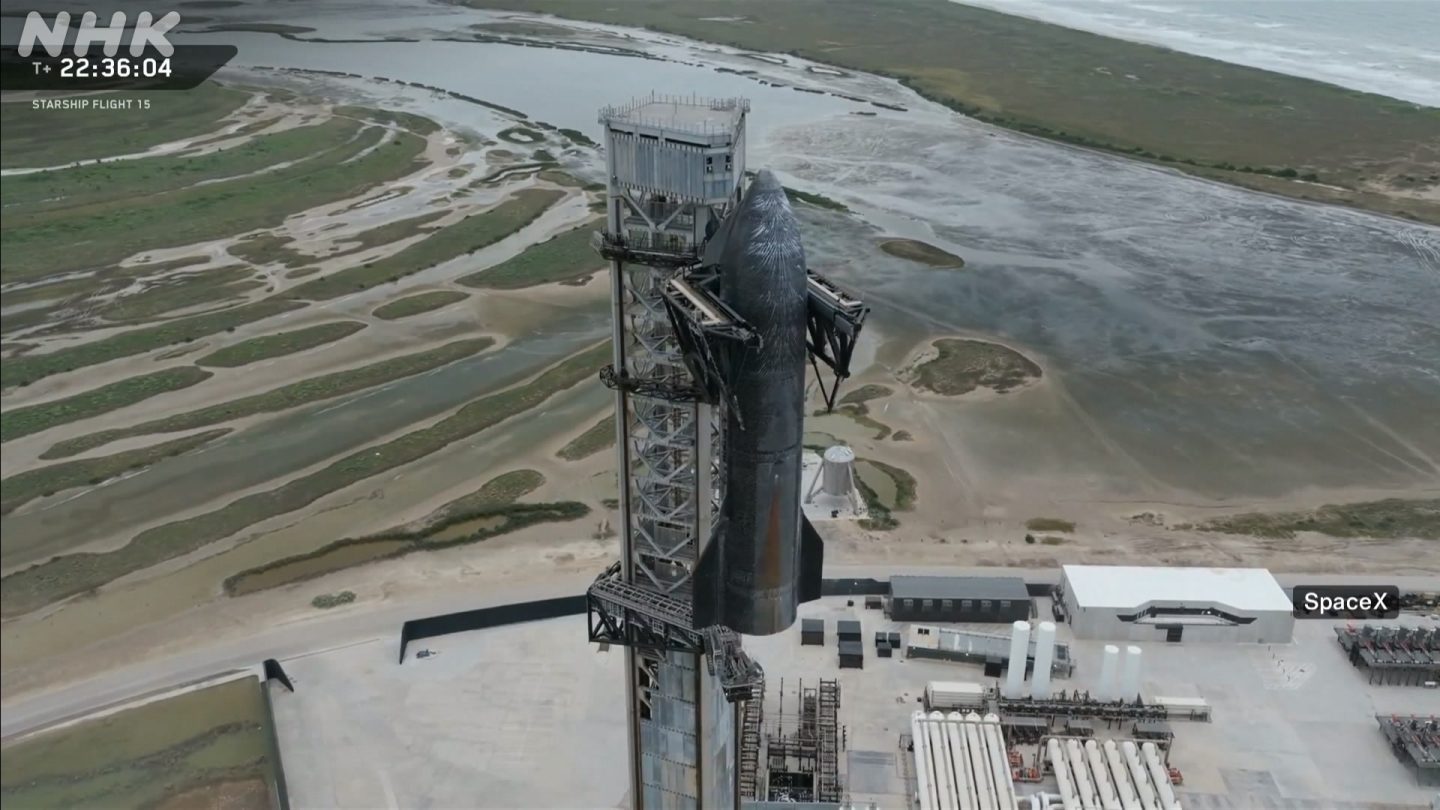
As the stainless-steel vehicle neared the ground, it rekindled its engines to position itself vertically and drifted downward toward the launch tower. Giant mechanical arms known as “Mechazilla” clamped onto two small fittings near the top of the vehicle. They held it suspended a few hundred feet off the ground while engineers inspected the carbonized exterior.
This journey marked only the second time a full-scale Starship traveled into orbit, following test flights conducted since 2023. As the vehicle fell through the atmosphere at supersonic speeds, its orbital velocity dropped from about 17,000 miles per hour, with its aerodynamic flaps folded backward to guide the descent.
That was the missing link, the Holy Grail of spaceflight.
Dan Huot, SpaceX mission commentator
The launch system fell short of a complete dual recovery while the upper-stage spacecraft achieved its return. The Super Heavy booster carried the stack into space on Friday. It did not manage a successful return to the launch platform and was lost.
Debris remained in the Gulf of Mexico inside areas isolated by buoys. Elon Musk shared updates on X alongside photographs and video footage from the launch tower hours after the touchdown.
Ship 42 is in great shape!
Photo: infomoney.com.br
Elon Musk
The successful test marks an engineering step in developing a fully reusable rocket system, which represents a decade-long development effort for the aerospace manufacturer. Company leadership views the 52-meter vehicle as the future core for deploying Starlink satellites. It will place data centers in orbit, support the Artemis program led by NASA for international lunar exploration, and eventually establish a human colony on Mars.
Maya Serrano leads TellingPointy's Technology desk, covering artificial intelligence, platforms, software, hardware, cybersecurity, and digital policy. Her reporting translates complex technical systems while examining governance, incentives, and real-world limits.