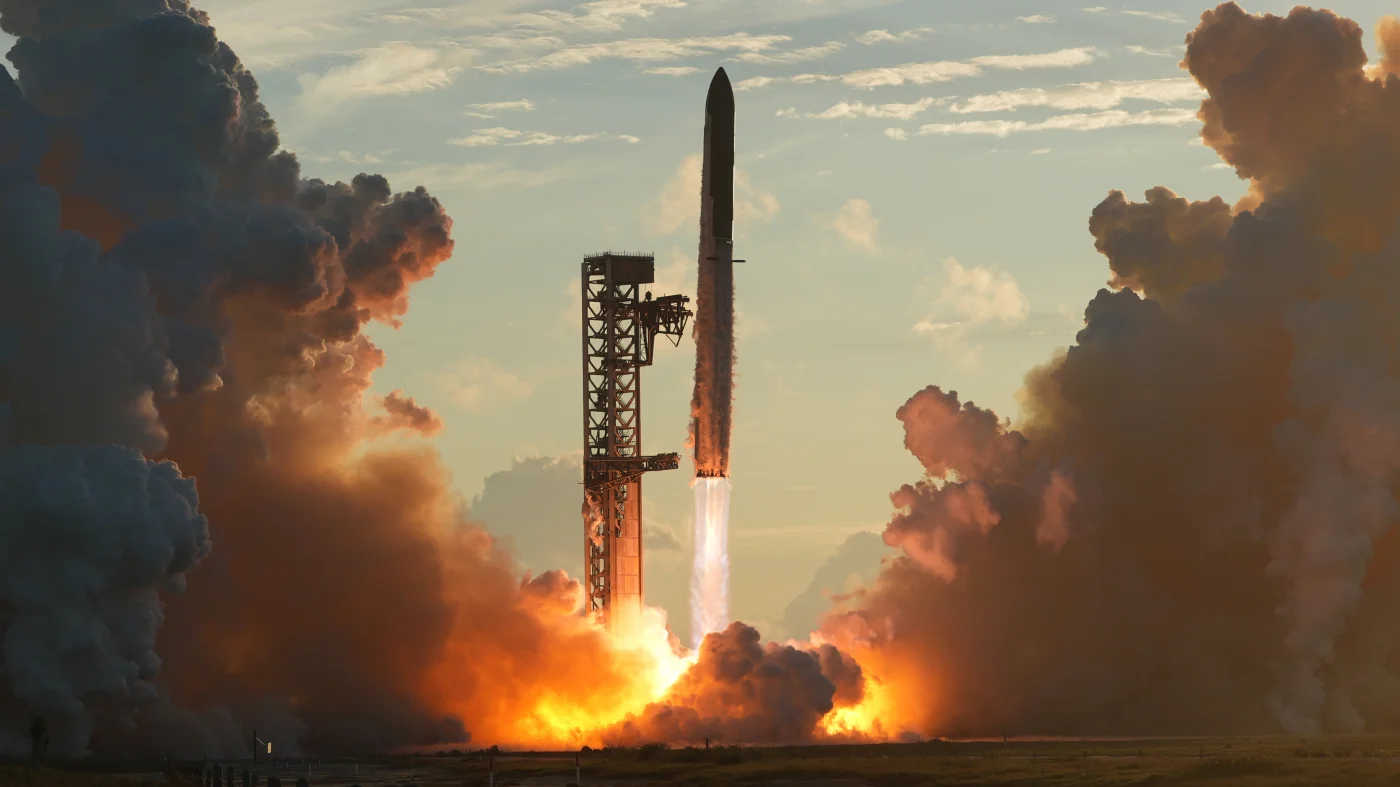
SpaceX launched its 15th Starship test flight from South Texas on Friday attempting to demonstrate the full recovery of both rocket stages for the first time.
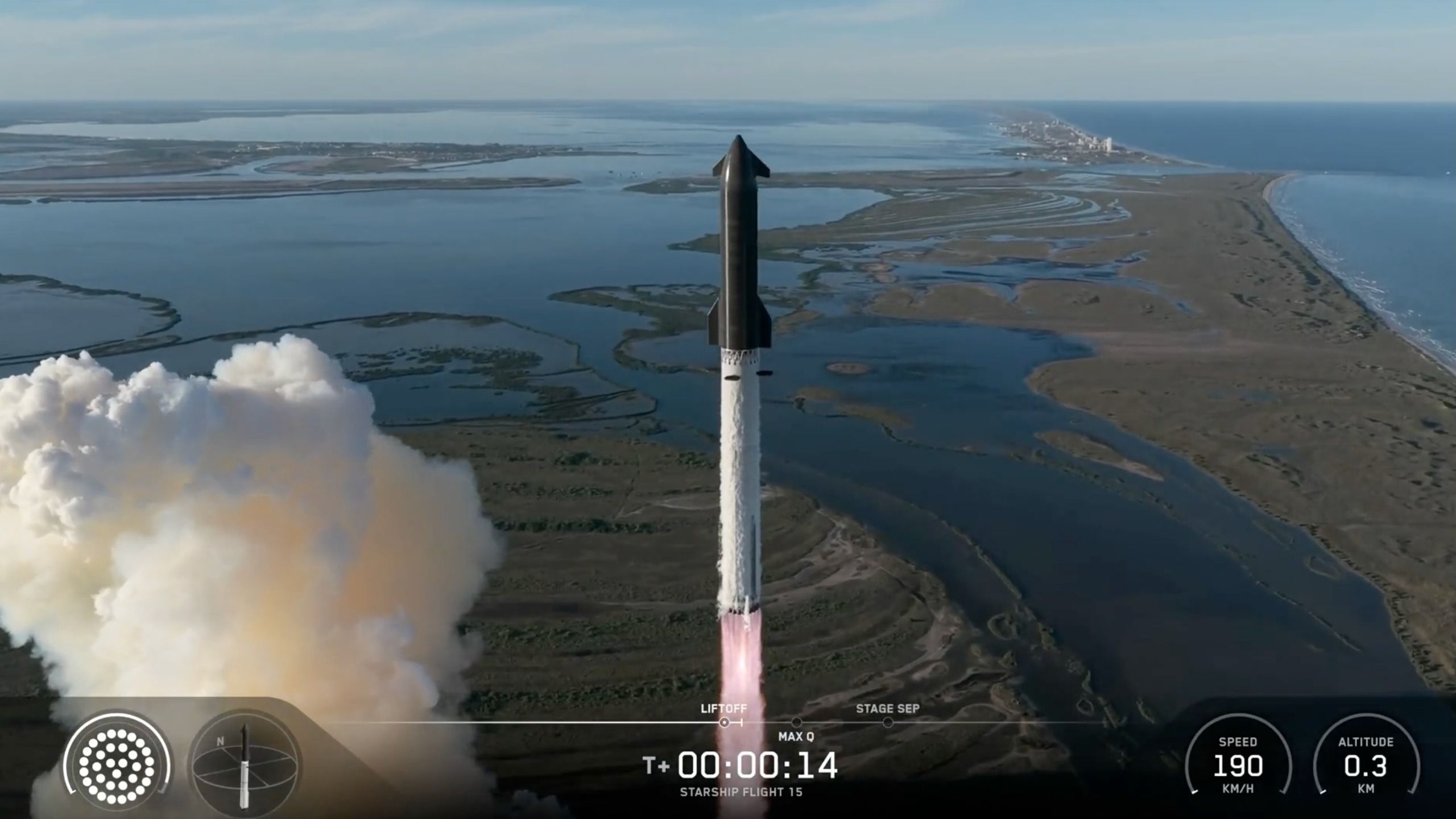
The mission lifted off from the Starbase facility at 5:47 p.m. ET. It sought to capture the Super Heavy booster using the launch tower’s mechanical chopstick arms.
Flight controllers aborted the planned tower catch. The first stage splashed down in the waters near the launchpad instead.
Booster Splashdown and Orbital Deployment
SpaceX confirmed that the Super Heavy booster diverted during its descent after identifying an issue with its lower-stage booster after it separated from the spacecraft.
The Starship upper stage reached orbit as planned. The vehicle began releasing its cargo of 26 next-generation satellites for Starlink, SpaceX’s satellite-connectivity business, 36 minutes into the flight. Space.com said the flight was the second to carry a batch of operational Starlink satellites to orbit.
Starship is preparing for catch Flight 15 is targeting to launch as early as Friday, November 13, pending regulatory approval → https://t.co/K5XRci6bnw pic.twitter.com/WS2xGLjVsx
Starship will be able to loft Starlink satellites in far larger and more frequent batches than the firm’s retiring workhorse rocket, the Falcon 9, according to Scientific American.
The vehicle reached orbit 27 minutes after launch. SpaceX confirmed that it has previously recovered three of its V1 Super Heavy vehicles, and reused two of those in later flights. The company used a Version 3 (V3) Super Heavy for the 15th test flight.
Offshore divert for the booster. No Super Heavy catch back at Starbase.
SpaceX began flying this version earlier this year. Joseph Gonzalez, an aerospace engineering researcher at the University of Illinois, said before the test that positive results could enable a fully reusable rocket within a few years.
SpaceX Pursues Full Reusability for Starlink and Deep-Space Missions
Full reusability of both rocket stages is a primary goal for SpaceX. Founder Elon Musk has described it as “the holy grail of rocketry.” An airplane-like launch cadence is central to the company’s business model as it manages increasing demand for Starlink and prepares for future deep-space missions. Starship must refuel in orbit to reach the moon, which takes a series of fuel-hauling launches.
“The road trip to Mars is six months — so you don't want to be in the minivan,” SpaceX President Gwynne Shotwell said.
“Once Starship is flying reliably several times per week, it makes sense to shift super scarce SpaceX engineering and production resources to Starship to get launch rate to several times per day, which means winding down Falcon,” Musk said on X earlier this year.
NASA watches the progress of the Starship program. The space agency has selected Starship as one of the program’s crewed lunar landers under the Artemis program. A demonstration mission is slated alongside NASA’s Orion spacecraft and Artemis III astronauts in the summer of 2027. Tower catches are not required for the Artemis III mission.
Any failures risk affecting the goal of landing astronauts on the moon in 2028. NASA has kept its options open by considering Blue Origin’s Blue Moon Mark 2 lander. During a summit at Kennedy Space Center, SpaceX vice president of launch Kiko Dontchev emphasized that scaled infrastructure combined with reusability forms the foundation for scaling launch cadence exponentially.
Starship is now in a long coast phase around Earth. Teams will monitor Starship’s systems over the next ~21 hours that we intend to be in orbit for. We do have a few early deorbit options available should we need them, but all systems are looking good right now
Flight 15 Mission Timeline
| Event | Status |
|---|---|
| Liftoff from Starbase | Successful |
| Booster Tower Catch | Aborted |
| Orbit Insertion | Successful |
| Satellite Deployment | Successful |
The Starship upper stage is scheduled to circle the Earth 14 times. It will spend 21 hours in space before coming home. Flight controllers will perform a series of health checks. The company intends to attempt a landing of the upper stage at the Starbase facility on Saturday, November 14.
Earlier coverage: SpaceX Targets Double Starship Landing in Attempt for First Full Recovery
Payload deploy complete. All 26 @Starlink V3 satellites are in orbit pic.twitter.com/y2ffFifGdo