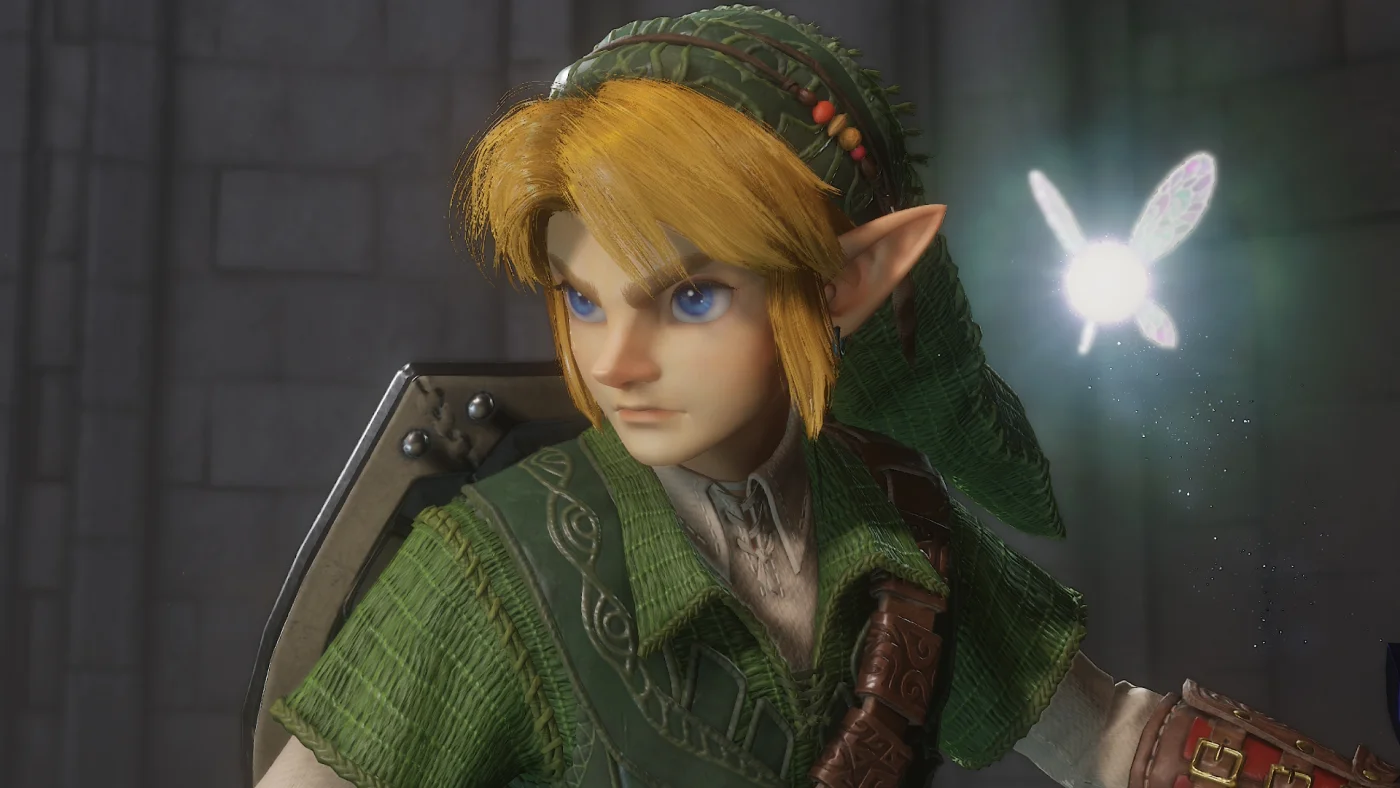
Nintendo released The Legend of Zelda: Ocarina of Time remake for the Nintendo Switch 2 on November 5, 2026, bringing the 1998 Nintendo 64 classic back into the spotlight with modern controls, expanded dialogue, and completely revamped visuals.
Speedrunners Break the New Hyrule With Free Movement and Jumps
For speedrunners, the arrival of the remake is an invitation to test the limits of Hyrule. The inclusion of a dedicated jump button, much like in Breath of the Wild, has given players new paths through the kingdom. As Kotaku reported, runners are dredging the kingdom for secret exploits to establish a blueprint for record times.
Runners such as Zfg1 are chronicling how altering Link’s mobility creates a butterfly effect across the adventure. Defying gravity and finding unassuming geometry to act as shortcuts can skip items, temples, and entire plot beats, transforming a multi-hour runtime into minutes.
Ladies and gentlemen, we have a speedrun pic.twitter.com/hRN97USavV
— Post by @Vespher on X
Link no longer needs to run off a cliff to remember how to use his knees. In standard play, Link can go higher, and players can jump endlessly in midair once they get used to the technique, which is bound to reshape speedrunning categories.
Not every collectible, whether a heart piece or Gold Skulltula, sits in the exact same location as it did in the N64 original. A new item helps point players toward Gold Skulltulas specifically, though the old rupee cheese grotto in Kakariko Village is sadly missing.
We can now beat Shadow Temple as child, which automatically turns you into adult. We still have 1 roadblock to get past before this can be used in a speedrun, but it'll be huge assuming we can get past it. It also looks very funny. pic.twitter.com/s2aoTKCQyY
— Post by @zfg111 on X
Players can swap between items using a quick menu system, mirroring the mechanic introduced in 2023’s Tears of the Kingdom and continued in 2024’s Echoes of Wisdom. While the remake drops the old auto-jump system that forced Link to leap from the furthest point possible near an edge, the manual button press takes some getting used to for veterans accustomed to chaining automated leaps.
Inside the Development Team’s Vision and Real-World Motifs
The project exists in part to pass the seminal game down to a younger group of developers at the company. Zelda producer Eiji Aonuma noted that letting younger staff familiarize themselves with the original allowed them to craft their own reinterpretation.
IGN recorded that Aonuma and Hidemaro Fujibayashi discussed how the opening cutscene and tapestry present the remake as a legend being passed down. Aonuma recounted how Shigeru Miyamoto and Yoshiaki Koizumi established the Z-targeting camera system.
Hey, Mr. Aonuma, you know you can’t really cut a wooden crate with a sword, right?
Shigeru Miyamoto, via IGN
Fujibayashi emphasized that the core of any Zelda game remains the combination of exploration and discovery, regardless of whether the perspective is top-down or fully three-dimensional. Aonuma served as producer while Hidemaro Fujibayashi discussed his role in the game’s development.
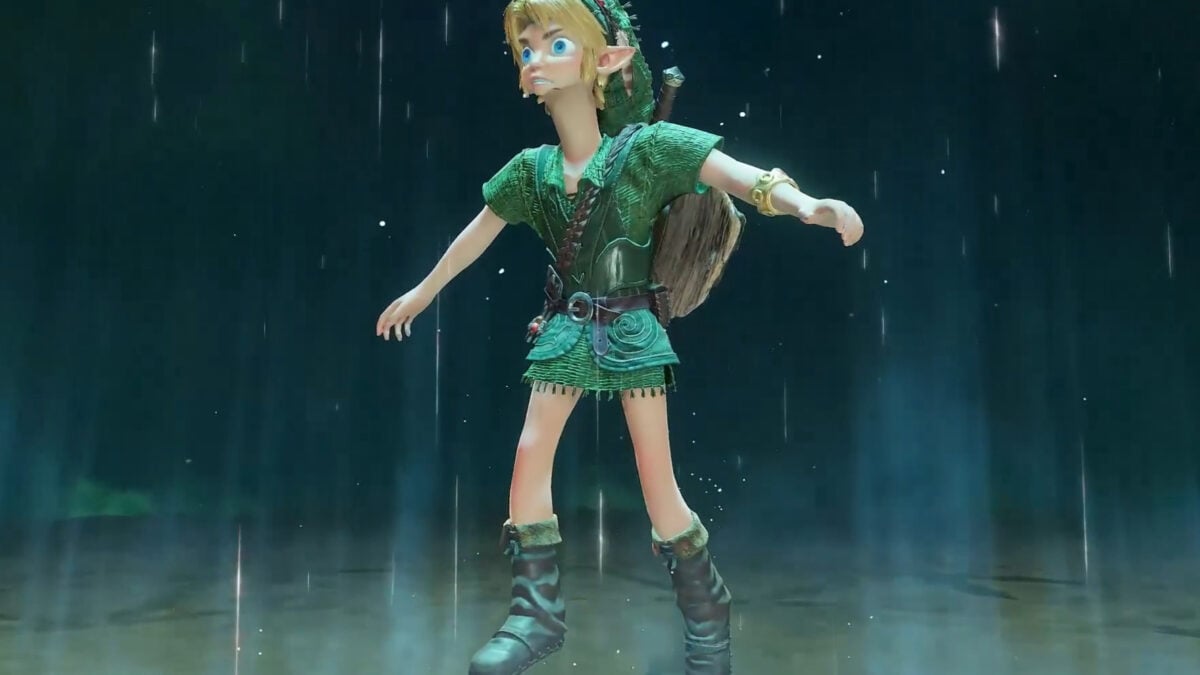
The opening cutscene frames the experience as a legend retold, opening on a tapestry depicting Hyrule’s people and places while a narrator reflects on Link’s journey as a valuable story worth passing down to future generations.
London Midnight Launch Draws Dedicated Fans
Fans braved long hours to secure physical copies of the release. At the London midnight launch outside the Tottenham Court Road Argos, campers arrived nearly a day and a half early. As Nintendo Life detailed, players traveled from other cities, dressed in costume, played full Switch Sports Resort tournaments, and traded tunes on ocarinas while waiting for the doors to open.
With just 48 hours of notice for the pop-up event, attendees formed a queue that stretched around the block. Die-hard fans expressed their excitement to revisit specific moments like the title screen, Kokiri Village, the bottom of the well, or fighting Ganondorf.
Emulation Experiments Push High-End Hardware
Within days of its Switch 2 debut, static recompilation builds of the remake surfaced on other platforms.
Further experiments pushed the remake onto other hardware. According to TechPowerUp, a jailbroken PlayStation 5 running EglantinePS5 loaded the game into Kokiri Forest at 15 to 20 frames per second before running out of memory. Developer Joe Jiang also booted the game on an iPhone 17 Pro Max by keeping peak memory usage at 3.4 GB.