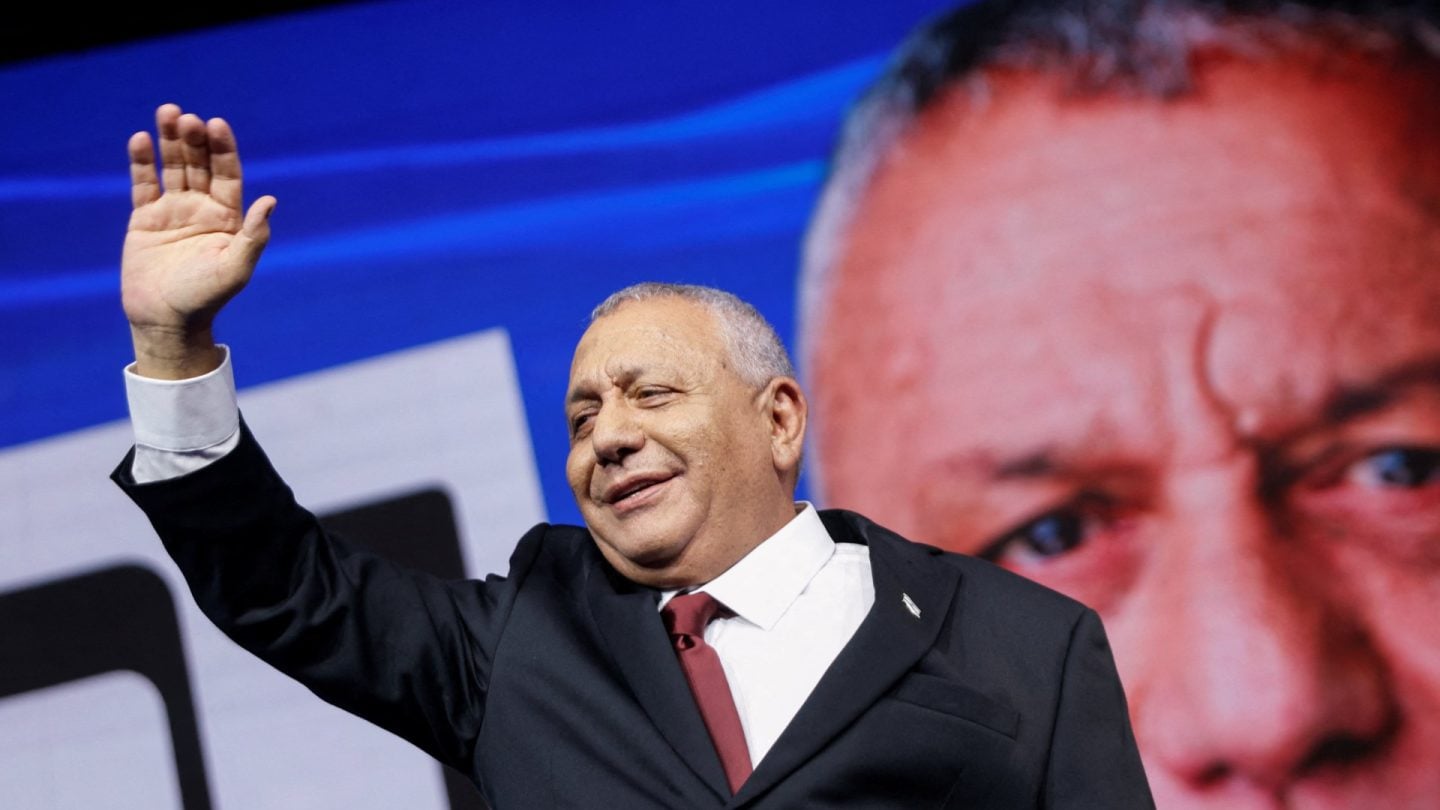
Israel’s President Isaac Herzog tasked Gadi Eisenkot with forming the country’s next government, passing over Benjamin Netanyahu following a deadlocked October 27 general election.
Herzog Appoints Eisenkot After Knesset Consultations
President Herzog informed Eisenkot of his appointment on Saturday evening, with a formal handover ceremony scheduled for Sunday at the President’s Residence, according to the presidential spokesperson. The decision follows a round of consultations with political parties after the election left neither major bloc with a parliamentary majority in the 120-seat Knesset.
Some 67 lawmakers endorsed Eisenkot, including representatives from Arab-led parties, while 46 backed Netanyahu. Eisenkot now holds 28 days to forge a governing coalition, with a possible 14-day extension permitted under law.
Reflecting on the appointment, Eisenkot posted a message on X stating, Now is the time to form a national emergency government. I will do everything I can to ensure we are worthy.
Naming the recipient of the mandate, the spokesperson for President Isaac Herzog said, President Herzog has invited Gadi Eisenkot to the President’s Residence, where he will be tasked with forming the government tomorrow,
according to the official statement.
Eisenkot Seeks 61 Seats Amid Fractured Parliament
The October vote yielded a fractured parliament where neither leading faction reached the threshold of 61 seats required to govern alone. Netanyahu’s right-wing and religious bloc secured 53 seats, with his Likud party taking 27. Meanwhile, Eisenkot’s Yashar party won 21 seats, and its four-party alliance captured 48 seats in total. Two separate parties representing Israel’s Arab minority won 19 seats.
| Bloc or Party | Seats Won |
|---|---|
| Netanyahu’s Religious-Nationalist Bloc | 53 |
| Eisenkot’s Four-Party Alliance | 48 |
| Likud Party | 27 |
| Eisenkot’s Yashar Party | 21 |
| Arab-Led Minority Parties | 19 |
To reach the 61-seat minimum, Eisenkot faces narrow and challenging pathways. While he has publicly ruled out a formal coalition with Arab-led parties, winning over the two ultra-Orthodox factions—United Torah Judaism and Shas—would land his alliance at exactly 61 seats. Alternatively, he could pursue a minority government backed externally by Arab lawmakers or attempt a unity government with Netanyahu, though analysts view these options as difficult to achieve.
Eisenkot Must Build Government Despite Right-Wing Opposition
Reporting from Ramallah in the occupied West Bank, Nour Odeh noted that President Herzog took the predictable route
in selecting the candidate with the highest number of endorsements.

The hard work will begin now for Eisenkot to put together a government that can pass a vote of confidence at the Knesset that: one, will not break too many of the promises he made on the campaign trail; and two, that can survive the opposition of the right-wing bloc led by Netanyahu,
Odeh reported.
Ahmad Tibi, a senior member of the Joint List representing Arab-led parties, confirmed that his faction’s endorsement was intended to deny Netanyahu another term. Prior to the decision, Netanyahu released a prerecorded video warning that an opposition administration dependent on Arab lawmakers would endanger the state.
🔴 BREAKING: Israeli President Isaac Herzog has formally given Gadi Eisenkot the mandate to form a government. pic.twitter.com/yG2Mb0EUDz
Eisenkot, 66, served as Israel’s military chief from 2015 to 2019 and joined Netanyahu’s wartime cabinet following the October 7, 2023, attack by Hamas before returning to the opposition. On the campaign trail, he emphasized his security background, referencing the Dahiyeh doctrine
implemented during the 2006 Lebanon war against Hezbollah, and has voiced criticism regarding the rise in settler violence against Palestinians since 2023.