Negotiations for a Code in the South China Sea have reached 70 percent completion, the Department of Foreign Affairs reported from Manila on Friday.
Regional leaders gather for the 49th ASEAN Summit. The maritime pact between the Association of Southeast Asian Nations and China remains unfinished.
Foreign ministers previously agreed to work toward finalizing the accord within a three-year window. That deadline falls this year as the Philippines concludes its tenure as ASEAN chair.
Officials and analysts indicate that completing the agreement by year’s end is unlikely. “there are issues that need to be clarified,” Foreign Affairs Spokesperson for ASEAN Affairs Dax Imperial said.
“At the moment, we’re seeing a 70 percent completion of the negotiations, so we are at that stage at the moment. Looking at the 30 percent, that would be up to our negotiators on how they will be able to complete that,” Imperial said at a briefing.
Resolving Four Milestone Issues in the Talks
The remaining hurdles center on four milestone issues that have prolonged talks for over two decades.
Negotiators must still determine how the Code connects to the non-binding Declaration on the Conduct of Parties signed in 2002. They must also decide if the final document will carry legal force.

Negotiators must determine its exact geographical scope. They need shared definitions for terms such as self-restraint.
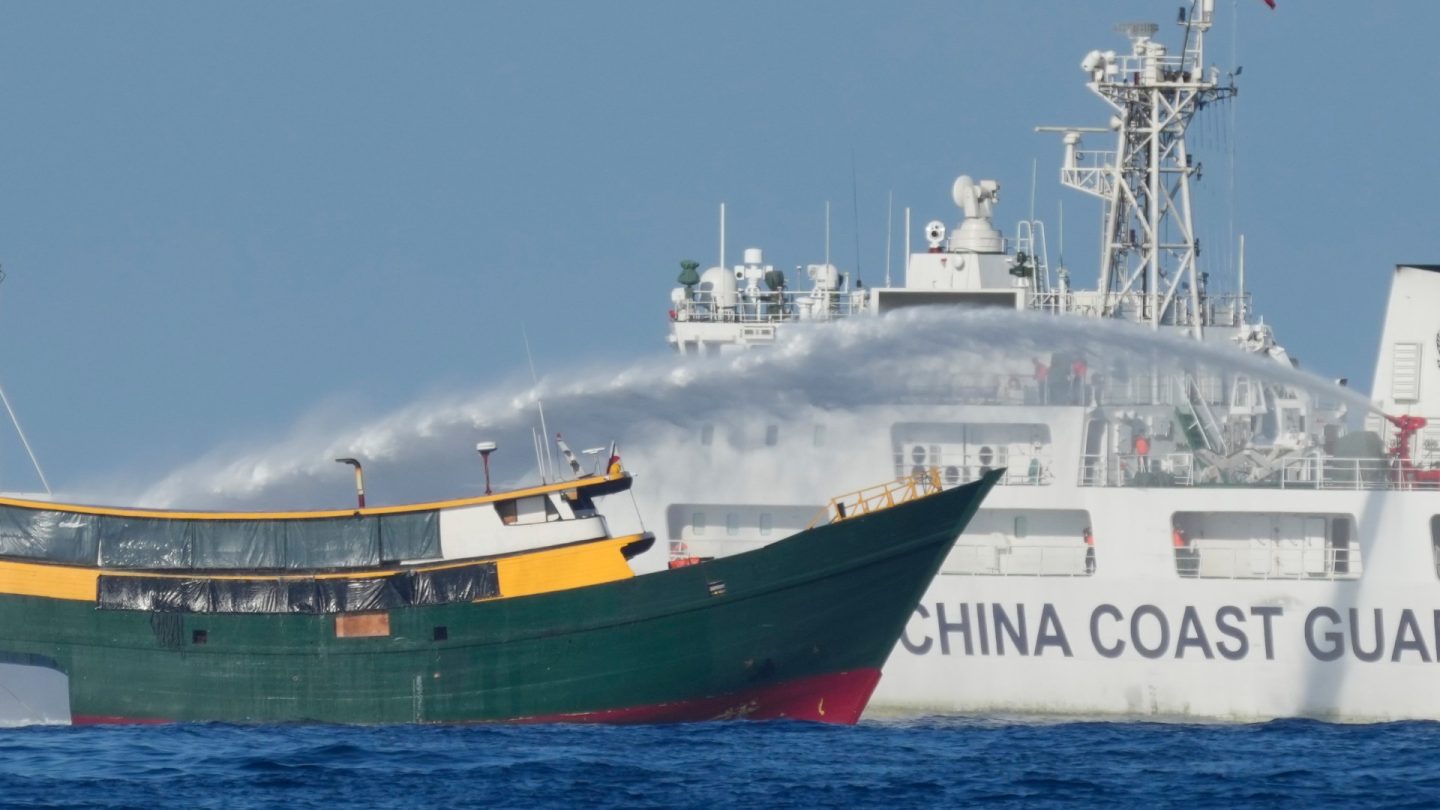
China has consistently resisted a legally binding agreement. Claimant states including the Philippines and Vietnam argue that binding rules are necessary to hold Beijing accountable during maritime confrontations, water-cannon deployments, and vessel collisions in disputed waters.
The debate intersects with the 2016 international arbitral tribunal ruling under the United Nations Convention on the Law of the Sea, which invalidated China’s claims.
Pursuing Maritime Cooperation at the Summit
President Ferdinand Marcos Jr. opened the summit plenary by addressing maritime cooperation, regional security, and economic deliverables, including the newly signed ASEAN Digital Economy Framework Agreement.
The Philippines pushes for provisions that protect third-party rights and guide behavior in the waterway. The country acknowledges that talks will extend into next year as the chairship passes to Singapore.
Malaysia serves as co-chair of the COC negotiations. Foreign Minister Datuk Seri Mohamad Hasan said that collective efforts must be intensified during this final stage.
I urge we redouble our collective efforts, to finalise the draft COC as soon as possible. Renewed political will is imperative in achieving this goal, particularly at this final and critical stage.
Datuk Seri Mohamad Hasan, Foreign Minister of Malaysia
External partners stated their stances ahead of the meetings. Union Ministry of External Affairs Secretary (East) Rudrendra Tandon said that any finalized code must comply with international maritime law, specifically UNCLOS, while respecting the legitimate rights of non-participating nations.

The Philippines initiated frequent discussions by holding meetings at least once a month to give negotiators time to resolve disagreements.
The Philippines oversaw the overarching diplomatic outreach with Malaysia. Dialogue partners prepared to engage in the Plus One Summits scheduled for November 16 to 17.
Diplomatic sources said the related sessions feature participation from multiple nations and international bodies. Those participants include India, China, Australia, Japan, New Zealand, South Korea, Russia, the United States, and the United Nations.
Chinese Premier Li Qiang attended the 29th China-ASEAN Leaders’ Meeting instead of President Xi Jinping.
Antonio Carpio warned that claimant states must evaluate proposed provisions to ensure regional actions do not legitimize construction projects or island-building activities within exclusive economic zones.
“You can't win it because if you get a good document, you'll be accused of railroading or it would come across as self-serving. But if it's a bad document, the Marcos Jr administration will be seen as a weak government,” Aries Arugay, a political scientist at the University of the Philippines, said.