
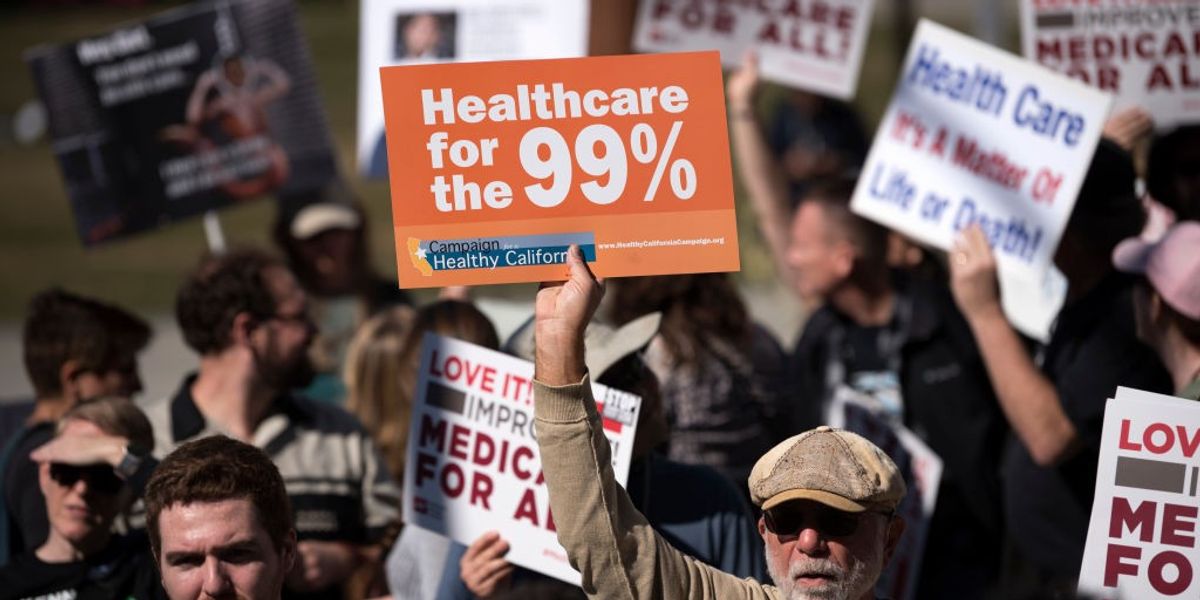
What began as a long-shot campaign promise by Sen. Bernie Sanders’ Medicare for All has vaulted to the forefront of the Democratic agenda for the new Congress taking office in January 2027.
Legislative Goals and Incremental Steps in the New Congress
Democratic leaders are preparing swift legislative action during their first 100 days to reverse recent Medicaid cuts that threaten care for millions, alongside reviving tax breaks for people purchasing insurance through the Affordable Care Act.
House Democratic leader Hakeem Jeffries of New York outlined plans to take incremental steps toward universal coverage by lowering the Medicare eligibility age below 65, adding dental, vision, and hearing aid benefits, and opening up healthcare to children. The proposals mirror key elements of the broader single-payer framework.
Jeffries noted during a post-election gathering in Denver that lawmakers would begin work early in the new Congress to reverse Medicaid reductions and extend tax credits for the Affordable Care Act. The House Democratic leader also acknowledged Sanders as the original pioneer whose committee will tackle healthcare legislation.
Dem leaders move toward expanding Medicare. And key "Medicare for All" backers are softening on the politically toxic provision on abolishing private coverage. Here's Abdul El-Sayed on @MeetThePress saying he's fine with private options. Emerging Dem consensus becoming clearer. https://t.co/oBp3kUk0Pk pic.twitter.com/QguEhAxKwI
“We got the ACA done, which was wonderful,” former President Barack Obama said.
Rep. Pramila Jayapal of Washington has been actively engaged in discussions regarding the advancement of the legislation over recent months. Jayapal pointed to a sense of momentum in recognizing the urgency of healthcare reform rather than simply restoring past policies.

Sen. Tammy Baldwin, a Democrat from Wisconsin, introduced the “Medicare at 50 Act,” which would allow the more than 58 million Americans between 50 and 64 to buy into the program. Baldwin emphasized that many individuals in that age bracket struggle to afford coverage or go without it entirely.
Washington Rep. Pramila Jayapal also unveiled the “Improving Medicare Coverage Act” to let people sign up starting at age 50, while Connecticut Rep. Rosa DeLauro floated a bill to open Medicare to anyone who wants to enroll.
Sanders, an independent from Vermont who caucuses with Democrats, has taken over the chairmanship of the Senate health committee and advanced portions of the universal healthcare push through his committee work.
.@RepJeffries, likely next Speaker of the House, calls for a robust health care agenda next year: —Undoing Trump’s Medicaid cuts —Restoring enhanced ACA funds —Lowering Medicare eligibility age —Adding dental/vision/hearing benefits —Universal coverage for kids Reversing Trump… pic.twitter.com/ynB1SW6fYF
Voter Sentiment and Political Realities on Capitol Hill
Polling from Kaiser Family Foundation in September found that 66% of all respondents agreed with favoring a national health plan, with backing reaching 84% among Democrats, 72% among independents, and 34% among Republicans. However, support shifted when potential downsides were introduced:
- Support fell from 66% to 52% after hearing the plan could eliminate private health insurance.
- Backing dropped to 35% when respondents were told it could require most Americans to pay higher taxes.
- Support fell to 24% upon learning it could lead to delays in medical care.
Economic Projections and Financing Debates
Under full single-payer proposals, private insurance, employer-provided coverage, Medicaid, Medigap, and traditional Medicare itself would disappear, shaking up roughly one-fifth of the nation’s economy.
The projected 10-year cost of implementing a Medicare for All plan reaches about $47 trillion, according to the White House Council of Economic Advisers, which predicts higher taxes, increased deficit spending, and program cuts. A 2020 analysis by the Committee for a Responsible Federal Budget estimated the 10-year cost at $25 trillion to $35 trillion.

taxes on high earners and corporations alone could not finance Medicare for All.
Committee for a Responsible Federal Budget, via PolitiFact
To cover those expenses, the organization pointed out that lawmakers would have to consider drastic budgetary choices, such as a 32% payroll tax, a 25% income surtax, a 42% value-added tax, a $7,500 per capita mandatory charge, doubling every income tax rate, or growing the national debt.
Costs and Economic Impact
A 2020 analysis by the Committee for a Responsible Federal Budget estimated the 10-year cost at $25 trillion to $35 trillion. Meanwhile, a study by the Yale School of Public Health offered a more optimistic outlook, concluding that the plan would cost $1 trillion less than the system it would replace while saving at least 100,000 additional lives annually, as reported by The Intercept.
According to KRDO and khbs, Doug Holtz-Eakin, who leads the conservative American Action Forum, estimated that lowering Medicare’s age threshold to 62 would require anywhere from $388 billion to $1.8 trillion over a 10-year span, contingent upon whether companies maintain workplace insurance plans for those newly qualified individuals.
Policy and Legislative Hurdles
In interviews discussing the political scene, Senator-elect Abdul El-Sayed compared his vision to public schools, explaining that everyone is entitled to a public school even though some people send their kids to private schools, according to PolitiFact. Curtis cautioned that such policy proposals often rely on slogans being thrown out during debates.
Alternative Proposals and the Presidential Veto Threat
Amid divisions within the party, Sen.-elect Abdul El-Sayed (D-Mich.) offered an alternative framework, proposing to allow “additional private insurance through unions or employers” so that existing coverage is not entirely wiped out during a transition.
Senator Tammy Baldwin, a Democrat from Wisconsin serving in the United States Senate since 2013, has established a progressive voting record on healthcare and introduced the Medicare at 50 Act to allow Americans between 50 and 64 to buy into the program.
Utilizing her legislative position and senatorial voting powers as a federal lawmaker, she can advance this healthcare expansion initiative by shepherding the legislation through the legislative process and securing co-sponsors to support coverage affordability for aging demographics.
President Donald Trump has promised to use the power of the presidential veto to swat back the Democratic agenda, telling reporters that lawmakers will send bills his way and he will veto them.
Why bother? That’s what members of Congress are elected to do — to try and try hard, and if they fail, to try again.
Brad Woodhouse, Protect Our Care, via AP News