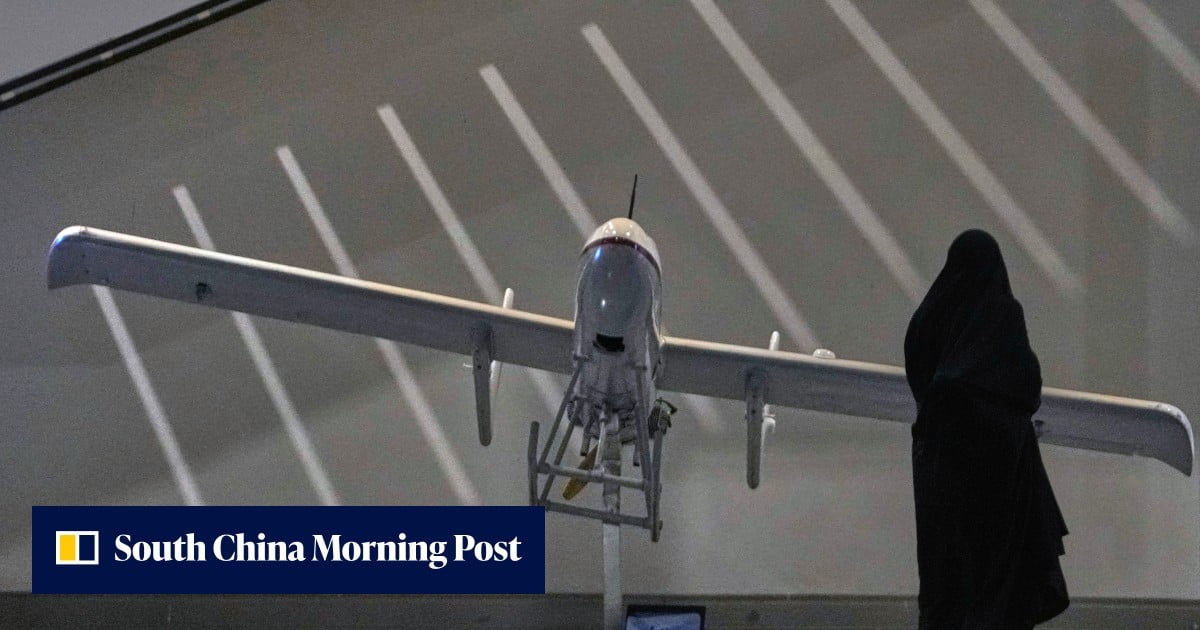
Two Italian defense technicians died in Kuwait on Thursday after falling debris from intercepted drones struck an air-defense surveillance station where they were working.
- Two Rheinmetall Italia technicians were killed when falling debris struck a vital military site on November 26, 2026.
- Kuwait’s Defense Ministry reported that four people were initially wounded in the incident, including a Kuwaiti army captain and a Pakistani national.
- Iranian Foreign Minister Abbas Araghchi rejected Tehran’s involvement during phone calls with his Kuwaiti and Italian counterparts.
Italian Technicians Killed by Falling Drone Debris
The incident unfolded when Kuwaiti military forces detected and engaged incoming aerial threats over the country’s airspace. Italian Foreign Minister Antonio Tajani told the Senate that several Iranian-made drones targeted military installations, hitting an air-defense detection station where the Italian personnel were stationed.
The technicians were identified by Italian news agency ANSA as 65-year-old Antonio Saccoccio and 36-year-old Emanuele Lo Russo, according to reporting cited by Arab News. They were performing maintenance work on the facility’s detection antennas.
Kuwait’s defense ministry confirmed that the two injured workers in addition to the fatalities included a Kuwaiti national and a Pakistani national. The ministry said that the strike caused unspecified material damage to the vital site.
Tehran Denies Responsibility and Alleges False Flag
Iranian officials strongly denied carrying out the strike. Brig. Gen. Abolfazl Shekarchi, a senior spokesperson for Iran’s armed forces, said that no offensive operations had been conducted by the country’s military in the region.
Foreign Minister Abbas Araghchi spoke by phone with Italian Foreign Minister Antonio Tajani and Kuwaiti Foreign Minister Jarrah Jaber Al-Ahmad Al-Sabah to dispute Tehran’s involvement. In a post on social media, Araghchi characterized the event as a suspicious occurrence that looks like a precooked recipe for war.

The incident is suspicious and looks like a precooked recipe for war.
Abbas Araghchi, Iranian Foreign Minister.
Iran’s embassy in Rome issued warnings regarding potential false flag operations aimed at expanding the scope of the conflict and drawing European nations into the Persian Gulf crisis.
Iran Embassy Highlights Regional Security Complexity
The Embassy of the Islamic Republic of Iran in Rome pointed out the complex security environment across West Asia and the Persian Gulf stemming from military actions conducted by the United States and Israel over the preceding nine months.
A former adviser to Iran’s nuclear negotiating team suggested that Ukrainian personnel operating regional networks might be involved in orchestration to draw attention from Washington. Meanwhile, Gulf Cooperation Council Secretary-General Jasem Mohamed Albudaiwi strongly condemned the brutal attack, asserting that sovereignty violations undermine regional stability.
Tehran Proposes Joint Investigation Into Incident
Iranian Foreign Minister Abbas Araghchi said that Tehran was prepared to cooperate with Kuwait and Italy to determine the origin of the incident, according to the Iranian foreign ministry. The top spokesperson for Iran’s Armed Forces, Brigadier General Abolfazl Shekarchi, strongly refuted the allegation while saying that his country had engaged in zero military or offensive missions within the area.
The Embassy of the Islamic Republic of Iran in Rome categorically rejects the allegation that Iran was behind today’s purported drone attack on a military facility in Kuwait—an incident that resulted in the deaths of two Italian nationals. The Embassy draws attention to the…
Dismissing the notion that Tehran was accountable for what it termed an alleged drone strike on a Kuwaiti military installation, the Iranian diplomatic mission in Rome firmly pushed back against the assertion. Referring to Araghchi’s denial of Iranian responsibility, Italian Foreign Minister Antonio Tajani said that numerous pro-Iranian militias operate in the region.
GCC Chief Condemns Attack on Kuwait Facilities
Jasem Mohamed Albudaiwi, secretary-general of the Gulf Cooperation Council, strongly condemned Thursday’s brutal attack, stating that Iran’s continued attacks on Kuwait targeting its vital facilities constitute a dangerous escalation. European Commission President Ursula von der Leyen wrote on X that her thoughts are with all those affected by the attack and their families.
In an effort to strengthen regional defense ties by sharing military expertise and technology acquired throughout the conflict with Russia, Ukraine has dispatched interceptor drones and specialized drone personnel to the Middle East to assist in countering Iranian strikes. Ukrainian leader Volodymyr Zelenskyy said during March that Kyiv had dispatched specialists along with interceptor drones to safeguard American and allied interests.
EU Chief Urges Pressure on Tehran After Fatalities
European Commission President Ursula von der Leyen responded to the fatalities by calling for more pressure on Tehran. Writing on social media, she said that the event reminds us that regional security affects partners across Europe.
Italian Prime Minister Giorgia Meloni expressed sorrow over the deaths during a European Council meeting, offering her condolences to the families of the victims.
The fatal strike occurred alongside regional disruptions affecting commercial shipping and airspace. Civil aviation authorities redirected passenger flights away from the key corridor crossing Iraq and Kuwait following the airspace closure. Meanwhile, British maritime monitors reported ongoing incidents involving commercial tankers in the Strait of Hormuz.