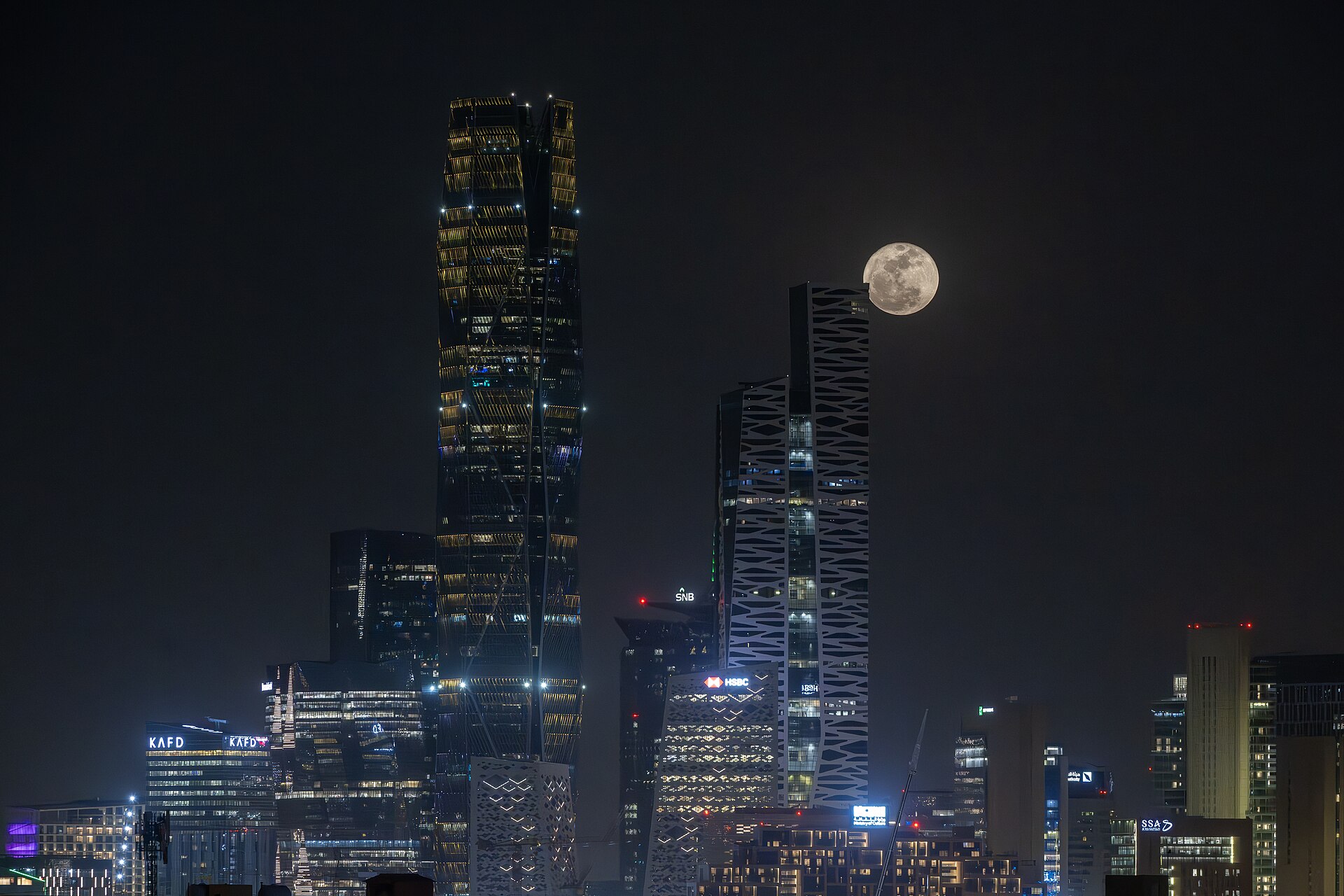
“dealt with a missile threat launched toward Riyadh”, coalition spokesman Major General Turki Al-Maliki said on X Thursday, as debris fell on the capital’s financial district.
A suspected Houthi missile struck the Public Investment Fund Tower in Riyadh’s King Abdullah Financial District on November 19, 2026.
The hit damaged the kingdom’s tallest building and the headquarters of its roughly $900 billion sovereign wealth fund. The tower, completed in 2021 and formerly known as the CMA Tower, stands at the centre of KAFD’s financial plaza. Floor counts vary by source: Skyscraper Center gives 72 above-ground floors; Wikipedia and HOK’s own project page cite 80 stories. A Times reporter who visited the city’s financial district saw damage to the building.
Reuters, citing three sources familiar with the matter, reported damage across the facade and windows of seven to eight floors. Residents of Riyadh heard a large explosion early Thursday. The Saudi-led coalition said it intercepted the projectile, but whether the damage came from a direct hit or falling shrapnel remained unresolved. No casualties were reported. The plaza and surrounding towers were evacuated.
Second Strike on KAFD in 11 Days
The attack marks the second time in less than two weeks that the financial district has been hit. On November 8, a Houthi missile blew out windows across several floors of the nearby Aramco Tower, according to The New Arab and Middle East Eye.
Saudi coalition forces intercepted two ballistic missiles heading toward Riyadh and shot down three drones targeting the kingdom’s Eastern Province on November 15. The barrage followed earlier strikes that damaged an Aramco-owned facility in the Saudi capital. Houthi attacks on Saudi infrastructure in October, including airports and energy facilities, killed 24 people and injured at least 374 others.

Houthi military spokesman Yahya Saree claimed that the group targeted Riyadh’s international airport and financial district with cruise missiles on November 19, according to TASS and The Siasat Daily. The building’s identification came from Reuters’ Saudi sources.
Widening Conflict Across Yemen
The same day, Saudi-backed forces carried out airstrikes in Yemen’s port city of Mokha and Taiz province, killing at least 15 people according to Houthi-run Health Ministry spokesperson Anees al-Asbahi. He said that an airstrike on a rest stop in Mokha killed 10 people and wounded nine others, while another strike in Taiz province targeted workers repairing a road, killing five and wounding five others. Al-Asbahi said the attacks were carried out by the Saudi-backed forces. This claim could not be independently verified. The coalition said it destroyed a ballistic missile launchpad in Dhamar used in the Riyadh attack, and intercepted missiles toward the southern region.
In a related development concerning the escalation on the ground, Major General Al-Maliki announced in a separate statement that air defenses had intercepted and destroyed another ballistic missile launched by the Houthis toward the southern region of the Kingdom. This was followed by the destruction of a ballistic missile launcher in Saada Governorate, northern Yemen, which had been used to carry out the attack.
The operations did not stop there; the Coalition later revealed that its air defenses had successfully intercepted and destroyed a cruise missile launched by the Houthi group toward the southern region as part of ongoing attempts targeting civilian objects and vital facilities within Saudi territory.
Saudi Aramco tower damaged after Houthi missile attacks on Riyadh
Financial District Under Pressure
The PIF Tower houses the fund that manages approximately $900 billion in assets, with 76 percent invested in domestic Saudi projects including NEOM, the Red Sea tourism zone, and Qiddiya. The fund and its subsidiaries occupy much of the district’s real estate. PIF ranked as the world’s fifth-largest sovereign wealth fund in 2024, according to AGBI. Its stated target is $2 trillion by 2030.
Saudi Arabia’s roughly $900 billion sovereign wealth fund is the engine of Crown Prince Mohammed bin Salman’s plans to overhaul the national economy and reduce dependence on oil. Many employees have been working from home in recent weeks amid persistent Houthi attacks. A PIF spokesman did not respond to a request for comment. The Saudi authorities have threatened to prosecute people who photograph or share information about attacks.
Established by Royal Decree M/24 in 1971 under King Faisal bin Abdulaziz Al Saud, the Public Investment Fund was originally mandated to finance projects of strategic significance to the national economy.
For decades it remained a passive holder of the state’s equity in listed firms until a 2015 restructuring moved its oversight to the Council of Economic and Development Affairs and installed Crown Prince Mohammed bin Salman as chairman, triggering a rapid expansion of staff from 50 to nearly 500 within three years.
🇸🇦 Houthi missile interception sends debris crashing into Saudi Aramco Tower in Riyadh The building in Riyadh's financial district sustained damage after Saudi intercepted two missiles launched by the Houthis. Falling debris struck the building, with Saudi Arabia's energy… pic.twitter.com/CrHUvzON1V
The fund’s international profile rose sharply after it acquired a 5% stake in Uber for $3.5 billion in 2016 and co-founded the SoftBank Vision Fund, while domestic ambitions grew with the transfer of a 4% stake in Saudi Aramco valued at around $78 billion in 2023. These moves underpin its target to increase assets under management to over $1 trillion by 2025.
Six-Month Campaign Ahead
Saudi officials told allies that the conflict with the Houthis could last another six months after Iran widened its attacks on its Gulf Arab neighbors on Wednesday. Crown Prince Mohammed bin Salman met US Central Command chief Admiral Brad Cooper in Riyadh on November 19. Cooper also met Saudi defence minister Prince Khalid bin Salman to discuss defence cooperation and regional security.
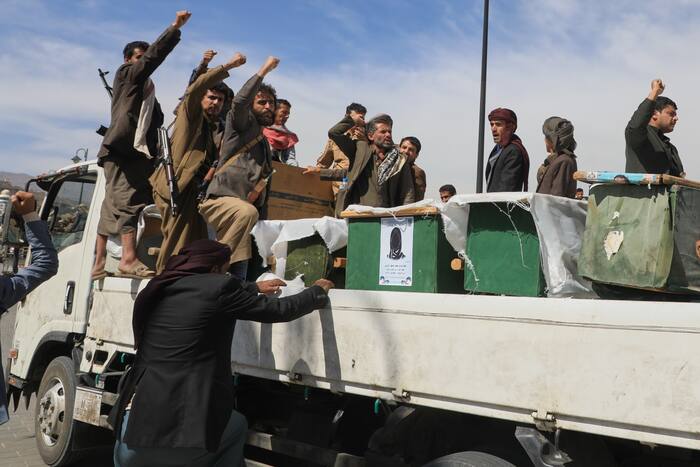
Analysts say the balance of power in Yemen continues to tilt toward the Houthis. A full-blown war erupted last month, when the Yemeni government declared a new military campaign against the Houthis, backed by Saudi warplanes.
So far, that campaign has made little headway. The Houthis’ advance along Yemen’s Red Sea coast has brought the group closer to the Bab el-Mandeb Strait, a strategically important passage connecting the Red Sea to the Gulf of Aden.
BREAKING: The Houthis have struck the Aramco tower in the King Abdullah Financial District (KAFD) in Riyadh, Saudi Arabia. KAFD is an important part of MBS’s signature reform plan known as “Saudi Vision 2030” KAFD serves as Saudi Arabia’s primary financial center, hosting… pic.twitter.com/8WiQwDWVYu