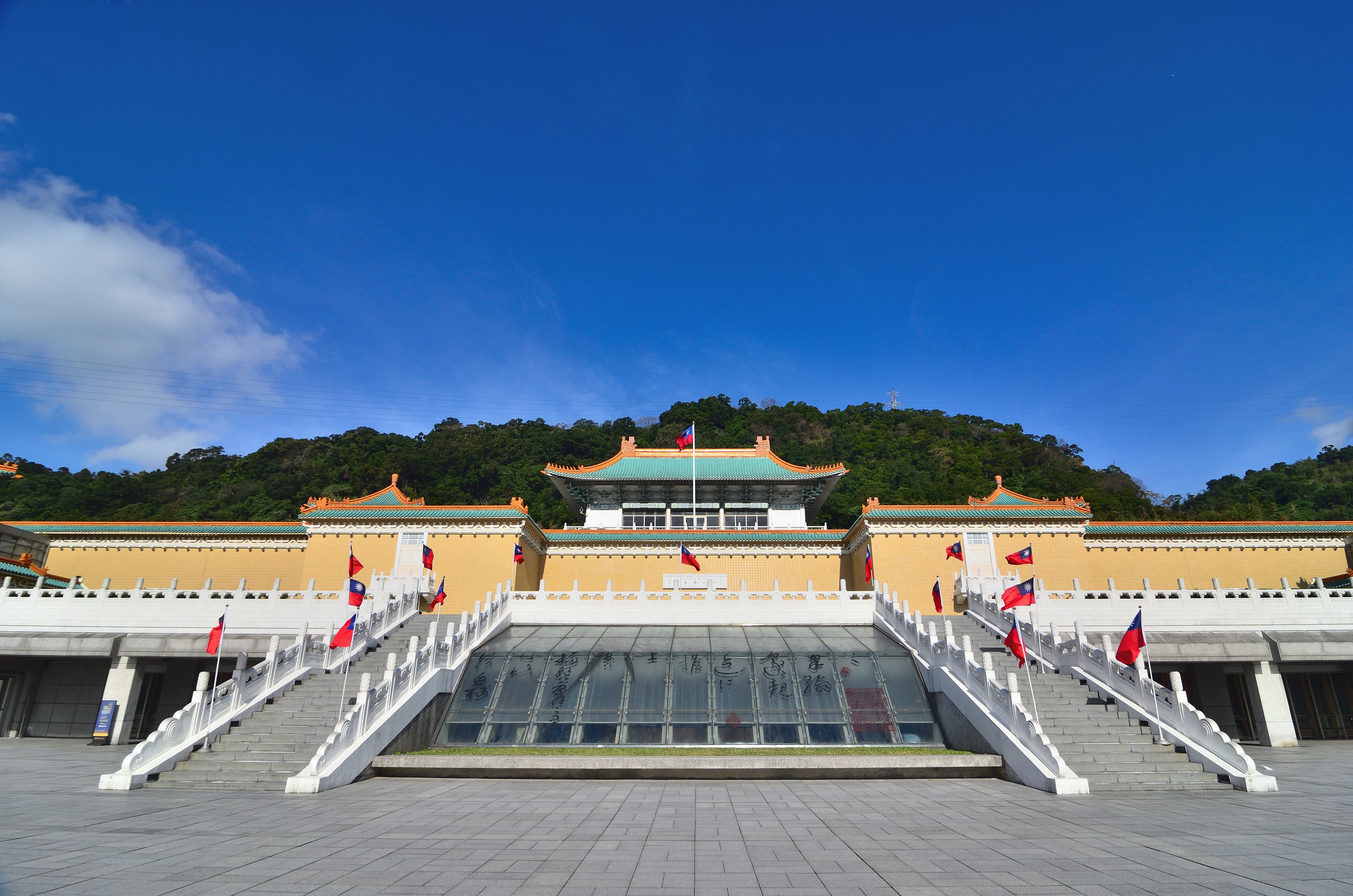
Taipei City Culture Bureau rejected a proposal from the National Palace Museum to install rooftop solar panels, citing cultural heritage preservation laws.
Taipei City Culture Director-General Tsai Shih-ping revealed on November 19 that the museum had previously floated the idea of setting up photovoltaic power equipment on its compound buildings. According to Tsai, the Taipei City Culture Bureau rejected the inquiry because the museum’s main building is designated as a historic structure and the surrounding grounds are classified as a cultural landscape.
Would tourists visiting the Louvre in France see solar panels installed on the roof and exterior walls? Tsai asked in response to the controversy.
Following the disclosure, the museum issued a statement expressing strong dissatisfaction and denying that it had formally proposed installing solar panels on the main museum grounds. The institution demanded that Tsai retract his comments and issue an apology.
KMT City Councilor Chung Pei-chun also shared an official document on Facebook showing that the museum issued an inquiry on November 12 regarding the suitability of installing solar photovoltaic power generation equipment on building roofs within the historic site and cultural landscape.
Tsai said that under Articles 24 and 30 of the Cultural Heritage Preservation Act, preservation and restoration plans must maintain the original appearance and preserve facade elements. Adding solar equipment would alter the exterior, impact the skyline, and change the overall visual landscape.
Founded in Beijing in 1925 as the Palace Museum within the Forbidden City, the National Palace Museum holds nearly 700,000 artifacts drawn largely from the imperial collections of the Ming and Qing dynasties. In 1931, following the Mukden Incident, the Nationalist Government evacuated 13,491 crates of its most valuable pieces to Shanghai, beginning a westward journey through Nanjing and interior China that lasted until Japan’s surrender in 1945.
Between December 1948 and February 1949, as civil war intensified, 2,972 crates representing roughly 22% of the original shipment were transported to Taiwan under the supervision of Hang Li-wu. The collections were stored in Taichung before the museum was re-established in Shilin, Taipei, in 1965.
The museum has already incorporated solar installations elsewhere without touching heritage structures. According to its 2025 sustainability report, the Southern Branch installed 1,300.11 kW of photovoltaic equipment at its south parking lot, generating an estimated 159萬度 kilowatt-hours annually. Meanwhile, the Northern Branch completed a new administrative building in 2024 featuring 33.06 kW of solar capacity projected to yield about 40,000 kilowatt-hours per year.