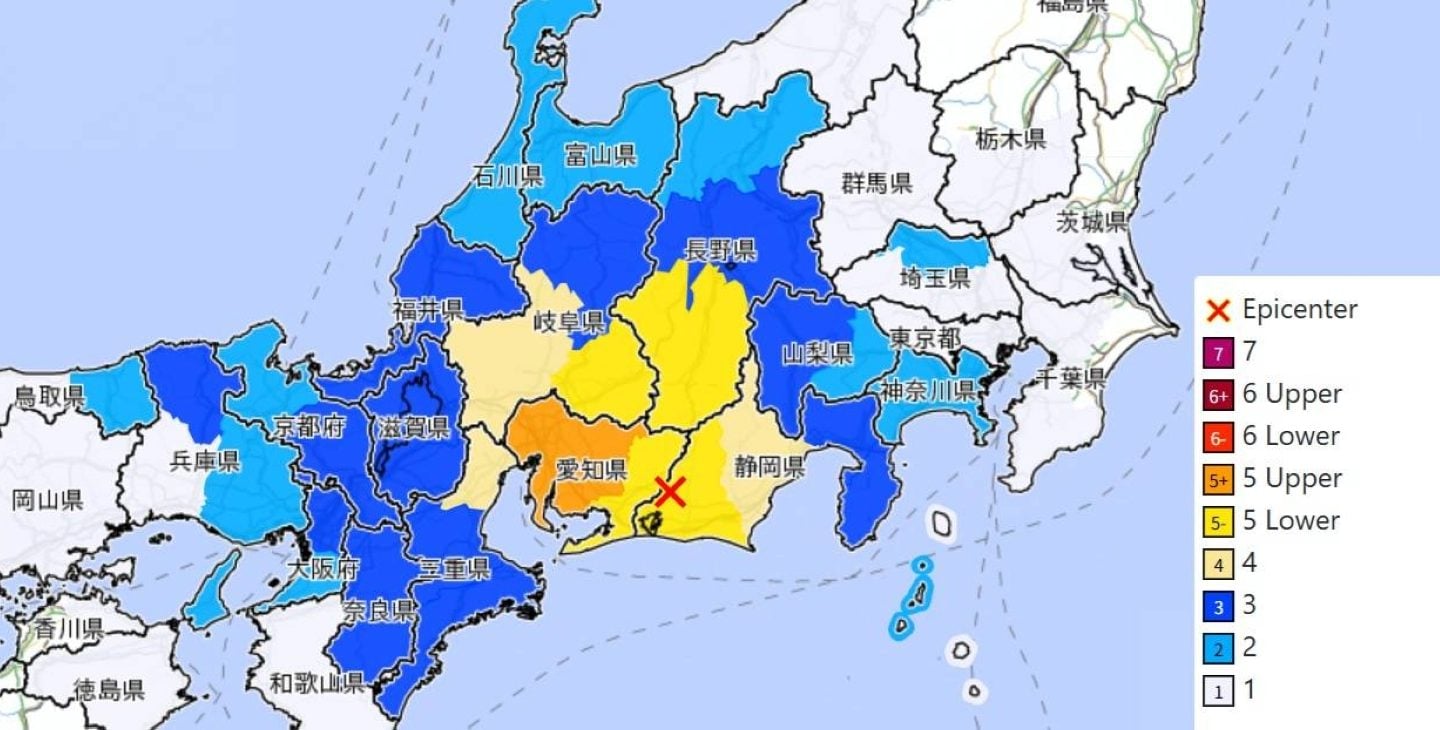
A magnitude 5.7 earthquake struck central Japan early Sunday, injuring more than 20 people, shattering storefront glass, and triggering temporary rail delays across the region. The tremor struck at 1:04 a.m. local time at a depth of about 40 kilometers with its epicenter in western Shizuoka Prefecture, according to the Japan Meteorological Agency.
Central Japan Shaken by Overnight Tremor and Aftershocks
The strong shaking was felt across a wide area of central Japan, though it did not reach Tokyo. The Japan Meteorological Agency recorded an upper 5 on Japan’s seven-level seismic intensity scale in Chita City, Aichi Prefecture, marking the first time jolts of that scale have been observed in Aichi since March 1997. Neighboring Aichi, Shizuoka, Gifu, and Nagano prefectures registered a lower 5 intensity. Japanese seismologists put the magnitude at 5.7, whilst the US Geological Survey put it at 5.5. A separate 4.3-magnitude quake struck the Kumamoto region at 10:53 a.m. Sunday, with no immediate reports of serious damage or injuries from that second tremor.
While authorities confirmed no tsunami warning was issued, the seismic activity disrupted public infrastructure and sent residents fleeing buildings in the middle of the night. Japanese television broadcasts showed shattered shop windows and aisles of books spilled across floors in local stores. In Toyota City, a man in his 40s and a woman in her 80s fell and hit their heads while evacuating during the tremors, though both were conscious when taken to the hospital.
Injuries and Local Disruption Across Aichi and Shizuoka
Local authorities and emergency services reported at least 22 to 25 injuries across Aichi and Shizuoka prefectures. Fire departments across Aichi Prefecture reported at least 16 people injured in the prefecture. In Shizuoka, several women sought emergency care, including a woman in her nineties who injured her shoulder after falling from her bed. In Osaka, located far to the west where the quake was also felt, a foreign resident fell from a second-floor apartment when the shaking startled them.
Utility crews also responded to localized impacts. Water supplies were cut off in parts of Aichi, where authorities received reports of water gushing from manholes. Shattered windows were observed at a car dealer in Toyohashi and merchandise dropped from shelves at a large bookstore in Toyota.
Rail Services Restored After Safety Inspections
Railway operators implemented precautionary speed restrictions and temporary suspensions following the seismic activity. JR Central placed the Tokaido Shinkansen bullet train line under reduced speed rules between Shizuoka and Gifu-Hashima stations while engineers inspected tracks and signaling equipment.
The restrictions affected 29 Shinkansen services, producing delays of up to 52 minutes and disrupting travel for approximately 17,000 passengers between Tokyo, Nagoya, Kyoto, and Osaka. Following completed safety checks, normal operating speeds were restored across the entire Tokaido Shinkansen route at 8:57 a.m. Regional networks, including Nagoya’s municipal subway lines and Meitetsu services, progressively resumed normal operations through the morning hours, with Meitetsu restoring services across its entire network by 9:15 a.m.

Meteorologists Urge Vigilance for Aftershocks and Mudslides
Meteorological officials urged residents in the affected prefectures to remain vigilant for strong aftershocks over the coming week, particularly during the next two to three days.
Please be on the lookout for mudslides, falling rocks and the possible effects from rainfall,
Ayataka Ebita, Japan Meteorological Agency official
Agency representatives addressed questions regarding the Nankai Trough, an underwater trench where two major tectonic plates meet beneath parts of Japan and where scientists monitor conditions for a potential megaquake. The Meteorological Agency held a press conference following the earthquake to brief reporters on seismic conditions and ongoing monitoring.