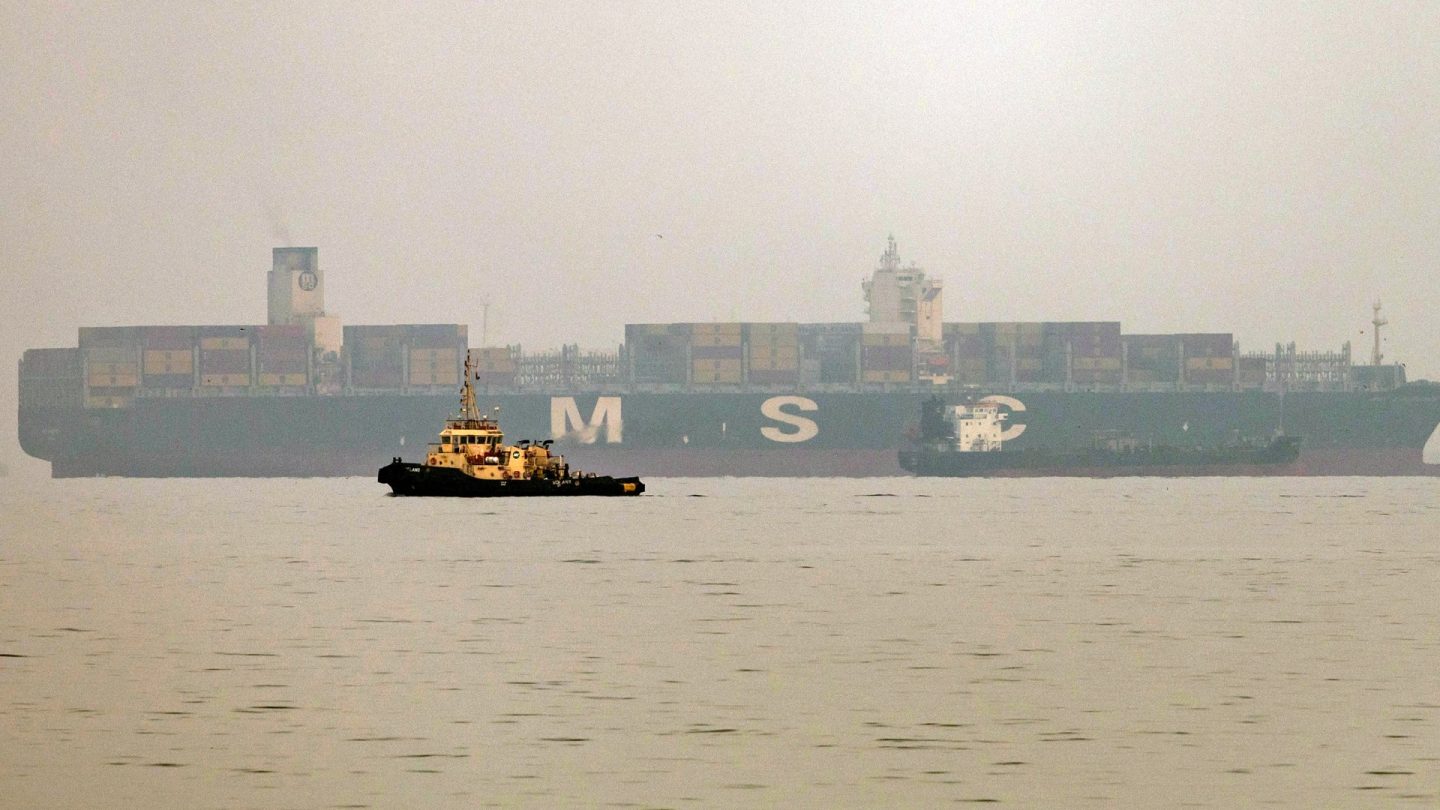
Dozens of vessels have been attacked in or near the Strait of Hormuz this October as Iran and the United States trade conflicting claims of control over the vital energy waterway.
Escalating Attacks and Divergent Security Claims
The security situation in the Strait of Hormuz has deteriorated sharply this month, with the United Kingdom Maritime Trade Operations (UKMTO) recording 12 attacks on commercial vessels in the week ending October 16 alone. These incidents, which included oil tankers and container ships, represent the highest weekly strike rate since the start of the U.S.-Iran conflict on February 28, 2026.
Despite the surge in violence, U.S. Central Command (CENTCOM) maintains that its naval presence ensures the passage remains viable. Admiral Brad Cooper, the CENTCOM chief, stated in a video message that 400 ships and 100 million barrels of oil successfully transited the waterway during the second week of October. Let me be clear: The Strait of Hormuz is controlled by the United States and our regional partners, not Iran,
Cooper said, characterizing the attacks as a sign of desperation
by the Islamic Revolutionary Guard Corps (IRGC).
🇮🇷🇺🇸 The IRGC says its doctrine is now "offensive and asymmetrical" and it will "invade" any country that attacks it, then brags that Hormuz will decide Trump's midtermsThe spokesman's claim is that Iran used to promise a response and now promises an attack designed so the… pic.twitter.com/yD8XjcsXYN
The Disputed Status of Sea Mines
A central point of contention involves the use of naval mines, which Tehran claims have disabled multiple tankers in recent days. On October 20, the IRGC reported that a supertanker caught fire after striking a mine while traversing an unauthorized
southern route. However, these claims have faced significant skepticism from international monitors. The IMO has rated the threat level in the region as SEVERE
but noted there was no substantiation
for the specific IRGC reports of mine strikes.
The U.S. military has previously asserted that it cleared more than 90 percent of Iran’s inventory of naval mines earlier this year. Martin Kelly, CEO of Orbital Risk Intelligence, noted that Tehran has evolved its strategy, increasingly targeting vessels near the coasts of Gulf Arab states. This shift has forced commercial operators to weigh the high costs of transit against the risk of attack, with war-risk insurance premiums for the region climbing significantly.
⭕️ NEW: Middle East oil exports appear to have surpassed prewar levels despite escalating attacks on tankers in the Strait of Hormuz, according to Kpler data cited by the Wall Street Journal.Regional oil shipments averaged more than 24 million barrels per day in the week… pic.twitter.com/dyf5Q4AZnL
Seafarer Safety and the IMO Warning
The human cost of the conflict continues to mount, with approximately 6,000 seafarers currently stranded in the vicinity of the strait. Arsenio Dominguez, Secretary-General of the International Maritime Organization (IMO), warned Sunday that the waterway is not open for business in the way that it was before the conflict started,
urging operators to avoid the area until safety guarantees can be established. Dominguez emphasized that the organization’s role is to prepare for a resumption of normal operations, but stressed that the root causes are addressed and those are beyond IMO.
Adding to the friction, Iran submitted a formal complaint to the IMO, alleging that U.S. naval forces were misusing VHF Channel 16—an international distress frequency—to intimidate Iranian crews and urge them to abandon their vessels. CENTCOM denied these claims, stating that its blockade enforcement is professionally communicated
and that vessels refusing to comply receive multiple warnings.

Diplomatic Proposals and Future Risks
Negotiations to resolve the maritime impasse remain stalled, though Iranian Foreign Minister Abbas Araghchi stated that Tehran has submitted a proposal via Qatar. This proposal outlines conditions under which the strait could reopen and normal traffic resume within seven days. However, the U.S. has not agreed to the terms, and analysts expect the volatility to persist at least until after the U.S. midterm elections on November 3. Until then, commercial shipping remains caught in a high-stakes standoff, with the volume of oil flowing through the strait currently estimated at roughly 12 million barrels per day—a significant decline from the pre-war baseline of 17 million barrels.
=== END ARTICLE >
"Iran has recently begun using more missiles, rather than drones, to hit vessels, the shipping and maritime security officials said. Infrared-guided missiles tend to steer towards hotter parts of the ship, and often have larger explosive payloads than drones."…
More on Strait of Hormuz
🚨🇮🇷 Iran says seven vessels have been STRUCK and threatens more to comeFour ships involved in oil transfers caught fire in the Arabian Gulf after being tracked by Iranian forces.Three additional vessels hit sea mines near the Strait of Hormuz.The IRGC is now warning the… pic.twitter.com/FaH8SYnqBt