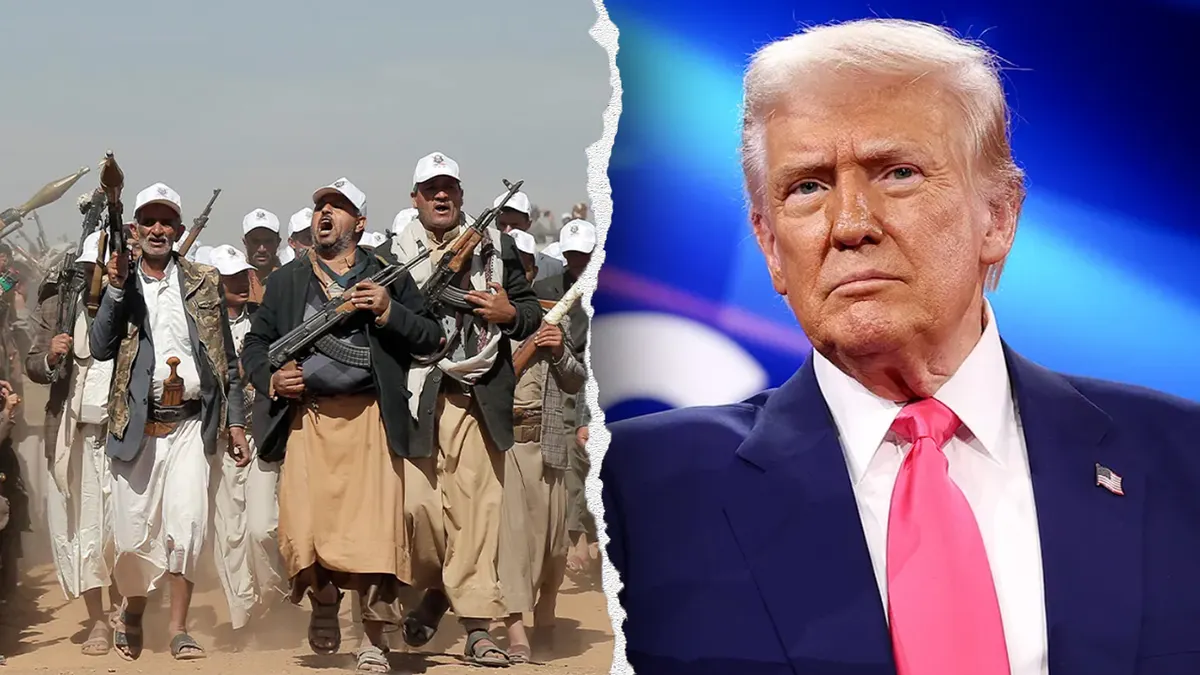
President Donald Trump has announced a peace plan requiring Hamas to disarm and Israel to withdraw from Gaza. While Hamas has agreed to the deal, the Israeli government maintains that no withdrawal will occur until the militant group is fully and verifiably disarmed.
The proposal, overseen by the Trump-established Board of Peace, seeks to end the war that began after the October 7, 2023, attacks. It introduces a phased transition of power and security, moving away from Israeli military control toward a new Palestinian administration. However, the path to implementation is fraught with a dilemma: Hamas demands an Israeli withdrawal as a precondition for disarmament, while Israel refuses to move until the weapons are gone.
The National Committee for the Administration of Gaza and the Disarmament Timeline
Central to the plan is the creation of the National Committee for the Administration of Gaza (NCAG), a body described as transitional, technocratic, and apolitical. Unlike the Palestinian Authority, the NCAG is intended to be a new administration built almost from scratch.

The disarmament process is structured in stages to manage the risk of collapse. The first step involves Hamas police transferring small arms to a new police force currently being trained outside Gaza by an International Stabilization Force (ISF).
The more contentious phase involves the Qassam brigades, Hamas’s military wing. The decommissioning of heavy weapons, production sites, and tunnels is expected to be a gradual, sequential, and time-bound
process.
| Phase | Action | Responsible Entity |
|---|---|---|
| Initial Security | Transfer of small arms | Hamas Police to ISF-trained police |
| Governance | Assumption of civilian duties | National Committee for the Administration of Gaza (NCAG) |
| Heavy Disarmament | Decommissioning tunnels/heavy weapons | Interim Palestinian Government |
| Final Withdrawal | Full exit from the territory | Israeli Defense Forces (IDF) |
Israeli Objections and the Yellow Line
The Israeli government has reacted with significant caution and internal friction. Prime Minister Benjamin Netanyahu has largely remained silent on the deal, but his office has communicated concerns to the U.S. regarding the proposed framework. The friction is most evident regarding the “Yellow Line,” the boundary separating areas still controlled by Hamas from those held by Israel.
The Board of Peace recently published text suggesting a gradual Israeli withdrawal. This sparked an immediate backlash from Netanyahu’s office and right-wing ministers. Bezalel Smotrich, the Minister of Finance, claimed the published text was completely different from what was presented to the security cabinet and demanded an immediate new vote on the Gaza plan.
An Israeli official reiterated that there would be no withdrawal of the IDF from the current Yellow Line unless Hamas underwent a genuine disarmament.
This stance creates a deadlock. While President Trump has called the agreement a great breakthrough
, the Israeli security establishment views the sequence of events as a security risk. Even if a withdrawal occurs under the plan, Israel intends to maintain control over significant portions of Gaza under the terms of the October ceasefire.
Financial Stakes and Regional Tensions
The transition is not merely military but financial. The text of the deal mandates that the NCAG conduct a comprehensive audit of Gaza’s financial affairs.

Outside the diplomatic halls, the situation on the ground remains volatile. Egypt, Qatar, and Turkey recently issued a joint statement condemning continued Israeli violations in the strip. This followed airstrikes on a Sunday that reportedly killed at least 19 people. The tripartite statement emphasized that targeting health facilities and killing civilians, including women and children, constitutes a flagrant violation of international law.
The regional dimension also extends to Tehran. President Trump has linked the success of the disarmament plan to his broader diplomatic efforts with Iran, suggesting that the willingness of Hamas to negotiate is a reflection of that pressure.

Despite the optimism from the White House, experts suggest the political cost for Netanyahu may be too high. Neil Quilliam of the Chatham House think tank noted that with October elections approaching, Netanyahu faces a reelection battle where several cabinet ministers are already advising against the deal. For Netanyahu, agreeing to a withdrawal before total disarmament could effectively scupper his chances of reelection
.
The immediate future of the plan now rests on whether the International Verification Committee (IVC) can certify that both parties have met their preliminary commitments. Until then, the “Roadmap” remains a document of intent rather than a functioning reality on the ground.