Net migration to the UK has fallen to 77,000 in the year ending June 2026, according to provisional Office for National Statistics estimates.
How Net Migration Fell Below 80,000
Net migration in the UK fell to 77,000, significantly decreasing from 204,000 in the year ending June 2025.
The latest provisional figures show that international net migration dropped by more than 60% over a 12-month period. It fell from 204,000 in the year ending June 2025.
That trajectory marks a steep decline from the peak of 944,000 recorded in the year ending March 2023. Total long-term immigration fell by 17% to 738,000 arrivals.
Long-term emigration remained at 661,000 departures. The contraction was driven primarily by fewer non-European Union citizens arriving in the country.
Over the course of the year, total immigration dropped by 17%. Asylum fell by 22%, family unification decreased by 30%, study dropped by 11%, and work declined by 25%.
Officials pointed to policy changes introduced across 2024 and 2025 as the primary catalysts for the drop. Those policies included restrictions on care workers, higher salary thresholds, and stricter compliance requirements for universities sponsoring international students.
Net migration among nationals from outside the EU, Norway and Switzerland was estimated at 258,000 in the year to June 2026. That figure was down from 379,000 a year earlier.
Asylum Claims Force Hotel Closures
Home Office data for the year ending September 2026 shows that asylum claims fell to 74,000. That represented a 33% drop compared to the previous year.
The department said the decline was due to faster decision-making and fewer arrivals through unauthorized entry routes, such as small boats crossing the English Channel.

Small boat arrivals dropped to 26,581 in the year ending September 2026. This is the lowest annual total recorded since 2021.
The number of initial decisions pending fell by 49% to 41,000. As a direct result, the temporary use of accommodation dropped.
The Home Office reported that 52 hotels dedicated to housing asylum seekers had been emptied over the year. By the conclusion of September 2026, the temporary lodging of asylum seekers in UK hotels had decreased 64% from the 36,273 recorded a year prior, settling at a total of 13,185.
An additional 4,100 people were placed in alternative non-hotel facilities, such as former military installations including Crowborough Training Camp in East Sussex and Wethersfield in Essex, as indicated by Home Office records.
“We have brought net migration to 77,000, down 92% from its peak under the Conservatives. Where they failed, we have delivered for the British people.”
Shabana Mahmood, Home Secretary
Population Growth Nears Halt Due to Emigration
The dramatic slowdown in migration brought overall UK population growth nearly to a halt. Provisional Office for National Statistics figures estimate the total population reached 69.56 million in the year to June 2026.
That was an annual increase of just 80,000 people, or 0.12%. That rate is the lowest annual growth recorded since 1983.
Natural change contributed marginally, with births exceeding deaths by about 3,000. Meanwhile, emigration among non-citizens remained high as previous arrivals departed.

Researchers at the Migration Observatory at the University of Oxford said that past high immigration periods naturally produce higher subsequent departures as migrants leave within five years of arrival.
“Immigration has come down, but emigration is still quite high. That doesn’t last forever,” said Dr Madeleine Sumption, director of the Migration Observatory at the University of Oxford.
Ministers Cite Border Enforcement Visa Restrictions
The milestone sparked immediate political debate over credit for the falling numbers. Government ministers said recent border enforcement and visa restrictions drove the impact.
Opposition figures pointed to changes initiated during the final months of the previous Conservative administration. Back in 2010, Conservative prime minister David Cameron initially set a target to bring net migration down below one hundred thousand. Neither he nor the leaders who followed him managed to achieve it.
Employers and economists also warned about potential trade-offs. Lower asylum costs are expected to ease pressures on public finances.
Industry representatives said that sharp reductions in skilled work visas could create labor shortages in sectors that rely heavily on international recruitment. Vialto partner and solicitor Lyudmyla Davies suggested focusing on the long-term economic contribution that people make rather than relying solely on salary levels.
Home Secretary Considers Migration Figure Elevated
When questioned by the Home Affairs Select Committee in February 2026 about whether net migration might drop to that level by the end of the year, the Home Secretary replied that she still considered the figure elevated regardless of the metric used.
Government figures showed there were 31,000 people illegally arriving in the year ending September 2026. That represented a drop of more than 20,000 on the previous year’s total of 51,244.
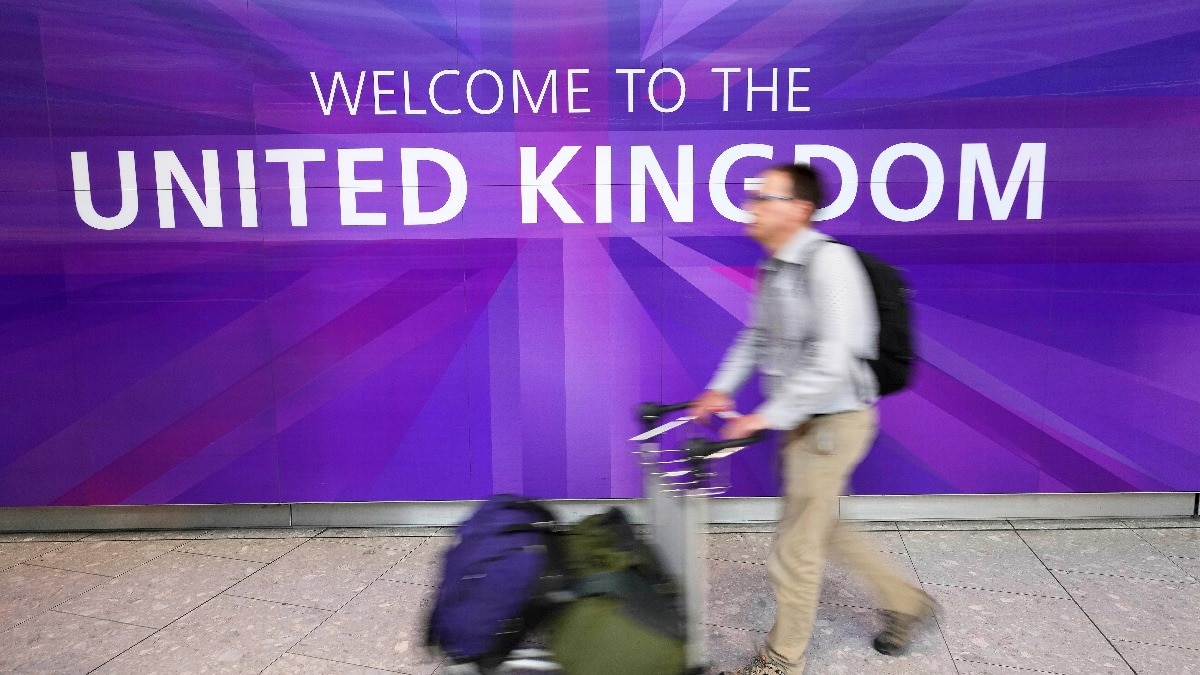
According to projections from the Office for Budget Responsibility, net migration is set to climb again starting in 2028. It will level off at 230,000 annually through 2031 and 2032.
Wider Economic and Demographic Impacts
Analysts have cautioned that reduced immigration risks shrinking the British labor force, hindering economic expansion, and lowering tax collections. Citing calculations from Oxford Economics, Reuters said that if net migration were to drop to zero over an extended period, the UK’s gross domestic product could lag its baseline projection by upwards of 15% come 2060.
At the same time, study-related arrivals stood at 257,000. That total was down 11% from 290,000 a year earlier, as reported by India Today.
The Migration Observatory at the University of Oxford reported that approvals for Indefinite Leave to Remain hit a historic high of 241,000 during the twelve months leading up to September 2026. Grants of British citizenship totaled 265,000, nearing the record highs seen in 2024.
Public Attitudes and Historical Comparisons
A survey conducted by King’s College London and highlighted by British Future revealed that just 4% of the public recognized that immigration had decreased in 2025. That was a period during which net migration dropped by nearly half, moving from 331,000 down to 171,000.
Back in 1997, net migration was recorded at 48,000. The Office for National Statistics collected data from the International Passenger Survey, which involved surveying people arriving at UK seaports, airports and the Channel Tunnel, as detailed in the ONS blog.
Operating as the executive office of the UK Statistics Authority, the Office for National Statistics holds responsibility for collecting and publishing statistics covering the United Kingdom’s economy, population, and society. Its statutory scope spans a wide range of information used for social and economic policy-making, relying on methods including a decennial population census, sample surveys, and the analysis of data generated by businesses and organizations.
Emigration has risen to 661,000, while net migration has fallen to 77,000, according to figures reported by CWIBC.