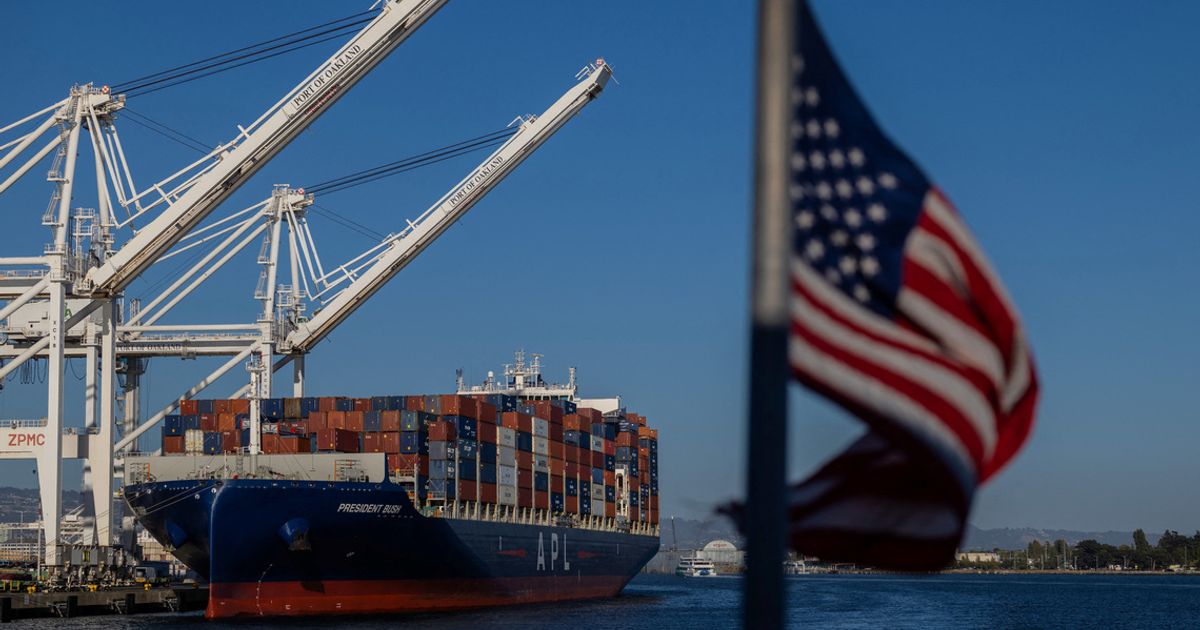
- The Trump administration proposed new tariffs on 14 major trading partners on Nov 25, 2026, following an eight-month Section 301 investigation.
- Singapore faces a capped tariff rate of 10 per cent, which U.S. officials said is consistent with previously negotiated trade agreements.
The Office of the United States Trade Representative announced the proposed duties after completing an eight-month unfair trade practices probe into 16 trading partners, including close allies such as Japan, South Korea, and the European Union.
Mexico and Norway were also part of the investigation, but the administration excluded them from this round because their probes remain ongoing. The action follows the striking down in February of sweeping global tariffs by the US Supreme Court.
For decades, foreign governments have used a combination of industrial subsidies, wage suppression, export targeting plans, non-market economy inputs, and other market-distorting policies to boost domestic production untethered from market demand. President Trump is proposing… pic.twitter.com/XhOntihmqS
U.S. Targets Industrial Overcapacity With Section 301 Levies
The administration justified the levies by arguing that foreign governments subsidize their domestic industries. These actions promote manufacturing output divorced from market demand and flood global markets with low-cost goods that undercut American producers. The duties draw on Section 301 of the Trade Act of 1974.
U.S. Trade Representative Jamieson Greer said the duties are designed to push back against industrial approaches reliant on manufacturing focus, labor and wage suppression, financial assistance, non-market inputs, and other distorting tactics that weaken the domestic manufacturing sector. “The administration's use of Section 301 is cynical,” Gregory Shaffer, professor of international law at the Georgetown University Law Center, told Al Jazeera.
The Trump administration has unveiled its latest proposed tariff hikes, continuing the effort to rebuild the IEEPA tariffs that the Supreme Court struck down — and doing so after a midterm rout fueled by affordability concerns. https://t.co/PHYewSCkc6
Exit polls conducted by SSRS on behalf of a consortium of US media outlets showed that 21 per cent of voters said tariff policies had helped, while 12 per cent found no difference. Yale University’s Budget Lab estimated earlier in November that tariffs raised US household costs by $900 annually.
Singapore and Malaysia Face Capped Rates Under New Trade Pacts
Tariff levels vary across the 14 targeted economies, depending on existing trade agreements and negotiation outcomes. Singapore, Malaysia, and several other partners received capped rates tied to prior trade deals. Regular most-favoured-nation duties, which average 15.62 percent on Bangladeshi goods, would remain in place.
FAST THINKING: On Wednesday, the Trump administration unveiled new tariffs on more than a dozen trading partners. Will the tariffs stick, and how could they reshape US trade relations? Our experts weigh in:https://t.co/t3WBd4mOhf
“obtain the elimination of the acts, policies, and practices,” the USTR said.
U.S. Trade Representative Jamieson Greer told CNBC that the proposed caps align with trade pacts negotiated over the past year that lowered barriers to American exports. For China, the 20 per cent duty adds to roughly 25 per cent in duties imposed during Trump’s first term. This complies with a trade truce expiring on Jan 10, 2027.
If that truce unravels, China’s rate could rise to 40 per cent. A senior US official said that the tariffs would not apply to about US$30 billion worth of Chinese imports that the US is considering for tariff reductions under a bilateral process.
Lawmakers Spar Over Economic Impact and Congressional Control
In the wake of the party’s disappointing midterm results, several congressional Republicans swiftly pointed the finger at the president’s tariff agenda, with Senators Todd Young and Ted Cruz publicly voicing their reservations.

Opponents argued that import levies function as a tax on American buyers while driving up inflation and holding back wage growth. This led them to demand that lawmakers take back control of customs tariffs.
As Finance Committee Chair, one lawmaker vowed to use every tool at disposal to end the trade measures, though halting them would not be easy due to bipartisan support for countering excess capacity centered in China.
Nathaniel Halvorson, a former USTR official who is now a trade partner at Baker McKenzie, said that undoing the levies could also cause trade deals to collapse. That leaves Democrats to consider whether they want to undo a settlement working for US interests.
Trading Partners and Global Supply Chains React to Tariffs
Norway praised the decision after being excluded from the proposals while investigations continue. A Norwegian representative stated the country had been clear throughout the process that its policies do not contribute to unfair advantages.
In Bangladesh, Abdur Razzaque, chairman of the Dhaka-based think tank Research and Policy Integration for Development, responded to the findings by noting that energy tariffs were eroding the country’s competitiveness in global markets.
For Apple, the tariffs introduce a new problem to work around by hitting imports from manufacturing countries including China and India. Andrew Siciliano, the global and US head of trade and customs in KPMG’s tax division, said that modeling, scenario planning, and evaluating potential exclusions and refunds are paramount as businesses prepare for what comes next.
Markets and Central Bankers Assess Tariff Inflation Risks
Economists and market analysts warned that the new tariffs could reverse a recent cooling of tariff-driven inflation just as price pressures were beginning to wane. U.S. stock markets reacted to the announcement. The tech-heavy Nasdaq Composite dropped 0.6 percent, and the S&P 500 closed down 0.25 percent.
Max Walter, a consumer goods and retail director at the consultancy Simon-Kucher, said that if the proposed tariffs take effect, it could take several months before Americans start noticing price increases. Minutes from the Federal Open Market Committee’s October meeting revealed that central bank officials expected inflation to remain elevated in the short term while declining over time in part thanks to the waning of tariff-related price effects.
The proposed duties must undergo a public notice-and-comment process and hearings before taking effect. Administration officials indicated that the earliest the new tariffs are expected to be implemented is January. A senior US official said that the administration does not expect the new trade measures to create tension or rancor at the upcoming G20 summit in December.