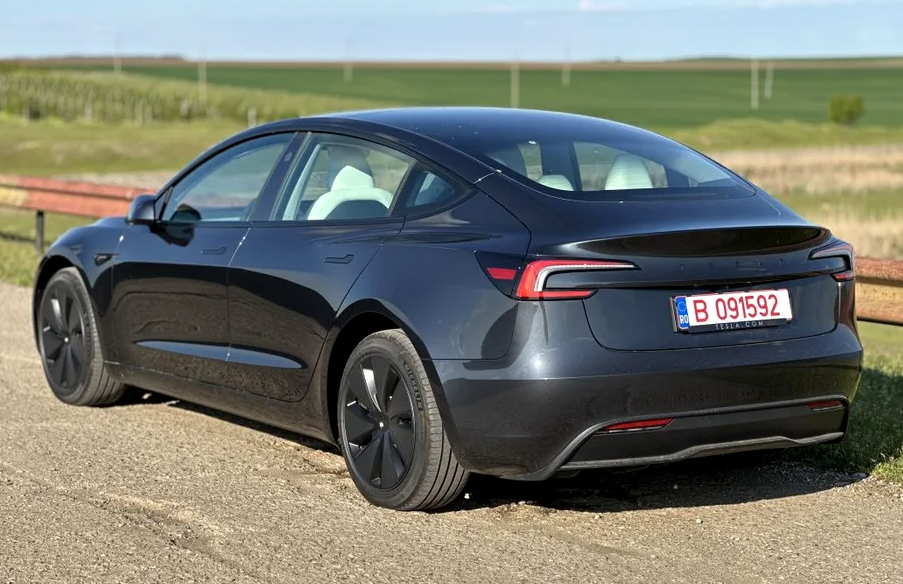
Tesla’s second-quarter net income plummeted 45% to $1.48 billion, even as revenue rose 2% to $25.5 billion. Despite aggressive price cuts and low-interest financing, the company faced weakening demand for its aging product lineup, delivering 443,956 vehicles—a 4.8% decline from the same period last year, according to AP News.
A Divergence Between Revenue and Profit
Tesla’s financial results for the second quarter present a paradox of growth and contraction. While the Austin-based automaker managed to beat Wall Street revenue estimates of $24.54 billion by reaching $25.5 billion, its bottom line suffered significantly. Net income fell to $1.48 billion, a steep drop from the $2.7 billion reported during the same quarter in 2023. This marks the second consecutive quarter of declining net income for the company.
The discrepancy between rising revenue and falling profit highlights the high cost of maintaining market share. To combat softening interest in its vehicles, Tesla implemented price cuts and offered low-interest financing options. However, these incentives failed to drive volume growth. The company sold 443,956 vehicles between April and June, falling short of the 466,140 units sold in the second quarter of 2023. Analysts had expected sales of 436,000, but the reality reflects a broader cooling of demand for Tesla’s current product offerings.
Margins and the Energy Storage Buffer
A critical metric for investors, Tesla’s gross profit margin, continued its downward trend, settling at 18%. This figure stands in stark contrast to the company’s performance in early 2022, when margins peaked at 29.1%. A year ago, the margin was 18.2%.
While the core automotive business faces headwinds, the company’s energy-storage division has emerged as a significant offset. This sector generated just over $3 billion in revenue during the second quarter, effectively doubling the intake from the same period in 2023. This growth in energy storage provided a necessary cushion for the company, which characterized its performance as a record quarterly revenue achievement despite a difficult operating environment.
The Gap in Annual Production Targets
The pace of deliveries has raised questions about the company’s ability to meet its annual goals. In the first half of the year, Tesla sold approximately 831,000 vehicles worldwide. This total remains far behind the more than 1.8 million vehicles that CEO Elon Musk had previously projected for the full year.

Market reaction to these figures was immediate. Shares of Tesla fell about 8% in trading following the earnings report. While the stock had previously recovered from a 40% decline earlier in the year, the latest quarterly performance data has renewed concerns regarding the company’s aging vehicle portfolio and its ability to sustain growth in a competitive electric vehicle market.
Market Valuation and Investor Sentiment
The 52 cents per share earnings reported by Tesla—excluding one-time items—fell short of the 61 cents per share expected by analysts.
Investors are now left to weigh the company’s success in diversifying its revenue streams, particularly through the energy-storage business, against the cooling demand for its primary automotive products. With production figures lagging significantly behind the CEO’s annual guidance, the company’s ability to pivot its product lineup will likely define its financial trajectory for the remainder of the year.
