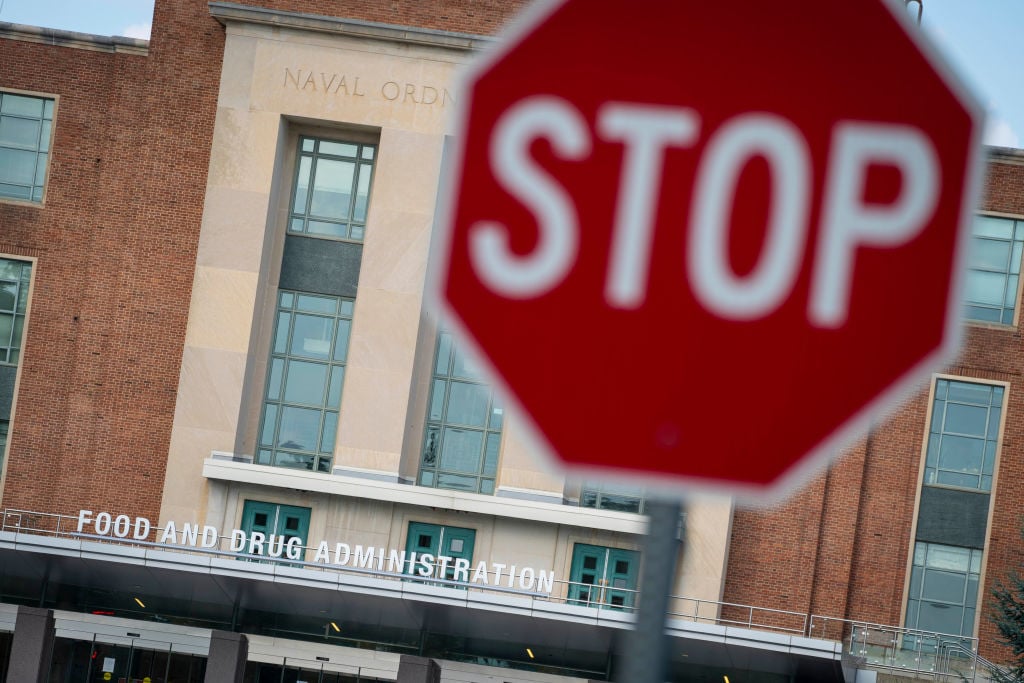
The U.S. Food and Drug Administration issued a complete response letter on Sunday declining to approve Summit Therapeutics’ ivonescimab in combination with platinum-containing chemotherapy for locally advanced or metastatic non-small cell lung cancer.
FDA Rejects Ivonescimab
The regulatory decision derails the immediate U.S. market entry for a novel PD-1 x VEGF bispecific antibody. According to the FDA’s complete response letter, the application could not be approved in its present form because the supporting clinical trial failed to achieve a statistically significant improvement in overall survival.
UA.News reported that the agency said the drug could not be approved because it did not help patients live longer, even though it slowed disease progression. Leerink Partners analysts said in a November 5 note, as cited by FiercePharma, that the bid had been assigned a 40% probability of approval.
The submission relied on data from the global HARMONi Phase III trial involving 438 patients. The study met its progression-free survival endpoint by demonstrating that the treatment significantly delayed disease progression compared to placebo. The agency concluded that this benefit alone did not establish a favorable benefit-risk profile for marketing authorization.
The biologics license application was filed on January 12, 2026, accepted by the FDA on January 29, and assigned a Prescription Drug User Fee Act date of November 14, 2026. Had the agency granted marketing authorization, it would have been the first approval for a PD-1 x VEGF bispecific antibody in the United States. Summit Therapeutics submitted the application for patients with previously treated, epidermal growth factor receptor-mutated non-small cell lung cancer after prior tyrosine kinase inhibitor therapy.
The global, randomized, double-blind Phase III study was designed with two primary endpoints. At the trial’s primary analysis in April 2025, the overall survival data showed a hazard ratio of 0.79 with a p-value of 0.057.
Two subsequent interim analyses produced overall survival hazard ratios of 0.78 in September 2025 and 0.76 in June 2026. Summit argued that the Western cohort overall survival data were immature compared to the China cohort and that continued observation demonstrated a consistent signal of benefit, but the regulator maintained its requirement.
Summit Responds to Decision
We are disappointed for patients and their families awaiting additional treatment options in this setting.
Robert Duggan, chairman and co-CEO of Summit
“With five positive Phase III studies between Summit and Akeso, nothing changes with respect to our ever-growing belief in the opportunity for ivonescimab and our determination to advance ivonescimab’s development,” he said in a company release. BioSpace reported that Mizuho Securities managing director and senior biotech and biopharma Graig Suvannavejh described the asset earlier in the month as the next major backbone of cancer treatment.

Pipeline and Competitors
Outside the United States, ivonescimab received its initial approval for marketing authorization in China in May 2024. Summit is evaluating the investigational therapy across multiple tumor types. Akeso is a partner in these efforts. Trials include colorectal cancer, urothelial carcinoma, and renal cell carcinoma. Ongoing trials such as the HARMONi-3 Phase III study target first-line non-small cell lung cancer.
Several pharmaceutical companies advance programs for PD-(L)1 x VEGF bispecific antibodies. Merck acquired exclusive rights to LaNova Medicines’ LM-299 for $588 million. AstraZeneca made a $2 billion equity investment in Summit Therapeutics on September 28, 2026, while AstraZeneca made a $2 billion equity investment in Summit Therapeutics on September 28, 2026.
Additional candidates moving into global phase 3 trials include Pfizer and 3SBio’s tivunatamig, BioNTech and Bristol Myers Squibb’s pumitamig, Merck’s MK-2010, and AbbVie’s ABBV-1480. These developments occur as Merck’s blockbuster immunotherapy Keytruda generates billions annually ahead of its patent expiration in 2028.
What are the next steps for Summit Therapeutics following the complete response letter?