
North Carolina regulators approved a two-year rate plan for Duke Energy on Monday that will raise residential bills starting in January 2027 while creating a dedicated rate schedule for large data centers.
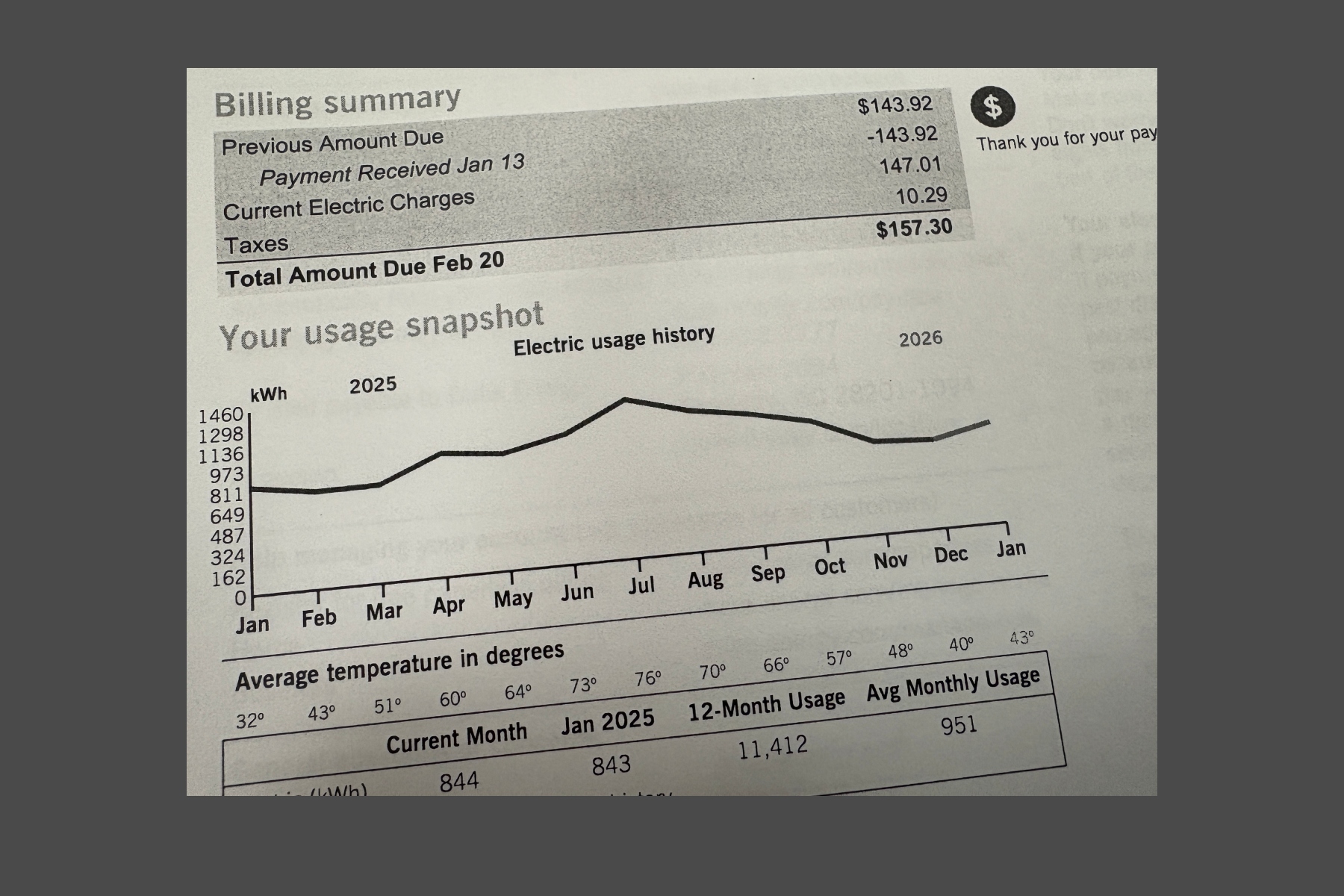
The North Carolina Utilities Commission authorized average annual increases of 3.7% for Duke Energy Carolinas and 3.4% for Duke Energy Progress, with residential customers seeing slightly higher jumps of 4.8% and 4.7% respectively. For a household using 1,000 kilowatt-hours a month, that translates to a $6.53 increase in 2027 and $4.66 in 2028 for Carolinas customers, and $9.62 in 2027 followed by $5.89 in 2028 for Progress customers, according to figures released by Duke and confirmed by the commission.
We listened to our customers and worked closely with stakeholders to find a more cost-effective way forward.
Duke Energy
The approved rates are lower than what Duke originally requested in November 2025. The commission also set a 9.8% return on equity for both utilities, down from the 10.95% Duke initially sought.
Data centers get their own rate class
Regulators established a separate electricity rate schedule for data centers with power demands of at least 50 megawatts. The move comes as artificial intelligence and cloud computing drive unprecedented demand growth across the Carolinas. Between March 2024 and April 2026, Duke signed contracts for 6.7 gigawatts of new capacity in North Carolina and South Carolina, with data centers accounting for 92% of that contracted load.
The new tariff requires large data centers to make upfront payments for dedicated facilities, provide financial security for transmission upgrades, and post collateral against the risk of stranded generation investments. The commission found that Duke’s existing billing structures did not adequately address the financial risks of this expansion, leaving other customers potentially on the hook for infrastructure if data center demand fails to materialize or companies leave prematurely.

Commissioners Floyd McKissick Jr. and John Gajda said they would have preferred applying the large-load tariff to other high-demand customers as well, not just data centers, but joined the majority in approving the decision.
Commissioner Donald van der Vaart dissented, arguing the 9.8% return on equity does not reflect the risk the order shifts from Duke to its customers, and warned that the data center tariff “should not obscure the rate increase this Order approves for every [Duke Energy Progress] customer.” Van der Vaart announced his resignation from the commission two days after issuing the dissent.
Duke must refund customers for delayed upgrades
The orders include several consumer safeguards. Duke must refund customers, with interest, if planned infrastructure upgrades are not completed on time. The utility’s shareholders will also contribute $20 million in new funding to help customers in need.
At public hearings, nearly all customers who testified opposed Duke’s proposed rate increase. Some said they were choosing between paying electric bills and buying groceries or getting medical care. Brooks has lived in the same home since 1995 and has watched her electricity bills climb. She recalls paying about $225 to $250 a month in previous years.

“We've been eating that up and now unfortunately with that spike its obvious that the consumers are going to have to pay all that up front. Very unfortunate,” Alejandro Leon Jr., owner of Olé Sports Bar and Lounge, said.
“I have to figure out whether I'm gonna pay at least a portion of the light bill and still be able to feed my three grandkids,” Brooks said.
North Carolina regulators will officially allow Duke Energy to raise electric rates for its customers starting on Jan. 1, despite pushback. Renee Umsted takes a closer look at the situation and what it means for you.https://t.co/CrNvDo4yTU pic.twitter.com/gZAapgWxPc
Carbon plan approval extends coal, adds gas and nuclear
In a companion decision this week, the commission approved Duke’s latest carbon plan, which guides the utility’s long-term generation mix. In the carbon plan, regulators approved a request by Duke Energy to delay some coal plant retirements until 2040 and green lit an additional 3,841 megawatts of new natural gas generation between 2030 and 2033.
It gives Duke the go ahead to pursue 2,300 megawatts of new solar generation between 2032 and 2034 and to develop up to 2,700 megawatts of additional battery storage.
It approves $440 million in advanced nuclear development costs through 2028 and preserves options to build new nuclear in the coming years. The commission further gave the utility a green light to resume the federal licensing process to build two reactors at a site in South Carolina and add a second to the Shearon Harris plant near Raleigh.
Environmental groups, including the Southern Environmental Law Center and the N.C. Sustainable Energy Association, expressed disappointment with the continued investment in coal and natural gas and what they view as insufficient emphasis on renewable energy sources.
Utilities combine but rates stay separate for now
The two entities will be combined into a single utility as of Jan. 1, but rates will remain separate. Rates will start to blend gradually over time at a pace determined by the NCUC as part of rate cases and rider filings after Jan. 1.
The next billing milestone arrives January 1, 2027, when the approved increases take effect — in the middle of the winter heating season.
Earlier coverage: Bipartisan Bill Would Charge Data Centers Billions for Grid Upgrades