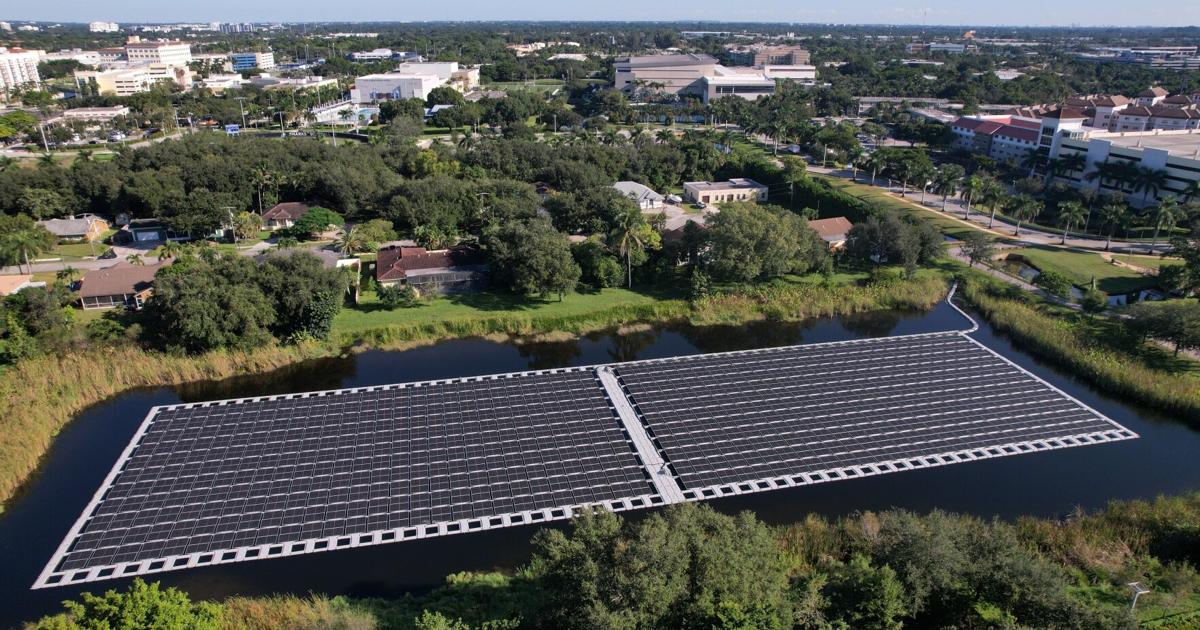
Florida is converting thousands of its stormwater retention ponds into floating solar farms to meet rising electricity demand while navigating the state’s limited available land.
The state’s towns and cities contain an estimated 76,000 stormwater ponds, infrastructure designed to manage runoff from frequent downpours. Researchers at the University of Florida note these ponds account for about 2.7% of the state’s urban land area.
Because these water bodies are already within city limits and “are not being used for anything else,” they provide a strategic opportunity for energy development, said Justin Kramer, director of emerging technologies and data analytics at the Orlando Utilities Commission.
AJ Reisinger, an associate professor at the University of Florida specializing in urban soil and water quality, attributed the prevalence of these ponds to the state’s development history, sandy soil, flat terrain, and heavy rainfall. While the United States has been slower than other regions to adopt this technology, Florida’s specific geography and climate make it a prime candidate for such projects to handle increasing power demands.
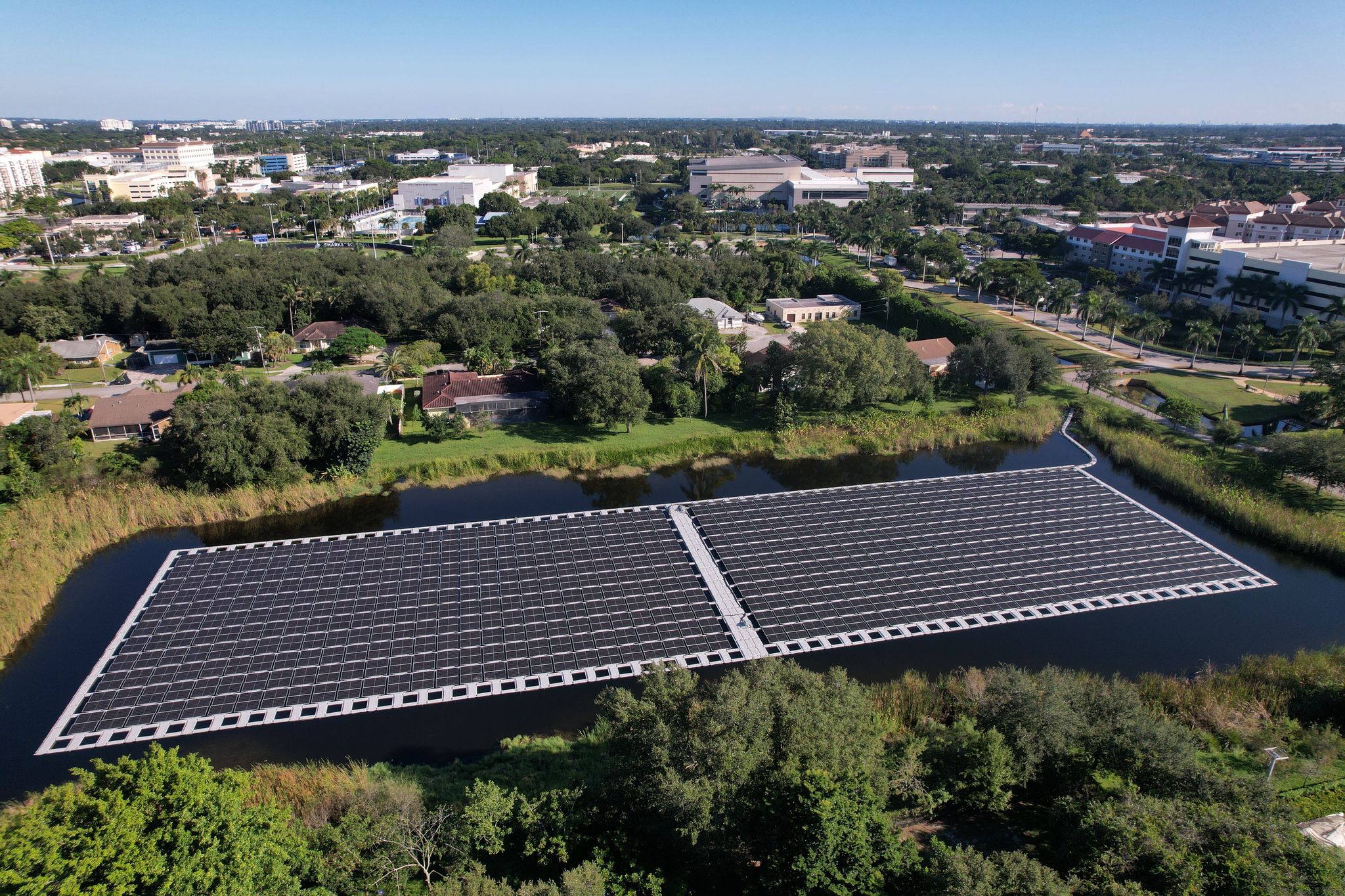
The shift toward floating photovoltaics—solar panels mounted on buoyant, anchored structures—is driven by both falling costs and state-level policy. A law enacted in 2022 explicitly supports the development of floating solar.
Globally, approximately 90% of floating solar capacity is located in Asia, with about half of that total situated in mainland China. Gandhi said that after two decades of development, investors and lenders have gained confidence in the technology because it has proven to be reliable and effective.
In November 2025, the Orlando Utilities Commission launched the Conway Road array, a 2-megawatt system featuring more than 3,400 panels. The commission reports this is the state’s largest floating installation. These floating systems offer a performance advantage over traditional ground-mounted setups: the water’s cooling effect allows the panels to produce about 5% to 8% more power than a typical rooftop array, Kramer said.
D3Energy, which has more than 15 floating solar projects in Florida, reports that none of its systems sustained structural damage during Hurricane Milton in 2024. “And they’re designed for the wind speeds that we have to deal with,” the company said.
D3Energy says it holds exclusive rights to develop floating solar systems on eligible Florida Department of Transportation stormwater ponds located within state highway rights-of-way, with estimates suggesting those systems could generate more than 1 gigawatt of energy.
While these ponds are engineered infrastructure, they host complex ecosystems including algae, plants, bacteria, insects, fish, and birds. The installation of solar arrays can limit the amount of sunlight reaching the water, a factor researchers are currently studying to understand the long-term ecological impact.
As the technology gains traction, scientists are evaluating whether there are specific thresholds for coverage that might fundamentally alter the pond’s natural character. As one researcher noted, the core question for the future of the technology is at what point the system’s nature is dramatically changed and at what levels the industry should stop covering the water.