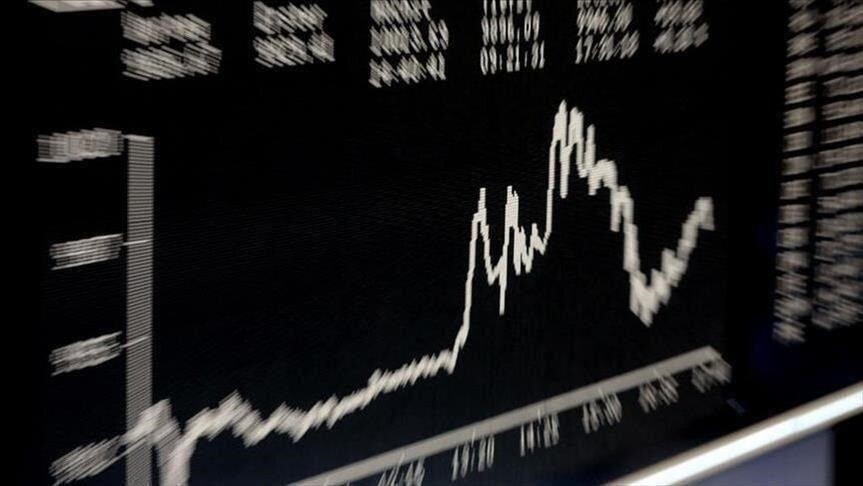
French bond yields climbed above 4.9 percent for the first time since 2002 as nationwide protests over the cost of living collided with severe political and fiscal pressures, pushing the euro lower and tightening borrowing costs across Europe.
Financial markets across Europe faced renewed strain as escalating street protests in France combined with long-running public debt pressures to rattle investor confidence. The 10-year French government bond yield climbed past 4.9 percent during trading, touching levels not seen since 2002, Anadolu Ajansı reported. The surge in borrowing costs followed a volatile weekend of demonstrations against high fuel prices, living expenses, and government economic policies. Concurrently, the US dollar gained ground as the US dollar index, which tracks the American currency against a basket including the yen and the euro, rose 0.17 percent to 101.97 points.
The unrest forced authorities to implement nighttime curfews across targeted districts in cities including Paris, Lyon, Lille, and Marseille, following clashes that resulted in thousands of detentions and hundreds of injuries among police, gendarmes, and firefighters. While the demonstrations initially gained momentum from public grievances over fuel prices and energy costs, they have intensified pressure on President Emmanuel Macron’s administration as it struggles to contain a widening budget deficit. Amid these tensions, the Japanese yen declined 0.35 percent against the American currency to 158.49 yen per dollar.

Euro Slips as French Debt Yields Hit Record High
The compounding domestic turmoil weighed heavily on the common currency, driving the euro lower against major counterparts and pushing sovereign debt spreads wider. The yield premium demanded by investors to hold French debt over benchmark German bunds widened to roughly 147 basis points, marking its highest point since the European debt crisis of 2011 and 2012, according to network reporting. Equity markets reflected the defensive mood, with France’s CAC 40 index slipping while broader European indices also retreated, as the pan-European STOXX 600 index fell 0.14 percent to 638.64 points.
Behind the market jitters lies a formidable fiscal challenge.
Economic Fallout and Potential Spillover Across the Eurozone
Advisory firms and market analysts warn that the turmoil risks trapping the eurozone’s second-largest economy in a difficult feedback loop. Oxford Economics cautioned in client notes that a severe bond market shock could tip both France and Italy into a recession by 2027, though an acute debt crisis remains outside its baseline expectations. The Canadian annual inflation rate rose to 3.1 percent in September, coming in slightly below economists' expectations.
Oxford Economics noted that things could get much worse, but they won't be quite as bad as they were in the past decade.

Traders Weigh Political Risks Against Global Monetary Stances
While European policymakers prepare for upcoming interest rate decisions, currency traders are weighing European political risks against shifting monetary stances in the United States. The US dollar found support from a rebound in artificial intelligence-related equities following a sharp sell-off earlier in the week, even as Federal Reserve officials signaled patience regarding further borrowing cost hikes.
In foreign exchange trading, the euro steadied near 1.1212 dollars as authorities began easing overnight restrictions in select French cities, though traders anticipate continued volatility. Money market pricing points to an 85 percent probability of a European Central Bank interest rate increase in December, leaving the trajectory of the common currency closely tied to how quickly Paris can restore fiscal stability and calm bond markets. At the same time, the Australian dollar rose 0.2 percent to 0.6996 dollars, while the New Zealand dollar increased 0.5 percent to 0.5689 dollars.