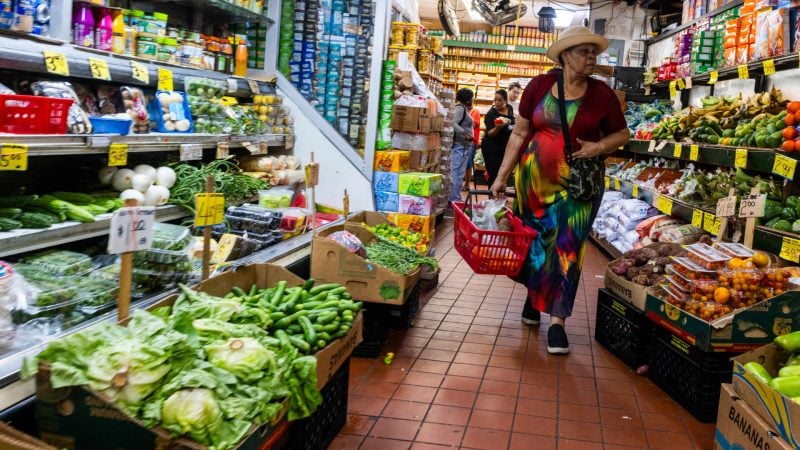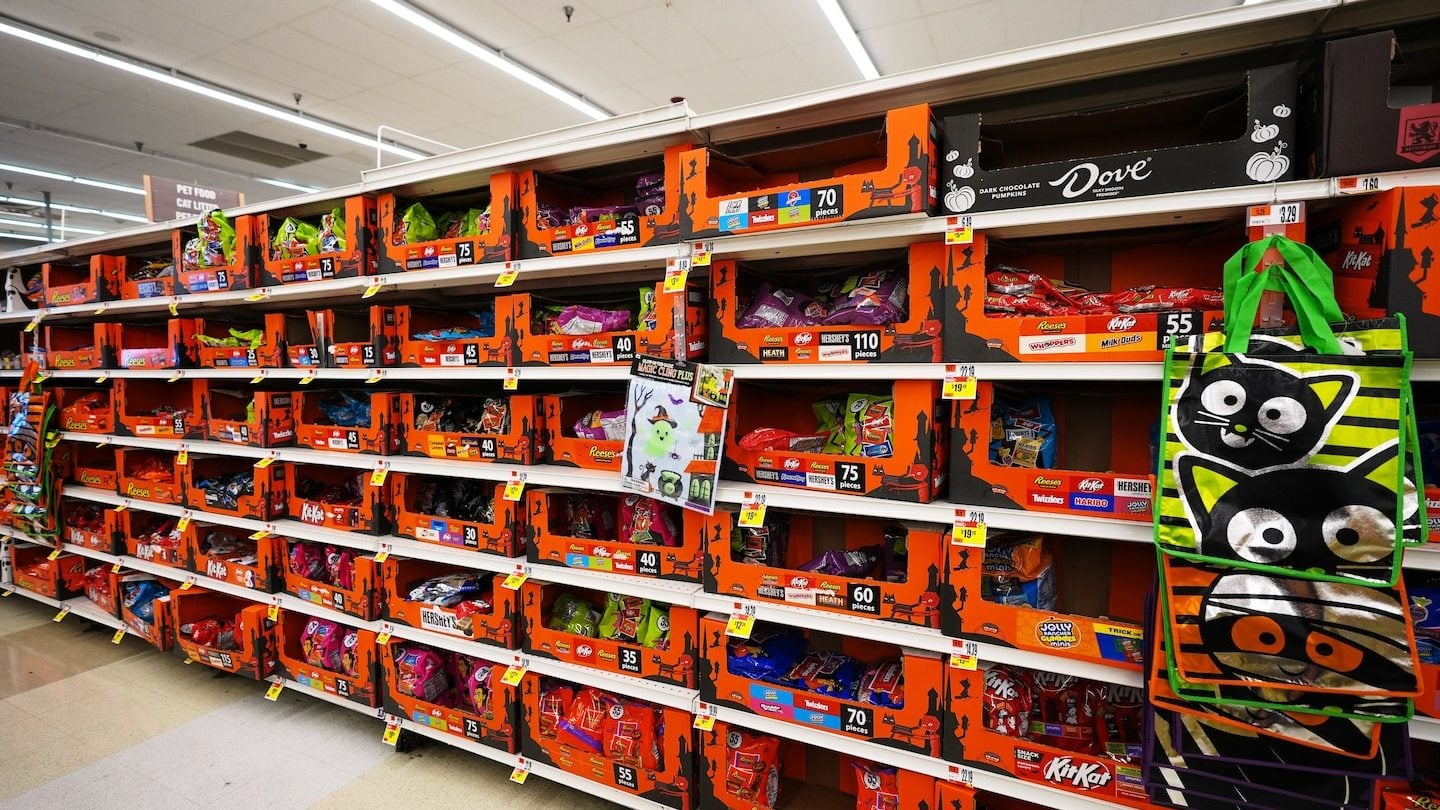
Shoppers hunting for Halloween candy face a holiday season with prices climbing 7.7 percent over the past year due to elevated expenses and corporate pricing strategies.
The scariest part of this year’s spooky season is not the haunted houses or the local costume shops, but the grocery store checkout lane. Americans are on track to spend a record $13.5 billion on Halloween festivities, with consumers forecast to shell out $4.1 billion on candy alone, according to data from the National Retail Federation.
Prices for the candy and chewing gum category have spiked 7.7 percent over the past year, marking a 71 percent surge since 2021 according to figures from the Bureau of Labor Statistics. While the $55 billion confectionery industry generated $7.8 billion in sales during last Halloween, shoppers this October are encountering a complex mix of soaring retail costs, smaller packaging, and shifting product formulations. A poll from consulting firm PwC found that the average person expects to spend about $263, with parents frequently spending the highest amounts because they shop for multiple events. Online shopping has dropped slightly for the holiday, with 27 percent of consumers planning to purchase online compared to 31 percent in 2025, as noted by the National Retail Federation. Allison Zeller, a National Retail Federation vice president, stated in a statement that consumers continue to make the holiday a spending priority while approaching the season with affordability in mind. Meanwhile, FinanceBuzz determined that a 100-piece assortment of Halloween candy costs an average of $16.96 this year, representing a 3.5 percent increase from last year and a 71 percent jump compared to 2021. Elizabeth Pancotti, the vice president of policy, advocacy and research at the Washington, D.C.-based progressive economic policy group Groundwork Collaborative, discussed these findings in an interview on The Conversation, pointing out that candymakers have left prices high and hiked them further despite dropping ingredient costs.
Cocoa Shortages and Manufacturing Pressures Drive Up Chocolate Prices
The root of mainframe sticker shock in the confectionery aisle lies in the global supply chain, where extreme weather and structural underinvestment from farmers and aging trees, as noted by Ron Sweetser, the cocoa sourcing and flavor development manager for San Francisco’s Dandelion Chocolate, battered cacao yields in West Africa, which supplies most of the world’s cocoa supply from Ghana and Côte d’Ivoire. Global cocoa prices reached a record high of $10,710 per metric ton in January 2025 before declining.
Although those commodity prices have since declined, major manufacturers are still passing down the financial strain. The BLS reported that U.S. merchandise manufactured from cacao experienced an increase of roughly 144% between December 2019 and November 2024. At the same time, drought in Mexico has led to lower supply out of the country, which serves as the largest source of raw and refined sugar imports for the U.S. Prices for sugar manufacturing increased nearly 44 percent over that same period, while corn sweetener prices rose over 26 percent. Daniel Sumner, a professor of agricultural economics at UC Davis, noted that general inflation has added pressure, alongside transportation costs fueled by diesel hitting an all-time high of $6.53 a gallon nationally. Cortland Hickey, the general manager of Chicago Costume, also highlighted that higher transportation and fulfillment costs, alongside tariff costs baked into products, are driving up holiday-related prices.
Corporate Profit Margins Versus Falling Input Costs
An economic analysis published by the Groundwork Collaborative and The Century Foundation points to a widening gap between falling raw material expenses and rising shelf prices. While cocoa prices have fallen substantially from their 2024 peak, wholesale sugar is down 10 percent year-over-year in 2026, and corn syrup prices are off 4 percent, average candy prices have jumped 15 percent compared to last fall, a rate four times faster than overall inflation. Groundwork’s analysis specifically highlights product lines such as Mondelez sour gummy candy variety packs, which cost 39 percent more in 2026 than in 2025, and Hershey’s seasonal Reese’s, which increased in price by over 23 percent.
Researchers attribute the discrepancy directly to corporate profit margins. Neither company reduced retail prices following the refunds, and both reported rising gross profit margins, with Hershey’s gross profit margin rising 30 percent in the second quarter of 2026 and Mondelez’s gross profit margin increasing by 33 percent.
Candy Makers Change Recipes to Cut Costs
To cope with the financial pressure, candy makers have turned to familiar cost-cutting tactics. Todd Baker, CEO of Baker’s Candies—a business started by his father in 1986 which he runs with his brother—noted that after COVID-19 and high cocoa prices, customers gravitated toward value rather than gourmet chocolate, leading to non-chocolate items or combos like chocolate-covered marshmallows and peanuts. Seeking value, some companies like Hershey added salty snacks to their Halloween lineups for the first time by releasing fun-sized packs of Pirate’s Booty and SkinnyPop, while PepsiCo’s Frito-Lay launched a Fright Night Mix of Doritos and Cheetos. At the same time, value-oriented supermarket chains like Aldi promoted a 135-piece assortment of Mars Inc. candy bars, featuring Trix, Milky Way, and Snickers, priced at $19.87.
Consumers are responding by altering their purchasing habits, gravitating toward value options and smaller bag sizes while cutting back on bulky, expensive chocolate assortments, with a LendingTree survey finding that 35 percent of consumers shopping for the holiday plan to skip out on candy. Retail research firm NielsenIQ reported that Halloween candy sales fell 6.7% in the month ending Oct. 17 compared to the previous year, with Nielsen noting an 11.7 percent decline in mid-September that erased preseason gains, as shoppers prioritized overall household expenses and gas prices averaging $4.29 over seasonal purchases.
Some of the decisions they’re making about Halloween candy, it’s not necessarily because, ‘I notice it’s more expensive than last year,’ it’s, ‘I can’t afford it this year because I’ve paid so much more for so many other things. I just don’t have the financial means to buy it this year.’
Chris Costagli, a vice president and food thought leader at NielsenIQ
Despite the financial headwinds, overall participation in the holiday remains strong, with the National Confectioners Association estimating that 85 percent of Americans plan to hand out treats this year. Industry experts note that shoppers looking to maximize their budgets are increasingly turning to sugar-based candies, lollipops, and non-chocolate alternatives where prices have remained more competitive.