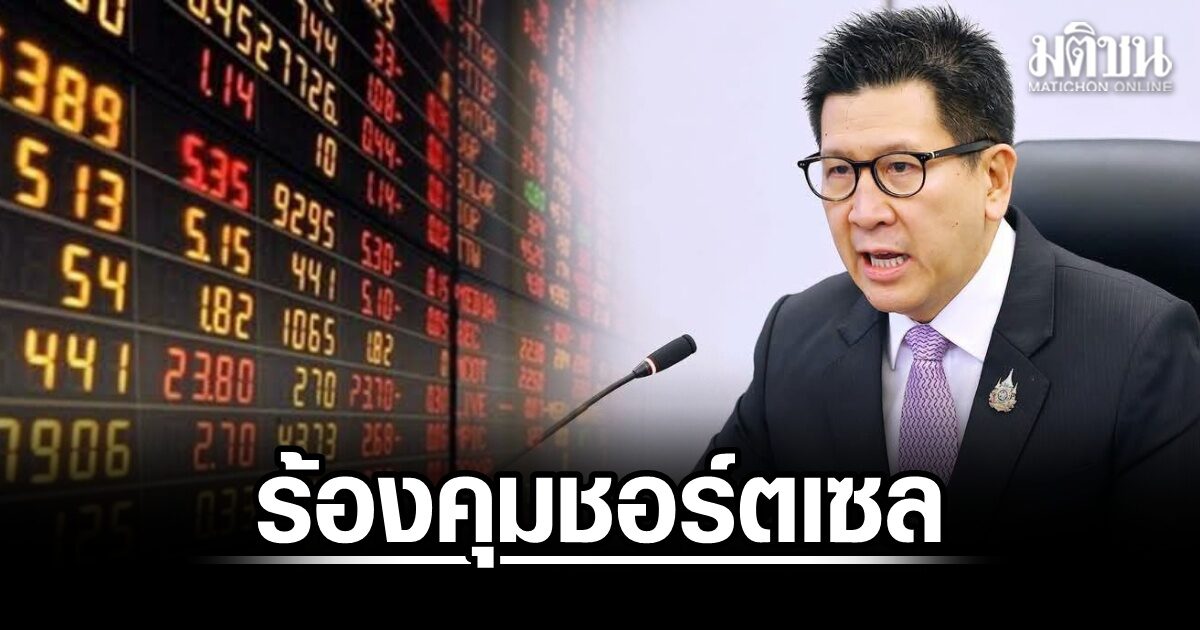
All Thai stocks permitted for short selling face a mandatory Uptick Rule requirement starting November 30, 2569, under an emergency one-month market intervention.
- The Stock Exchange of Thailand board approved the temporary measure on November 28, 2569, to counter steep volatility driven by global sell-offs in artificial intelligence shares.
- The restriction runs through December 30, 2569, though officials may lift the rule early if trading conditions normalize.
- Market Makers are exempt from the temporary short-selling restriction.
Global AI Sell-Off Triggered Emergency Intervention
The Stock Exchange of Thailand acted following widespread global market turbulence tied to heavy selling across technology and artificial intelligence equities. International headwinds combined with erratic domestic trading patterns to destabilize the SET Index, prompting urgent action from market regulators.
The exchange board convened on November 28 to approve the temporary mandate. Under the emergency rule, any short sale order must carry an execution price strictly higher than the most recent trading price.
Shifting from Zero-Plus Tick Back to Strict Uptick
The emergency directive rolls back a more lenient trading framework that had been in place for less than two weeks. Regulators had implemented new trading rules on November 16, which permitted short sales at prices equal to or higher than the last traded price, known as the Zero-Plus Tick system.
Under that recent framework, the stricter Uptick Rule applied only to individual securities whose closing prices dropped by 10% or more from the previous day. The new intervention strips away that threshold, imposing the Uptick requirement across every short-able stock regardless of its daily percentage drop.
The Securities and Exchange Commission formally acknowledged the temporary measure. Pornanong Budsaratragul, Secretary-General of the SEC, confirmed that the regulatory body supports the exchange’s deployment of emergency powers.
The implementation of such trading measures exercises the authority under the regulations of the Stock Exchange of Thailand, which has already been approved by the SEC board to enable the SET board to determine appropriate temporary measures for accommodating situations that may affect overall securities trading conditions and reducing potential impacts.
Surging Short Volumes and Investor Pressure
The emergency intervention follows intense scrutiny from market participants regarding surging short-selling volumes under the Zero-Plus Tick rules.
Delta Electronics (Thailand) PCL recorded the highest two-week short volume, followed by Kasikornbank PCL, Gulf Energy Development PCL, and Krung Thai Bank PCL.
| Stock | Short Volume (Million Baht) | Proportion of Total Turnover |
|---|---|---|
| CPF | 1,429.91 | 30.83% |
| SIRI | 184.12 | 28.38% |
| SPALI | 260.98 | 28.33% |
| BTS | 156.79 | 27.97% |
| IRPC | 383.46 | 23.91% |
| QH | 39 | 22.91% |
| STGT | 43.68 | 22.77% |
| BLA | 45.45 | 22.7% |
| TCAP | 444.87 | 22.67% |
| TLI | 433 | 22.65% |
From past experience, when the short-selling proportion exceeds 10% of total trading value, the Thai stock market tends to adjust downward continuously, affecting retail investors who buy stocks when prices weaken and potentially impacting market liquidity in subsequent periods.
Prakit Siriwattanaket, Managing Director of Merchant Partner Asset Management, via ประชาชาติธุรกิจ Business
Investor groups had also submitted formal petitions to Prime Minister Anutin Charnvirakul and Deputy Prime Minister and Finance Minister Ekniti Nitithanprapas, demanding tighter caps on accumulated short positions and stricter oversight of derivative hedging channels.
Investor Coalition Petitions for Action Against Unfair Rules
An investor coalition submitted an official appeal on November 25, 2569, addressed to Prime Minister Anutin Charnvirakul and Finance Minister Ekniti Nitithanprapas. The petition demanded urgent executive action to address unfair short-selling rules, derivative loopholes in block trades, and opaque disclosure practices by the exchange.
The document outlined four structural vulnerabilities disadvantaging local investors, including short selling executed through Single Stock Futures block trades and subsequent delta hedging. The letter highlighted that high-frequency trading and undisclosed transactions in proprietary accounts created false impressions of fundamental selling pressure.
Comparative Limits and Cumulative Short Volume Restrictions
Following the return to the Zero-Plus Tick system, total short sales rebounded to nearly 10% to 12% of overall market turnover, according to Matichon Online and LINE Today. This contrasted sharply with the Taiwan Stock Exchange, which enforces a hard cap prohibiting cumulative short positions from exceeding 10% of paid-up capital alongside daily volume limits.

Mitihoon documented substantial short-selling proportions across various large-cap equities during this period, including 15.22% for PTT, 19.76% for ADVANC, 18.80% for AOT, 21% for PTTEP, and significant ratios in banking and industrial stocks.
Under regulations approved by the Securities and Exchange Commission board, the Stock Exchange of Thailand board exercises emergency powers to determine appropriate temporary measures for accommodating situations that affect overall securities trading conditions and reduce potential impacts.
Historically, the regulatory framework expanded when the Thai government increased control over securities and finance companies in 1972, leading to the official commencement of trading on April 30, 1975, before the entity formally adopted the Stock Exchange of Thailand name on January 1, 1991.
Market Stabilization and Final Timeline
The temporary Uptick restriction is scheduled to remain in effect until December 30, 2569. The exchange indicated it will maintain continuous surveillance of trading conditions to determine whether market stability warrants restoring standard rules ahead of the scheduled expiration date.