
As tvN’s period spy drama “100 Days of Deception” approaches its final episodes in late November 2026, the series has sparked fierce viewer debate alongside record ratings, driven by the intersecting fates of undercover operative Lee Ga-kyung and elite government interpreter Kim Tae-woong.
- Episode 14 reached a new nationwide series high of 11.7 percent among paid-platform households.
- The plot centers on a 1932 Gyeongseong espionage romance involvingpickpocket-turned-spy Lee Ga-kyung.
- Screenwriter Ryu Bo-ri addressed viewer criticism regarding the historical framing of pro-Japanese collaborators.
Ratings Surge Meets Viewer Backlash Over Pro-Japanese Portrayals
While viewership figures climbed steadily toward the show’s climax—peaking at 11.7 percent nationally—the narrative surrounding male lead Kim Tae-woong drew sharp criticism from audiences.
Viewers expressed frustration that the series focused heavily on the personal anguish of Tae-woong—who was born in poverty, adopted by powerful Japanese official Sato Shinichi, and trained at the Imperial Japanese Army Academy—without sufficiently reckoning with his active role inside the Governor-General’s Foreign Affairs Department.
The controversy deepened around the series midpoint, intensified by storylines such as the Gyeyam-ri Incident, which was inspired by the historical Jeam-ri and Gojuri massacre of April 15, 1919. Critics argued that utilizing such dark historical events primarily to catalyze the adoptive son’s internal identity crisis risked overshadowing the suffering of actual victims under colonial rule.
Screenwriter Ryu Bo-ri Explains the Characters’ Evolution
Addressing the mounting viewer scrutiny ahead of the final broadcast, screenwriter Ryu Bo-ri defended the trajectory of her characters by pointing to the complex psychological reality of ordinary people living under colonial occupation according to ZAPZEE.
“The biggest question was: ‘How did ordinary people in 1932, who could not foresee or know the future of independence, come to join the independence movement?’ While many started with noble ideals, perhaps not all did. Compassion and love for family, comrades, and those nearby might have driven them first, eventually leading to the path of reclaiming the nation.”,” Bo-ri said.
Ryu emphasized that the protagonists were not born fighters, noting that their journey was designed to trace how local attachments and personal affections gradually expanded into a wider struggle to protect others.
“Please join us for the final two episodes to see where their hearts, starting from different places, will lead,” screenwriter Ryu Bo-ri said.
Family Secrets and High-Stakes Confrontations in Episode 15
As the plot shifts toward its conclusion, long-buried secrets have come to light. Episode 15 revealed that Ga-kyung’s mother operated as a Gugukdan spy before being killed by the Inspector-General, while Suzuki—mistakenly informed that his daughter had died of typhoid fever—discovers the truth in the detailed recap published by AOL.
Simultaneously, the discovery of a shared photograph in a Jongno pawnshop—identified as the Hanseong Korean Medicine Clinic hiding the secret base of the Rescue the Nation Group—linked the pasts of both Ga-kyung and Tae-woong to Lee Ae-young.
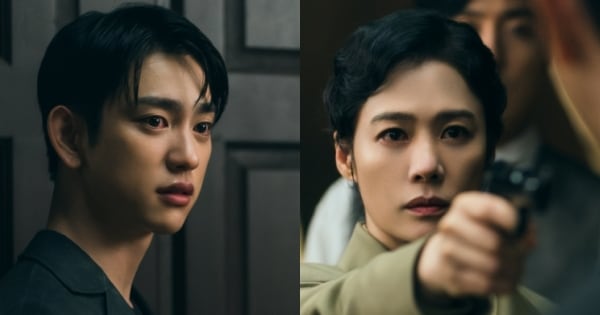
Newly released production stills show Tae-woong arriving unexpectedly at the home of Yoo Philip and Yoo So-ran, where So-ran responds by pointing a gun directly at his back as reported by Soompi. With Tae-woong also warning his adoptive father Sato Shinichi that he will disrupt a scheduled speech, the series moves directly toward its final showdown on tvN and streaming platforms like Netflix and TVING as noted by DiaryPoint.
Ga-Gyeong's Mother Acted as a Spy Before Being Murdered
Viewers learned that Ga-gyeong’s mother had once agreed to act as a spy for So-ran and the Gugukdan after learning that the Inspector-General was responsible for the death of her own daughter. However, her cover was ultimately blown, leading the Inspector-General to murder her following the birth of her daughter Ga-gyeong.

Simultaneously, Herald Corporation reported that the long-standing mystery surrounding the Jongno pawnshop was finally solved through Lee Bak-chun, a former independence fighter with a missing leg living in Gyodang-ri.
The location was not a pawnshop, but a secret underground base for the Gukgukdan that contained hidden drawers of family photographs. This unmasking coincided with Tae-ung informing Myung-nam that their marriage was officially called off, freeing her to pursue her genuine affection for Young-bok according to DMTalkies.
Growing Viewer Discontent Over Character Choices
Star News Korea said that public frustration intensified regarding specific narrative choices, with audiences criticizing scenes where the male lead used funds from Myeong-nam to acquire Kim Seung-eok’s land only to behave as though he were performing a generous charity. Viewers expressed irritation at the superficial utilization of the historical era, prompting some dedicated followers to abandon the series despite its strong early reception.
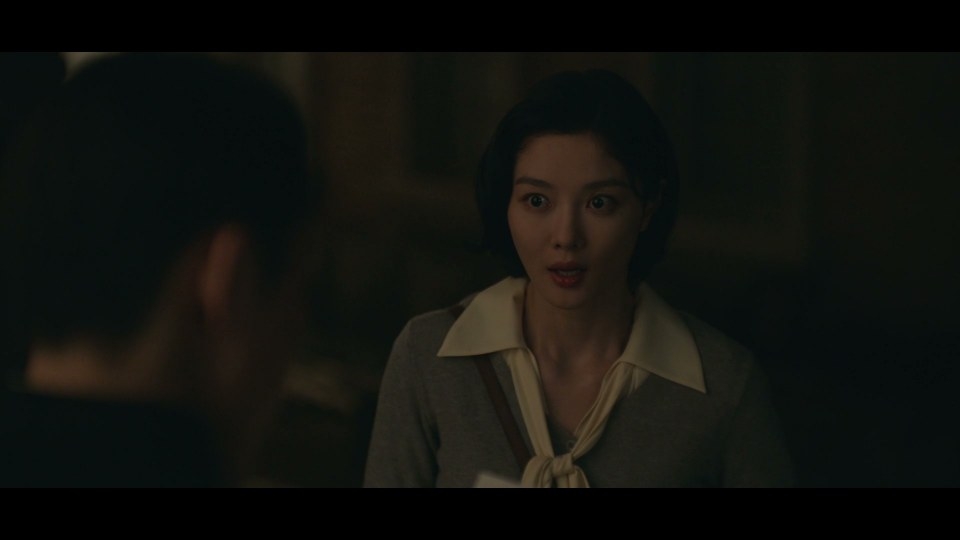
Chosun reported that Tae-woong did aid local villagers in Tomak through an arrangement with Kim Seung-eok, which simultaneously finalized his separation from Kim Myeong-nam. Meanwhile, ZAPZEE highlighted that fan dissatisfaction was further fueled by sequences where Hideo managed the colonial administration’s public image for foreign press without displaying adequate remorse or critical reflection regarding the consequences of his daily duties.
As a nationwide pay television network, tvN maintains a dominant market position in South Korea, with its dramas holding 28 of the top 50 spots for the highest-rated Korean cable television series. The network has produced several major hits, including Crash Landing on You, which was the first tvN drama to exceed 20% in ratings.
Studio Dragon and Nangman Crew Produce the tvN Special Project
The weekend drama is produced by Studio Dragon and Nangman Crew, and directed by Yu In-sik alongside Kim Yun-jin. The series marks a 20th-anniversary special project for tvN. Originally premiering on October 10 with a nationwide rating of 5.3 percent, the show encountered a distinct scheduling challenge during its initial run. For the first six weeks, Saturday broadcasts lagged behind Sunday figures by 2.0 to 3.3 percentage points, as Saturday episodes regularly competed directly against the finale of SBS’s Friday-Saturday series Doctor X: Mafia in White.
Once that competitive hurdle cleared, episode 13 achieved a nationwide average of 10.0 percent and reached 10.8 percent in the Greater Seoul area, representing the first time a Saturday broadcast broke into double-digit figures.
Subsequent episodes continued an upward trajectory, with episode 14 climbing to an 8.0 percent rating during head-to-head competition before surging to peaks surpassing 11% and reaching an overall high of 11.7 percent. In platform analytics across the industry, the series topped overall engagement charts with a 19.08 percent share, while cast members Kim Yoo-jung and Park Jin-young led individual buzz metrics.


