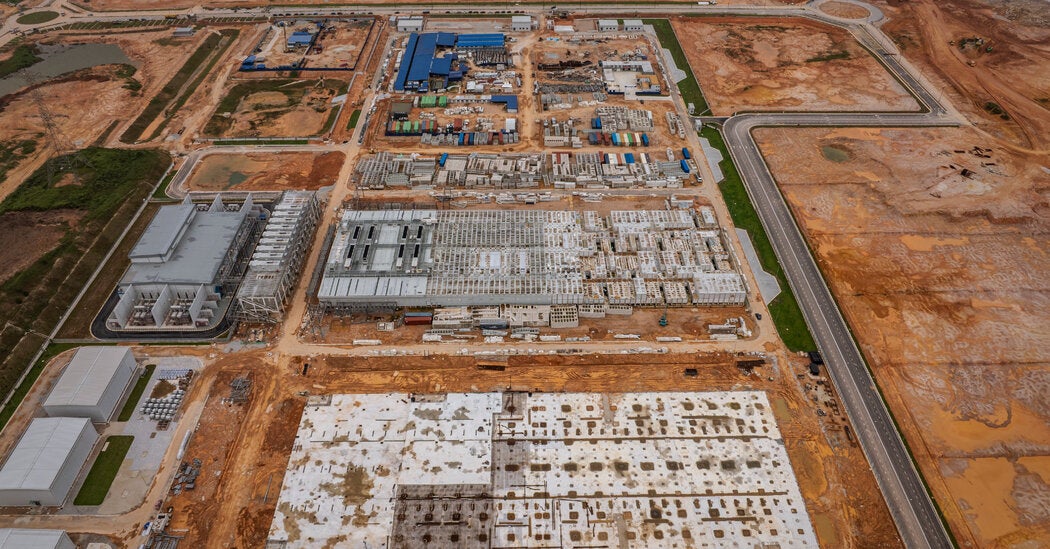
The Trump administration issued an interim final rule on Monday in Washington to curb China’s remote access to advanced American artificial intelligence hardware through overseas cloud data centers.
The Bureau of Industry and Security within the Commerce Department published the new restrictions to prevent Chinese firms from bypassing existing physical export controls by leasing processing power abroad.
Exporters must secure specific authorization before shipping advanced semiconductors and high-performance servers to Brazil, Indonesia, Malaysia, Singapore, and Thailand under the regulations taking effect immediately. Washington designated these nations as jurisdictions presenting a higher-than-normal risk of technology diversion.
The restrictions apply directly to foreign facilities that supply large amounts of computing capacity to companies headquartered in restricted destinations, including China, Russia, Iran, and North Korea. Overseas data centers maintaining arrangements with covered entities face a 90-day window to acquire the necessary government licenses.
Policymakers designed the framework to close a gap that allowed Chinese enterprises to lease computing infrastructure located outside their borders. U.S. restrictions historically blocked direct purchases of top-tier processors, prompting domestic Chinese firms to rent processing power from foreign facilities instead.
The rules target aggregate processing thresholds, requiring operators to monitor ownership structures and verify end users rigorously. Exemptions exist for facilities operated by United States-headquartered corporations, though remote access limitations continue to govern those locations.
The regulatory action follows weeks of friction among federal agencies regarding technology leakage. Treasury Secretary Scott Bessent criticized the Commerce Department for delaying action against specific foreign entities accused of funneling restricted hardware to mainland Chinese firms.

The debate intensified following the sudden resignation of Nvidia Chief Executive Jensen Huang amid federal scrutiny of his ties to a corporate customer in Singapore. Investigators examined whether the network diverted thousands of banned processors to support artificial intelligence training initiatives for overseas clients.
Industry analysts welcomed the update while pressing for measures to cover domestic vulnerabilities.
The announcement arrives as President Trump travels to Asia for economic summits, where he is scheduled to meet with Chinese leader Xi Jinping. Administration officials face the delicate task of balancing national security objectives against fragile trade truces.

Market participants responded swiftly to the regulatory update. Share prices for major American chipmakers, including Nvidia, Intel, and Micron Technology, declined in morning trading following the release of the interim final rules.
Commerce Secretary Howard Lutnick agreed to testify before the Senate Banking Committee on December 10 to address oversight and implementation of the export controls.
Earlier coverage: Nvidia Fallout Looms Over Trump-Xi Meeting