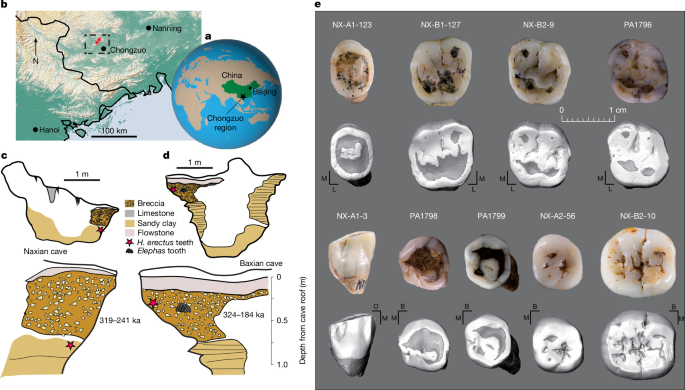
Tooth fossils unearthed from two limestone caves in southern China reveal that Homo erectus survived on the Asian mainland until roughly 184,000 years ago, living up to 200,000 years later than previously believed.
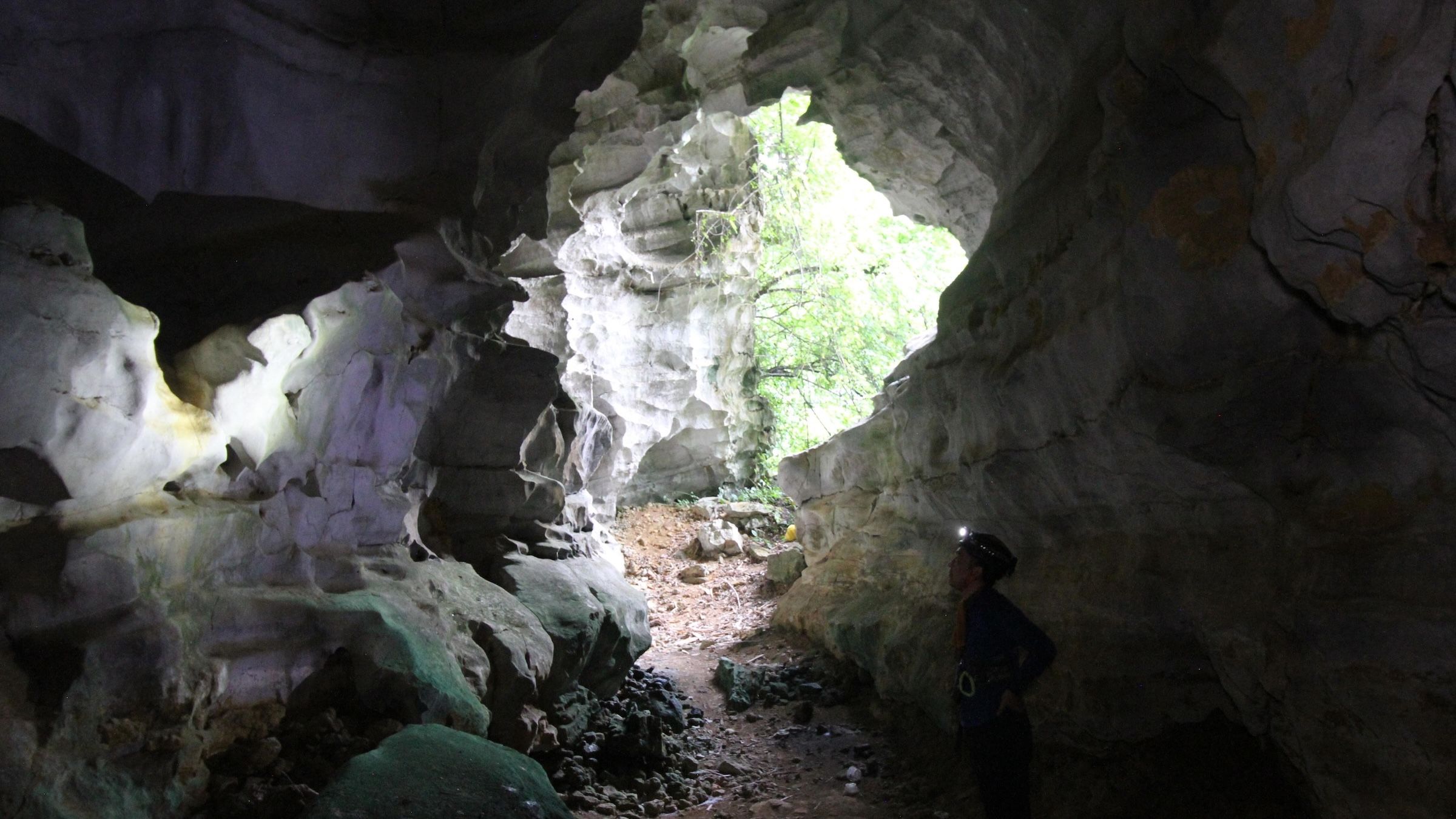
The findings stem from excavations in the limestone karst of Guangxi province, where researchers recovered nine hominin teeth and animal fossils from the Baxian and Naxian caves, situated about 15 kilometers apart. Scientists applied five dating techniques to the teeth and surrounding sediments, placing the human presence between 324,000 and 184,000 years ago.
Radiometric dating of the fossils and surrounding cave deposits, including uranium decay analysis, established the chronology. Prior to these discoveries, securely dated Homo erectus fossils on the Asian mainland were thought to have disappeared around 400,000 years ago, leaving a major temporal gap before the younger Indonesian specimens found in Java.
Faunal analysis and stable isotope testing on the tooth enamel showed that the inhabitants fed on resources derived from closed-canopy C3 vegetation, demonstrating that late H. erectus populations exploited tropical rainforest resources. Researchers said that these dense, canopied forests were previously considered the exclusive domain of Homo sapiens.
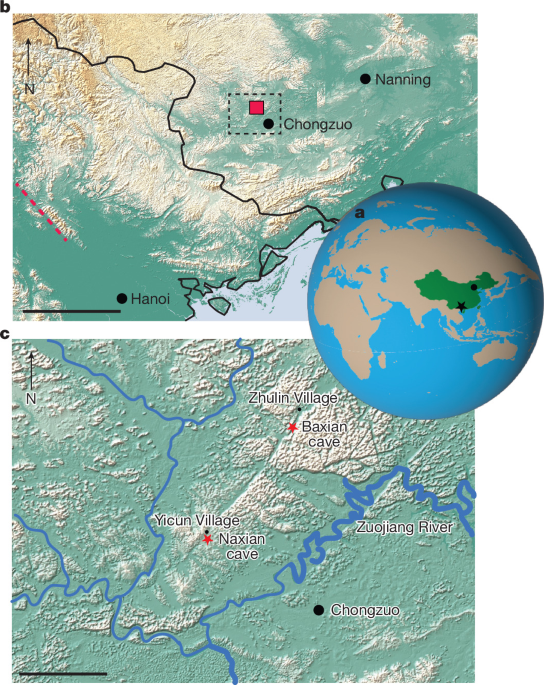
Chemical signatures in the enamel further indicated that individuals moved across large areas during their childhoods, possibly traveling up to 250 kilometers from regions such as northern Vietnam.
Homo erectus was far more mobile than previously thought, and the findings suggest that they traveled remarkably long distances through complex tropical rainforest environments.
Renaud Joannes-Boyau, paleoanthropologist at Southern Cross University
Researchers extracted ancient proteins from five of the teeth, finding that four carried enamel protein variants previously observed in older Chinese specimens. One tooth, designated PA1796, remained mysterious and distinct from known hominin species.
Tooth PA1796 could represent a longi/Denisovan, though it is relatively small in size, and relevant comparative data for longi/Denisovans is sparse.
Frido Welker, molecular palaeoanthropologist at the University of Copenhagen
The excavation sites yielded thousands of mammalian remains alongside the hominin teeth, which researchers determined had accumulated through the actions of porcupines scavenging for and collecting bones.
Professor Kira Westaway of Macquarie University led the team that reconstructed the behavioral and environmental context of these late-surviving groups, working alongside researchers from institutions including the Institute of Vertebrate Palaeontology and Palaeoanthropology at the Chinese Academy of Sciences and the Max Planck Institute of Geoanthropology.
Geochronologist Kira Westaway pointed out that while the species was long thought to have gone extinct due to an inability to adjust to encroaching rainforests on Java around 110,000 to 108,000 years ago, the new discoveries challenge the view of Homo erectus as an inflexible or unsuccessful lineage.
Instead, the evidence shows the species possessed a broad behavioral flexibility that allowed them to navigate and persist within demanding tropical ecosystems across mainland East Asia.
Furthermore, the overlapping chronology with putative Homo longi or Denisovan samples in southern China and Laos raises the distinct possibility that these archaic human groups inhabited the same geographic regions concurrently. Molecular analysis of enamel proteins across multiple teeth continues to illuminate the complex biological relationships and evolutionary history shared between these contemporaneous hominin populations in Asia.
“I think it's exciting because it means that there are two hominin populations occupying these rainforest conditions there at the same time,” study first author Frido Welker, a molecular palaeoanthropologist at the University of Copenhagen in Denmark, told Live Science.