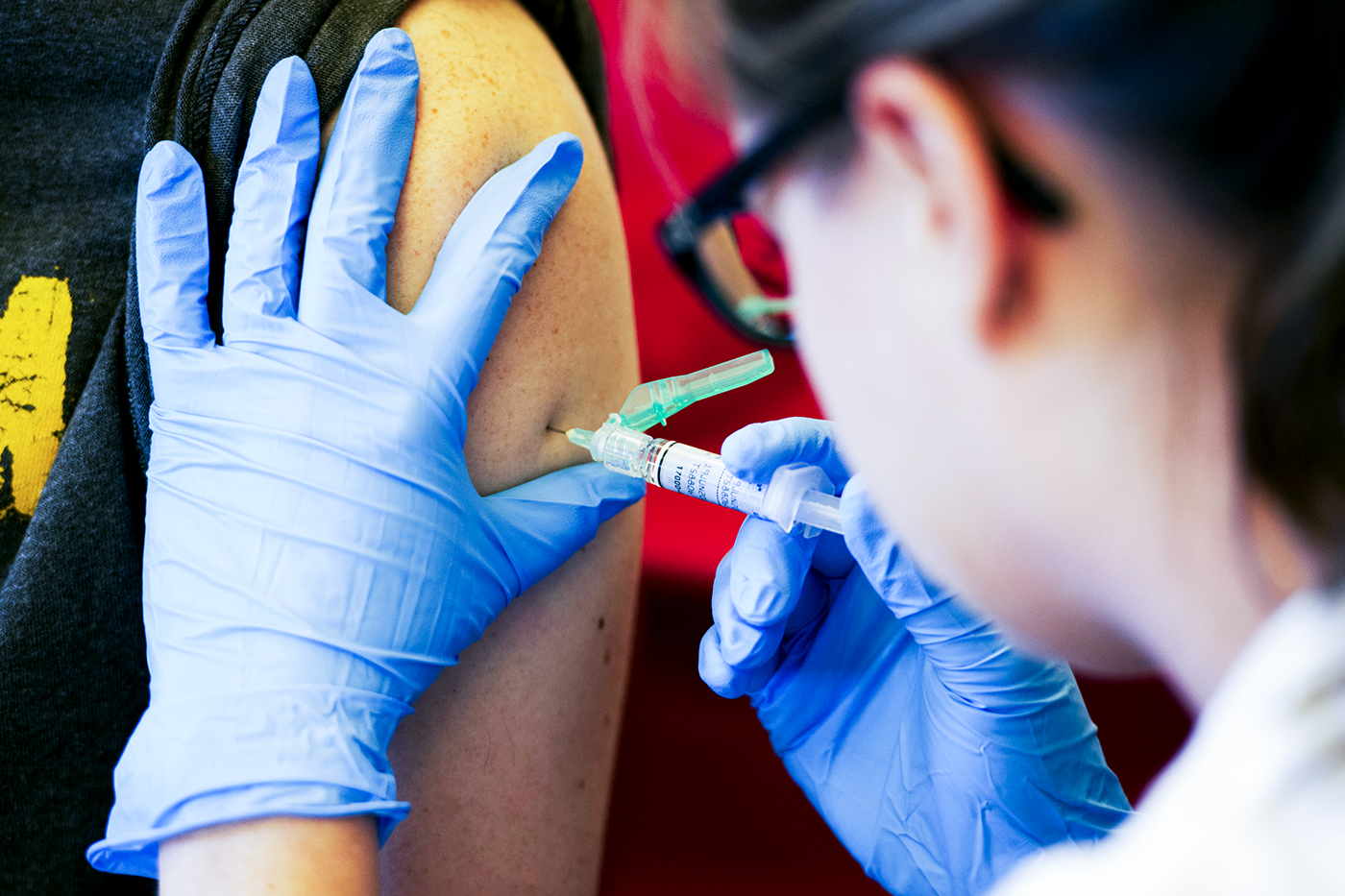
CDC figures show the 2026–2027 H1N1 flu season has caused at least 1.7 million illnesses, 25,000 hospitalizations, and 1,400 deaths.
The 2026–2027 flu season is accelerating across the United States months ahead of schedule, driven by an H1N1 influenza strain carrying a G155E mutation.
Surveillance figures from the U.S. Centers for Disease Control and Prevention indicate that infections are rising in 42 states.
National estimates record at least 1.7 million illnesses, 25,000 hospitalizations, and 1,400 deaths so far this season.
Early Flu Surge Grows Across the United States
Influenza activity began climbing as early as August, pushing case numbers upward.
The West Coast has seen rapid growth, with viral transmission reaching levels typically not observed until January.

Nearly 99% of these early U.S. infections stem from the influenza virus H1N1. This represents a direct change from last winter, when an H3N2 variant dominated nationwide circulation.
During the 2022-23 season, when vaccine effectiveness was about 30%, the Centers for Disease Control and Prevention estimated that flu vaccination prevented more than 70,000 hospitalizations and roughly 3,700 deaths.
Hospitalizations and deaths from the flu are also rising as the season gets underway. “Cases are still relatively low, so we're still in the early phases of a flu surge,” Andrew Pekosz, a virologist at the Johns Hopkins Bloomberg School of Public Health, told TODAY.
Bernard Camins, an infectious disease physician and professor at the Icahn School of Medicine at Mount Sinai, said that the H1N1 strain spreading now is different from the H3N2 strain that dominated last winter.
The Centers for Disease Control and Prevention estimates that more than 1 million Americans have already contracted the flu this season.
The G155E Mutation Helps H1N1 Evade Existing Immunity
Public health experts attribute the accelerated timeline to genetic changes in the circulating virus. The G155E mutation alters a surface protein on the H1N1 pathogen, affecting how the virus attaches to cells and helping it bypass existing population immunity.
“What we are seeing in the U.S. right now is largely an H1N1 lineage, and it carries a mutation that helps it evade some existing immunity,” said Samuel Scarpino, director of executive for artificial intelligence and a professor of public health and health sciences at Northeastern University.
Researchers said that younger demographics may face higher susceptibility because their early childhood immune exposures involved the post-2009 pandemic H1N1 strains rather than older variants, leaving a vulnerability at the specific site altered by the G155E mutation.
Global Surveillance Tracks the Variant
The variant’s trajectory mirrors patterns observed earlier abroad. Japan’s national infectious disease monitoring agency detected the same mutation as early as May 2026, followed by steady community spread from August onward.
The resulting surge in Japan prompted regional school closures and drove a seven-fold jump in clinic visits compared to the previous year. Meanwhile, World Health Organization data for early November shows that while global positivity rates for influenza remain below 10%, temperate zones across the Northern Hemisphere are experiencing steady seasonal increases.
Vaccination Protects Public Health
Despite the antigenic change in the circulating H1N1 variant, infectious disease specialists and public health authorities continue to urge vaccination. Preliminary laboratory evaluations suggest that current formulations still recognize the virus and will mitigate severe illness.
Clinicians said that immunization remains critical ahead of the winter holidays to allow antibodies adequate time to reach protective levels.
“Going into the holiday season, that means you’ll have developed some immunity,” said Neil Maniar, director of the Master of Public Health program at Northeastern University, “Influenza causes a significant number of hospitalizations and deaths, so we should be taking this very seriously,” Neil Maniar, director of the Master of Public Health program at Northeastern University, said.