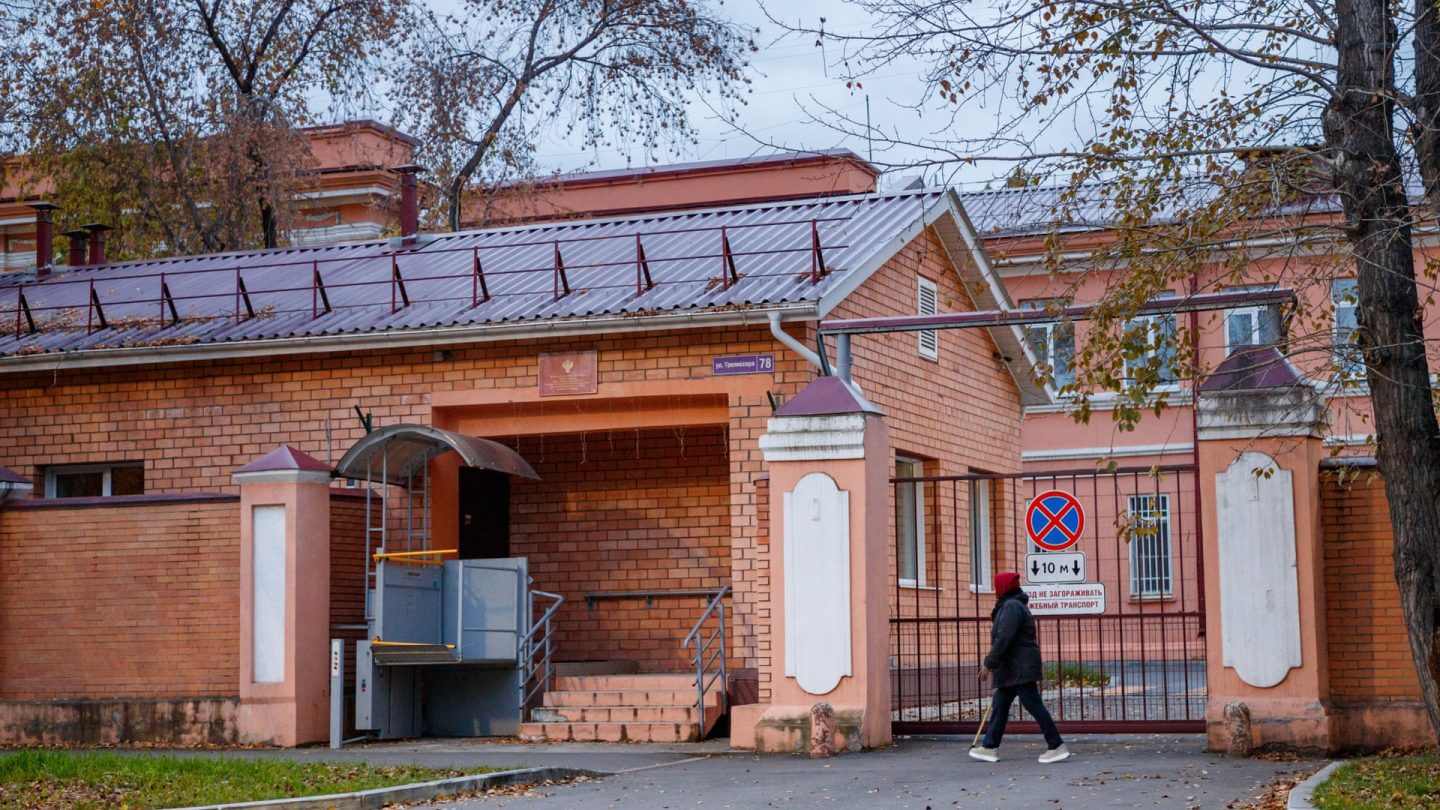
Following the October 2, 2026 death of a 28-year-old laboratory technician at a Siberian research facility, international health officials have sought clarity on the circumstances. Russian authorities state no plague cases occurred in the region, while the World Health Organization notes the exact causative agent remains unverified.
The Death at the Irkutsk Antiplague Research Institute and Local Quarantine Measures
International concerns over a public health threat emerged after a laboratory worker died in Russia from a severe respiratory illness. The World Health Organization requested information from the National IHR Focal Point of the Russian Federation regarding the reported death and its public health implications, as Orfonline reported.
The regional news outlet Lyudi Baikala identified the deceased laboratory worker as 28-year-old Daria Sh., The Newham Recorder noted. She was admitted to a hospital with severe pneumonia symptoms on September 29 and died overnight between October 1 and 2 in Shelekhov. The facility focuses on plague and was founded about a century ago to study the disease in Siberia.
"Last Friday, the 2nd of October, the first media reports emerged of a suspected case of pneumonic plague in a laboratory worker at the Irkutsk Antiplague Research Institute in the Russian Federation.The lab worker died after being hospitalized with severe pneumonia. Initial…
Local media reported that health authorities in the Irkutsk region placed around 200 people under medical observation, The Herald Insight reported. Security services reportedly escorted ambulances taking some of those contacts for medical evaluations.
Official Responses from Moscow and the World Health Organization
Russian health authorities maintained that the worker died from pneumonia of unknown origin and disputed unconfirmed reports that the illness involved pneumonic plague. Rospotrebnadzor, Russia’s federal consumer rights and human wellbeing watchdog, stated that extensive testing found no evidence the illness was caused by any of the pathogens she worked with at the institute. In an official response to the WHO, the agency reported that no recent cases of plague had been registered in the Irkutsk region.
Maria Van Kerkhove, WHO director of epidemic and pandemic management, stated that the agency does not know what caused the woman’s death, according to reporting by the Welwyn Hatfield Times. This is why we need more information
, Ms Van Kerkhove said.
This is why we need more information.
Maria Van Kerkhove, WHO director of epidemic and pandemic management
Rospotrebnadzor also rejected media reports about a second person falling ill after coming into contact with the lab worker, labeling those claims as fake. A probe into biological safety norms at the institute found no emergencies in handling pathogens, confirming that all safety measures had been observed.

Global Scientific Context and Modern Treatment of Plague
While public health bodies pressed for transparency, external scientists emphasized that an ordinary plague infection poses a limited threat to global populations due to modern antibiotics and medical care. The World Health Organization recorded approximately 3,800 plague infections and 423 deaths worldwide between 2019 and 2025, with Madagascar accounting for most contemporary cases, Yahoo reported.
It’s constantly cycling between rodents via fleas, and it just does that in perpetuity in a manner we poorly understand, despite 100 years of research.
David Wagner, director of the Pathogen and Microbiome Institute at Northern Arizona University
Jason Murphy, head of pharmacy at Chemist4U, explained that pneumonic plague is a severe form of plague that can spread from person to person, the, Harrow Times reported. Despite its severity and potential to become fatal within 24 hours if left untreated, the disease is treatable when identified early using strong antibiotics such as gentamicin, doxycycline, and ciprofloxacin.
International Diplomatic Reactions and Future Pandemic Governance
The incident drew attention from international political figures. United States Secretary of State Marco Rubio stated that it is incumbent upon Russia to share more information with the world, The Herald Insight noted. President Donald Trump announced that the United States would be willing to help if needed.
The lack of transparency in Siberia prompted broader debates among policy experts regarding international biosecurity governance. Kent Buse, co-CEO of Global 50/50, and Dr Darren Mann, a former medical director of the Cabinet Office Covid-19 PPE task force, argued that existing international regulations lack verification mechanisms and sanctions, as detailed by The Guardian. Experts suggested that proposals for independent verification and a public compliance register should be raised when the pathogen-sharing annex of the WHO pandemic agreement returns to the assembly, an agenda item deferred to May 2027.
Since the first media reports, @WHO has been actively following up on the reported death of a laboratory worker at the Irkutsk Antiplague Research Institute in Irkutsk oblast, Russian Federation. The individual died on 2 October 2026 after being hospitalised with severe… pic.twitter.com/1vikwtwVtS
More on Irkutsk
A laboratory technician at the Irkutsk Anti-Plague Institute died on October 1, 2026, and authorities have placed approximately 197 contacts under quarantine and observation. While Russian officials characterized the cause of death as a "particularly dangerous infection," the… https://t.co/Kpf8xZJ0dD pic.twitter.com/joKU59RFbI
"At the Shelekhov District Hospital in the Irkutsk Region of Russia, a quarantine was imposed due to a suspected especially dangerous infection. A 28-year-old Darya Shipilova, a laboratory technician at the Irkutsk Anti-Plague Institute, died there. About 200 people who may…


