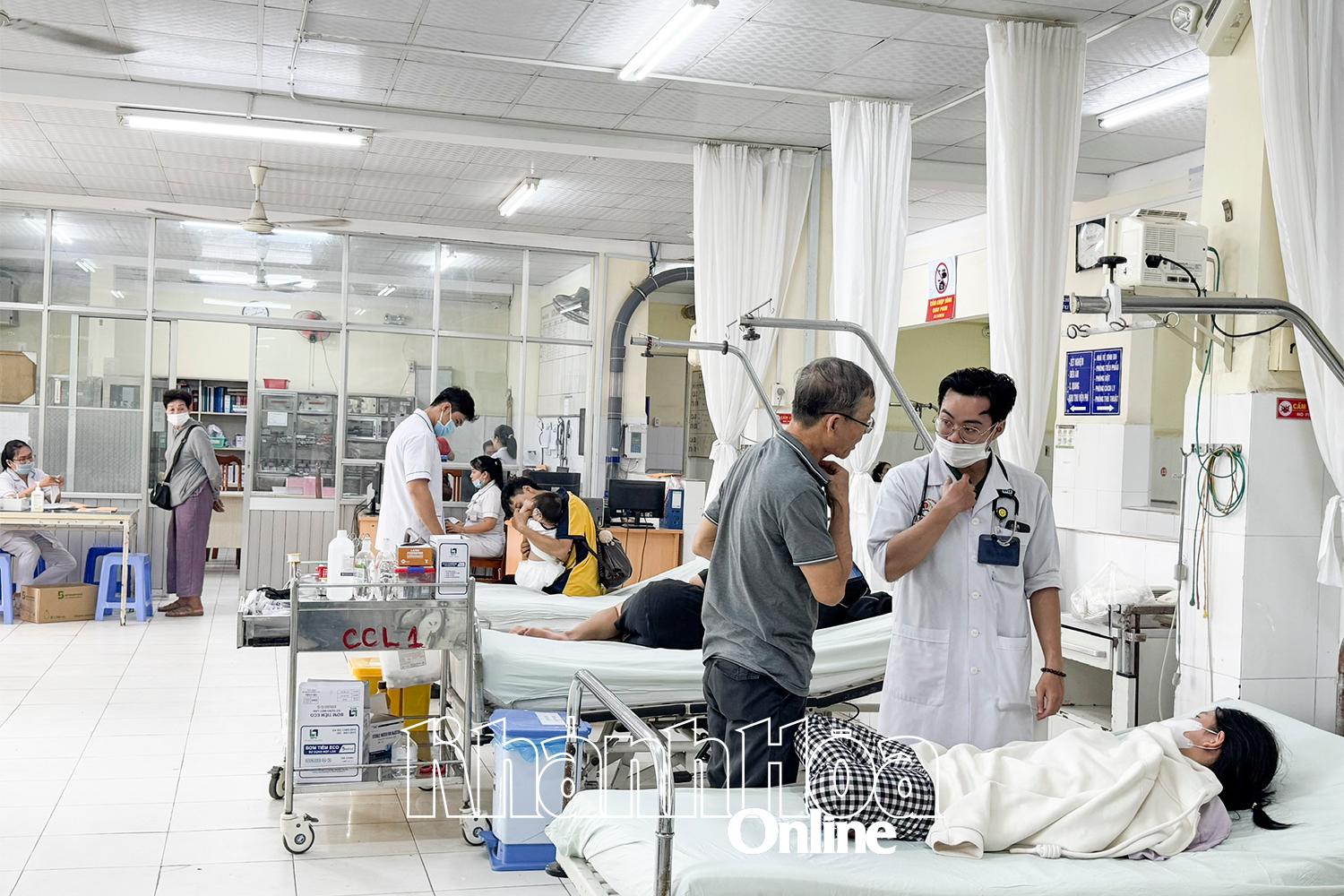
Rapid intervention restored blood flow in under an hour for three patients treated for acute myocardial infarction at the emergency department of Xuyen A Duc Hoa General Hospital.
When an 85-year-old patient arrived with severe pain in her lower right back and chest, hospital staff performed an electrocardiogram and triggered an internal emergency alarm. Medical personnel rushed her to the digital subtraction angiography intervention room, where specialists implanted two drug-eluting stents in the left anterior descending artery in less than 50 minutes.
On the same day, a 43-year-old man was admitted with chest pain radiating to his arm. Staff activated the emergency protocol just three minutes after his arrival. Brought into the intervention room at 00:20, he underwent a successful procedure that restored cardiac blood flow in 40 minutes.
A third patient, a 47-year-old man, arrived in an apathetic state with slowed reactions, a Glasgow Coma Scale score of 9, and severe acute myocardial ischemia. Clinicians assessed his condition, identified the underlying cause, and launched simultaneous reanimation measures alongside targeted cardiovascular care.
Doctors emphasize that acute heart attacks can strike at any age and require immediate attention rather than waiting at home for symptoms to subside. Warning signs include discomfort or pressure in the chest area, and pain extending into the shoulders, arms, back, neck, jaw, or upper abdomen.
Patients may also experience shortness of breath, cold sweats, nausea, vomiting, dizziness, fatigue, or anxiety. Severe cases can involve low blood pressure, irregular heartbeats, somnolence, or unconsciousness.
Health guidelines advise calling emergency services immediately if chest pain persists for more than five minutes after rest or medication, or if symptoms worsen. Emergency medical personnel can initiate clot-dissolving treatments and other critical measures within the vital first hour after an attack begins. Beyond acute response, mitigating cardiovascular risks involves managing blood pressure, diabetes, lipid disorders, weight, and smoking habits, alongside maintaining regular physical activity and a healthy diet.
Your risk for coronary heart disease increases if you have total cholesterol levels greater than 200 mg/dL, LDL bad cholesterol levels greater than 100 mg/dL, HDL good cholesterol levels less than 50 mg/dL, or triglyceride fat levels greater than 150 mg/dL. Overweight and obesity increase the risk for high blood pressure, atherosclerosis, and heart disease. Unhealthy eating patterns also contribute to these outcomes. Drinking more than two alcoholic drinks a day for men or one drink a day for women can raise total cholesterol levels. Risk factors you cannot change include age and gender, as women generally develop heart disease about 10 years later than men do, though it remains their number one killer, and their risk increases more rapidly around age 55.
Women are also more likely than men to have coronary microvascular disease, which affects tiny arteries within the heart muscle and is more difficult to diagnose. Family history can influence risk, and waking up suddenly can cause a sharp increase in blood pressure and heart rate, which has been linked to angina and heart attacks. Smoking, even when only light or occasional, damages the heart and blood vessels, leading to unhealthy cholesterol levels and higher blood pressure, and secondhand smoke is also dangerous.
Maintaining a healthy weight through a small amount of weight loss, such as 10% of your initial weight, helps lower your heart disease risk when aiming to lose no more than 1 to 2 pounds per week. Getting enough quality sleep by aiming for 7 to 9 hours a night and going to bed and waking up at the same time each day is also recommended.