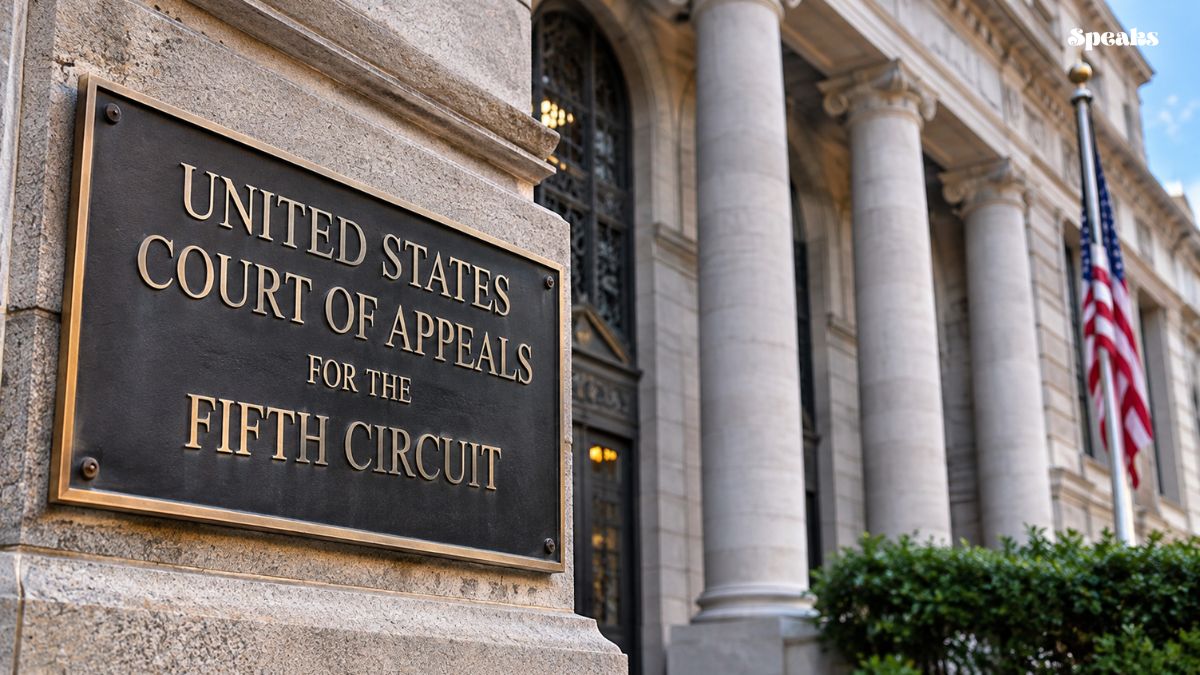
A divided federal appeals court ruled on Friday that the U.S. House of Representatives unconstitutionally passed a sweeping government funding package in 2022 by counting remote proxy votes to establish a legislative quorum.
Fifth Circuit Upholds Injunction Blocking Enforcement
The New Orleans-based 5th U.S. Circuit Court of Appeals voted 9 to 8 to uphold an injunction secured by outgoing Republican Texas Attorney General Ken Paxton, blocking enforcement of the Pregnant Workers Fairness Act against the state of Texas, according to reports by NBC News. The statute requires employers to provide workplace accommodations such as water and bathroom breaks, relief from heavy lifting, and time off for prenatal appointments.
Writing for the majority, U.S. Circuit Judge Cory Wilson focused on Article I, Section 5 of the U.S. Constitution, which requires a majority of members to be present to conduct official business. The court concluded that remote voting procedures adopted during the COVID-19 pandemic violated this constitutional requirement.
While the chambers of the legislature have much discretion regarding their rules of procedure, the Quorum Clause’s constraints on congressional power cannot be circumvented by congressional fiat.
U.S. Circuit Judge Cory Wilson, via NBC News
The proxy voting system was initially implemented in May 2020 by then-House Speaker Nancy Pelosi following the onset of the COVID-19 pandemic. The procedure allowed lawmakers to designate another representative to cast votes and record their presence remotely.
When the House passed the Consolidated Appropriations Act of 2023 on December 23, 2022, 226 members voted by proxy.

The en banc opinion was joined by Chief Judge Elrod and Judges Jones, Smith, Willett, Ho, Duncan, Engelhardt, and Oldham alongside Judge Wilson. The majority stressed that historical application and Supreme Court precedent mandate physical presence for a valid quorum.
Ruling Invalidates Pregnancy Law in Three States
Legal experts said that the ruling immediately invalidates the pregnant workers law in Texas, Louisiana, and Mississippi, a region home to approximately 20 million women. Advocacy groups warned of the practical consequences for local workers.
This decision effectively erases essential rights to pregnancy accommodations for workers across Texas, Louisiana, and Mississippi. The 5th Circuit has put the health, livelihoods, and economic security of millions of American women and their families at risk.
Inimai Chettiar, President of A Better Balance
William Eskridge, a scholar of constitutional law at Yale University, said that the decision would create dramatic and destructive real-world consequences by jeopardizing the economic security and health of millions of American families. Professor Widiss also pointed out that the reasoning opens the door to broader legal challenges questioning the entirety of the $1.7 trillion legislation.
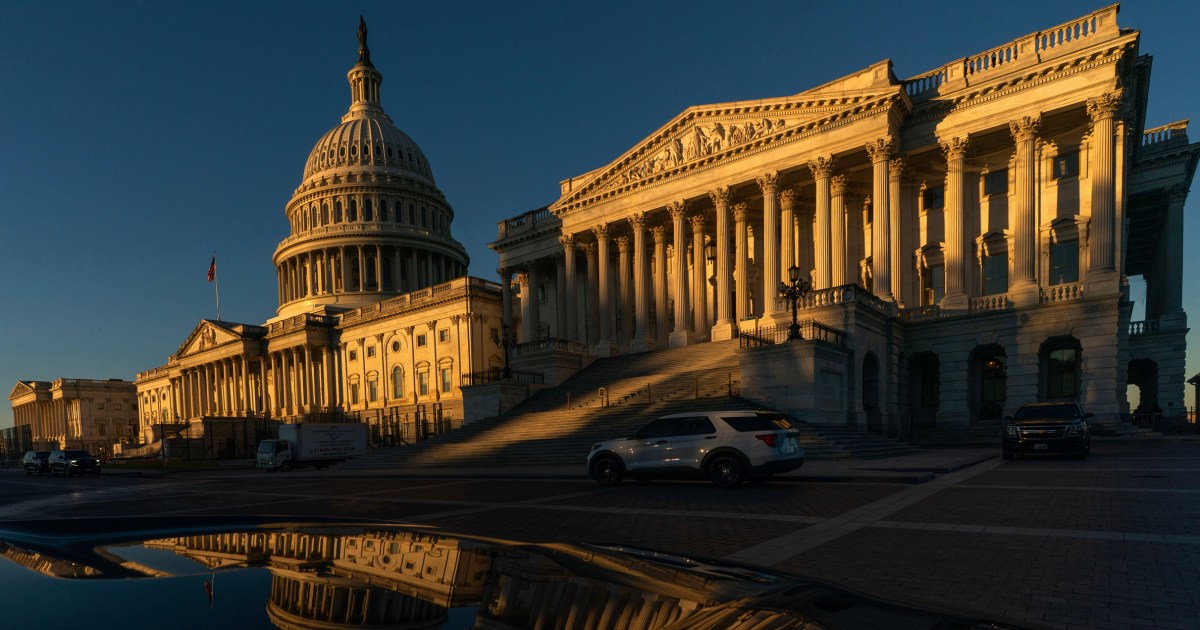
“It's breaking down the separation of powers if the courts get to second-guess the choices that the House made about its own rules in terms of how it was going to count votes,” Deborah Widiss, a professor of law at Indiana University Bloomington, said.
In a dissenting opinion, U.S. Judge Graves also questioned why the court’s judgment applied only to a narrow provision rather than the entire multitrillion-dollar spending legislation, noting that the majority offered no explanation for limiting the remedy to one small sliver of the act while leaving the rest intact.
The 5th U.S. Circuit Court of Appeals was created by the Evarts Act on June 16, 1891, and originally covered Florida, Georgia, Alabama, Mississippi, Louisiana, and Texas. In 1981, the district courts for Alabama, Georgia, and Florida were transferred to the newly created Eleventh Circuit.
Starting in the late 1950s, judges Elbert Parr Tuttle, John Minor Wisdom, John R. Brown, and Richard T. Rives became known as the “Fifth Circuit Four” for decisions advancing civil rights, earning the court the nickname “Supreme Court of Dixie.” During his first administration, President Donald Trump appointed six judges to the court, with many observers thereafter regarding it as the most conservative court of appeals.
Constitutional law scholars pointed out that the ruling also casts legal uncertainty over defense allocations within the broader funding package, which included approximately $858 billion in defense spending alongside $436 million designated for military facilities in Texas. The case is expected to be appealed to the U.S. Supreme Court.