An Alaskan bush pilot is asking the U.S. Supreme Court to stop the state from seizing his $95,000 airplane over a passenger’s stash of beer.
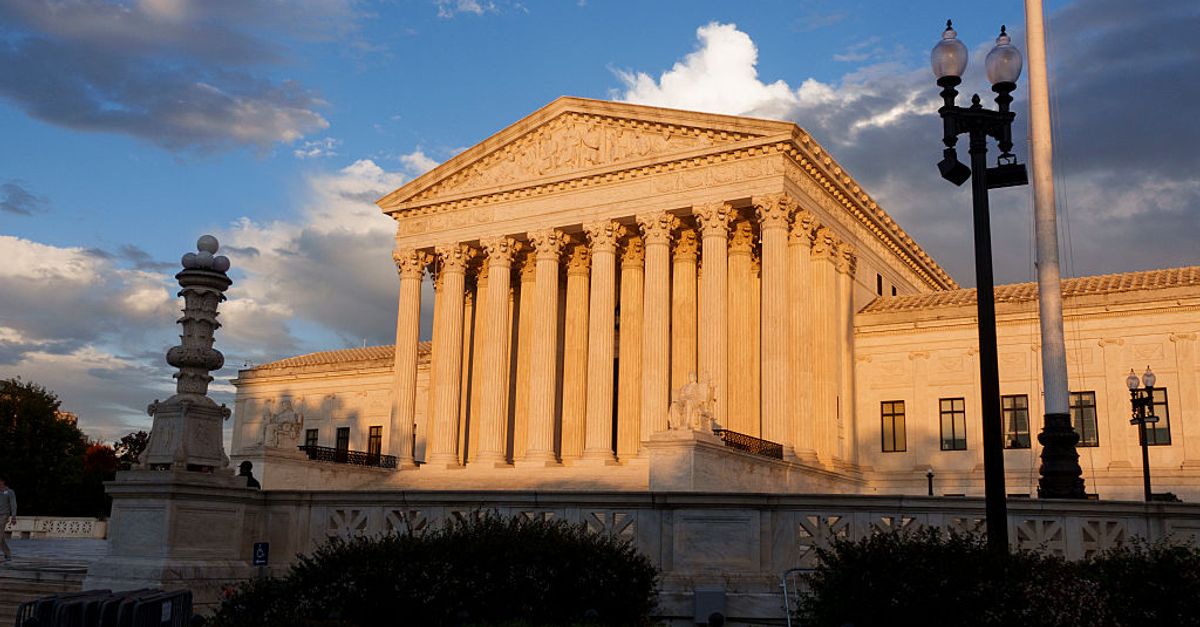
Ken Jouppi, a retired 83-year-old pilot, has spent 14 years fighting to reclaim his 1969 Cessna U206D. The Supreme Court heard oral arguments on Tuesday in a case that tests whether seizing aircraft for minor offenses violates the Eighth Amendment’s prohibition on excessive fines.
- Ken Jouppi’s Cessna U206D was seized by Alaska state troopers in April 2012.
- The passenger’s luggage contained three cases holding 72 cans of beer.
- Beaver, Alaska, is a dry village that prohibits importing or possessing alcohol.
- The Alaska Supreme Court upheld the plane’s forfeiture in a 2025 ruling.
The 2012 Seizure in Fairbanks
Alaska state troopers executed a search warrant in April 2012 as Jouppi prepared to fly a customer from Fairbanks to Beaver, Alaska. Beaver is a remote village of about 50 residents with no connecting roads or emergency medical services. Under local laws, the community bans the sale, importation, and possession of alcohol.
State lawyers maintained that investigators had received information indicating Jouppi had repeatedly transported passengers carrying alcohol. Troopers discovered three cases of beer totaling 72 cans and roughly 9 gallons inside the passenger’s luggage. State troopers testified that at least one six-pack was visible in a plastic grocery bag.
Jouppi has consistently maintained that he never saw the beer and refused to rummage through passengers’ belongings. “Looking through somebody’s underwear for a bottle of whiskey that’s contraband – that just did not appeal to me at all,” Jouppi said, as cited by the Irish Independent.

A jury convicted Jouppi of knowingly transporting alcoholic beverages into a dry village. A judge sentenced him to three days in jail, though he was never incarcerated, and imposed $3,000 in fines on Jouppi and his company. Alaska authorities also seized his seaplane under a state statute mandating the forfeiture of aircraft used in certain alcohol-related offenses.
The Excessive Fines Dispute at the High Court
Represented by the libertarian nonprofit Institute for Justice, Jouppi argues that confiscating his aircraft constitutes an unconstitutional punishment under the Eighth Amendment. His lawyers pointed to the Supreme Court‘s 1998 decision in United States v. Bajakajian, arguing that the penalty is grossly disproportionate to his individual offense.
“Governments have tried to magnify small offenses into big offenses for the purpose of imposing massive fines on ordinary people and padding their own budgets,” said Institute for Justice lawyer Sam Gedge, according to WHTC.
Jouppi’s legal team criticized the Alaska Supreme Court‘s 2025 ruling, which concluded that the forfeiture was constitutional. They argued that the state court evaluated his actions at a “stratospheric level of abstraction,” focusing on public health costs of alcohol abuse in rural Alaska rather than harm caused by flying a six-pack of beer.
The state of Alaska presented a different picture to the justices. Lawyers for the state emphasized that Jouppi’s cargo involved two cases of beer and four additional six-packs of 16-ounce beverages destined for an isolated settlement.
“The state believes its position is supported by the law and the record in this case,” Alaska’s Office of the Attorney General said in a statement.
Court Challenges and Legal Arguments
Devi Rao, a lawyer at the MacArthur Justice Center civil rights legal organization who has followed the litigation, said that Jouppi has a good shot at winning before the high court.
Institute for Justice attorney Sam Gedge contacted Jouppi’s Alaska lawyer within hours of the state supreme court’s ruling. Gedge said that the fact the justices agreed to hear the case suggests they might think something went wrong in the Alaska court system. Legal counsel also said that the forfeiture represents a major imposition on the pilot’s ability to sustain himself and leaves him economically disabled.
Federal Support and Stakeholders
The U.S. Justice Department filed a brief supporting Alaska’s position, noting that federal and state governments generate billions of dollars annually from asset forfeitures. “If anything, the forfeiture here is more moderate than others that have historically been permitted,” the Justice Department said, adding that a vehicle used to transport illegal alcohol “is forfeitable whether it is a snowmobile or a luxury jet.”
Business groups, including the U.S. Chamber of Commerce, filed briefs warning that the Alaska court’s standard could weaken Excessive Fines Clause protections in civil penalty cases. Civil rights advocates and legal scholars said the justices agreed to hear the case because they perceived potential errors in the lower court’s reasoning.

Jouppi, now retired and living in Idaho, has continued paying storage fees for the aircraft as it sat in a Fairbanks lot during years of litigation. A local judge briefly blocked the forfeiture in 2013, allowing him to regain temporary possession before the state resumed its legal fight.
Represented by the libertarian public interest law firm Institute for Justice, the pilot’s challenge joins a long line of high-stakes litigation pursued by the organization. Operating from its headquarters in Arlington, Virginia, along with seven regional offices across the United States, the Institute for Justice employed a full-time staff of 157 members, including 64 attorneys, as of 2023.
As of 2026, the Institute for Justice has litigated thirteen cases before the United States Supreme Court, successfully winning eleven of them. Its strategic track record before the high court includes landmark rulings addressing civil asset forfeiture and excessive fines, such as the 2019 decision in *Timbs v. Indiana*.
“If we do win, it would be just tremendous and good for the whole country,” Jouppi said.