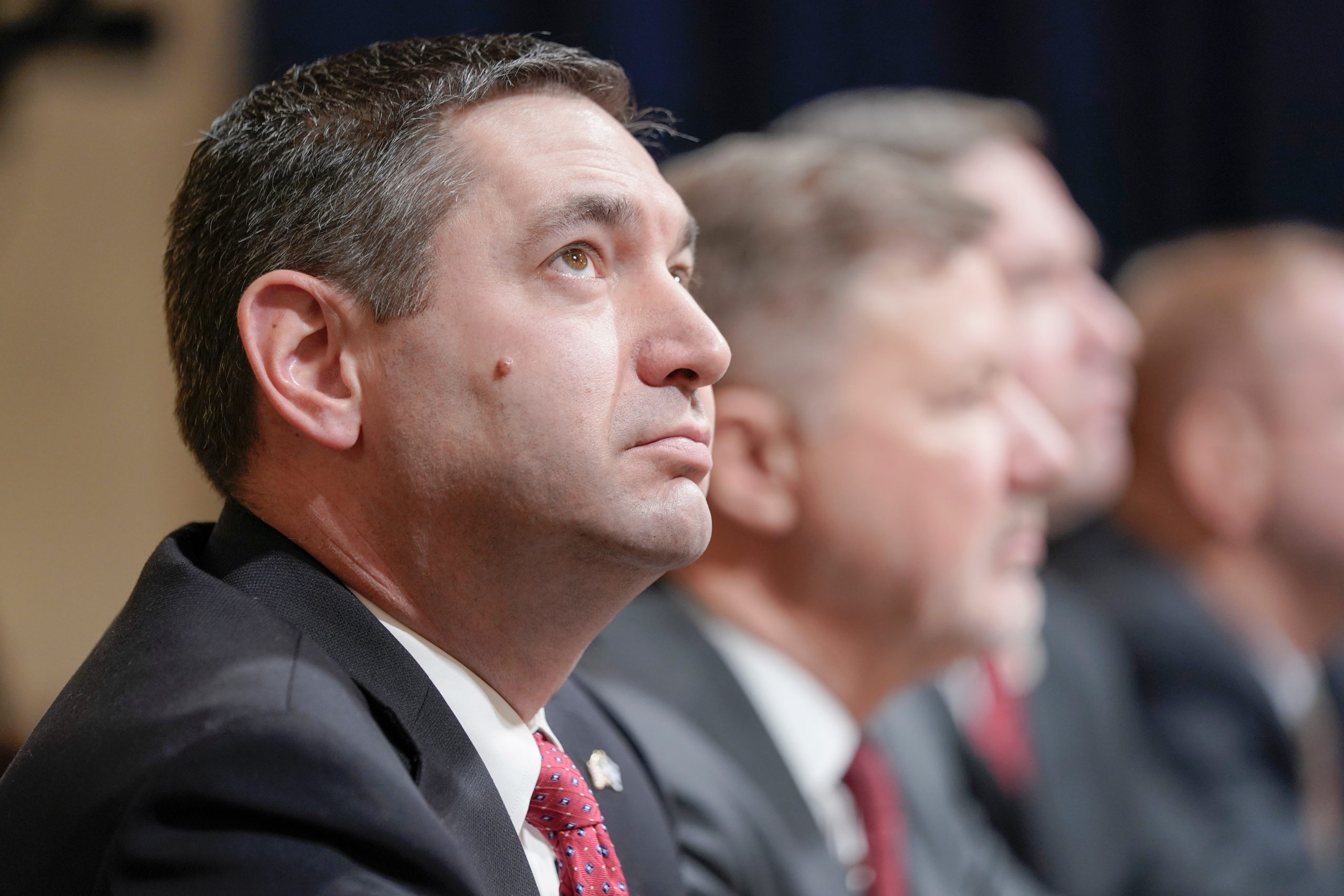
The Montana Supreme Court sided unanimously with Gallatin County Attorney Audrey Cromwell in her case against Attorney General Austin Knudsen on Friday, ruling that Knudsen exceeded his authority when he attempted to take control of Cromwell’s local responsibilities.
The standoff traces back to October 2025. Gallatin County records personnel asked Gallatin County Attorney Audrey Cromwell for guidance after receiving an ICE request for confidential criminal justice information regarding a county resident. While law enforcement agencies routinely share such records among themselves, members of the public and media face an onerous process to obtain them. Cromwell’s office advised records staff that federal immigration officials were not entitled to the sensitive files without a court order.
Things escalated sharply in April. Invoking state code granting him “the power to order and direct county attorneys in all matters pertaining to the duties of their office,” Knudsen exercised supervisory powers to command Cromwell to fulfill the ICE records requests. Cromwell issued the memo Knudsen demanded, but immediately made it clear to her internal staff that she could not vouch for the underlying legal analysis.
Drawing the Line Between State and County Authority
Cromwell fought back by petitioning the state Supreme Court, arguing that Knudsen had unlawfully interfered with her office and that ICE lacked automatic rights to confidential criminal justice databases for civil immigration enforcement.

Justice James Shea delivered the unanimous opinion for the court on Friday. Shea explained that a county attorney answers to two distinct entities: the state and the county. Under Montana law, the attorney general holds supervisory authority solely over state-related responsibilities, such as prosecuting criminal laws or handling civil suits brought in the state’s name.
Because Cromwell acted purely in her capacity as legal adviser to Gallatin County and its local subdivisions during the records inquiry, Knudsen lacked the legal mechanism to force her hand. The AG does not have supervisory authority over a county attorney when the county attorney acts as legal advisor to the county and its subdivisions,
Shea wrote.
Knudsen’s legal team had urged the high court to throw out the petition entirely, arguing that the dispute was merely an internal executive-branch matter between superiors and a subordinate. The justices flatly rejected that defense. Both Shea’s opinion and a concurring opinion from Chief Justice Cory Swanson affirmed that Cromwell maintained independent responsibilities as a county official, giving her a right to challenge executive interference.
Dec. 7 Briefs Will Tackle the Core ICE Questions
While Friday’s decision resolves the limits of executive oversight, the core legal question remains completely undecided. The Montana Supreme Court has scheduled a fresh round of briefings to tackle two fundamental issues:
- Does ICE qualify as a criminal justice agency under Montana law?
- Does a criminal justice designation automatically entitle an agency to confidential files regardless of whether a request serves civil or criminal purposes?
The court ordered both Attorney General Knudsen and County Attorney Cromwell to file their comprehensive briefs by Dec. 7, 2026.