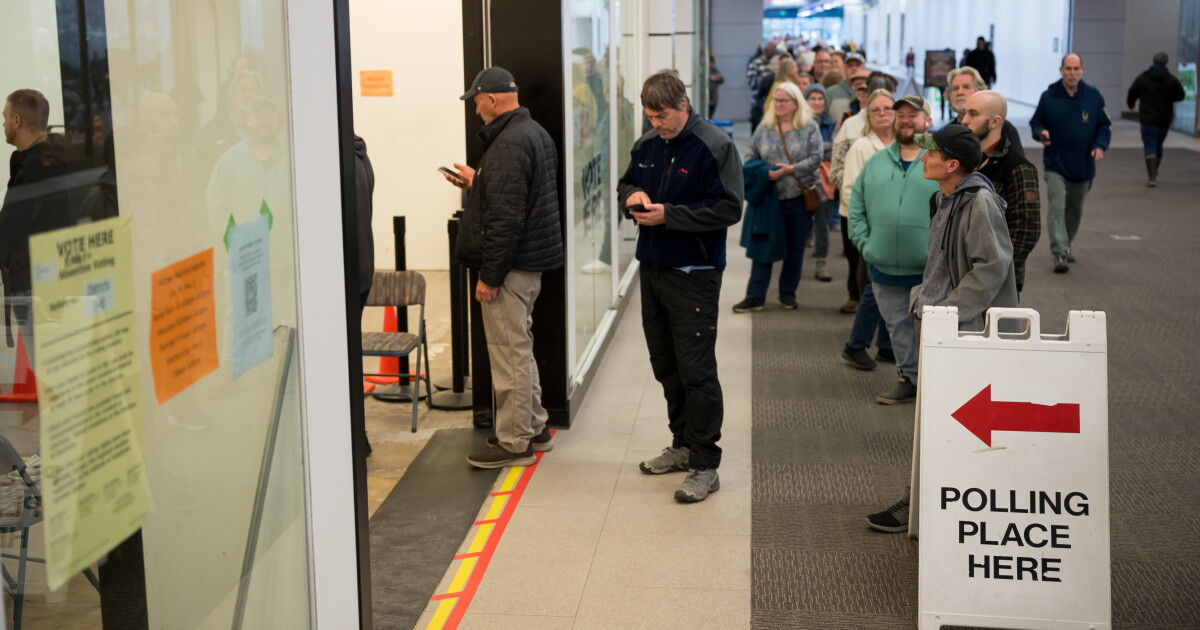
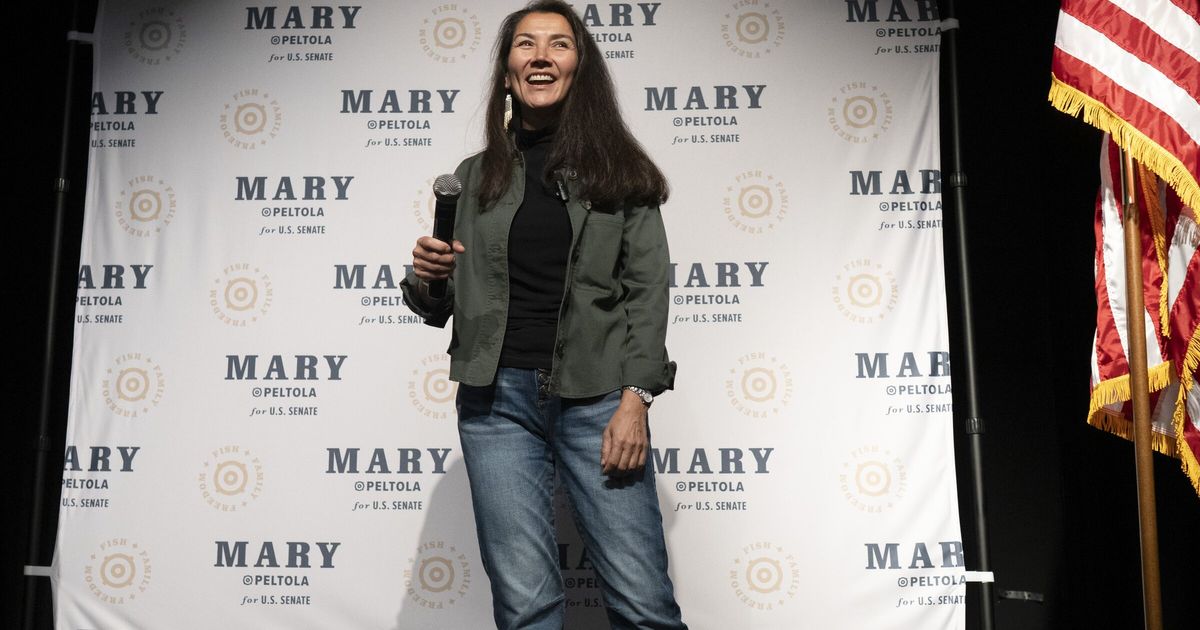
Democratic efforts to recruit a duplicate candidate named Dan Sullivan to Alaska’s U.S. Senate race have sparked a firestorm of accusations and voter skepticism just days before Election Day. A New York Times investigation reported that the campaign of Democratic candidate Mary Peltola sought out individuals sharing the incumbent Dan Sullivan’s name to confuse voters and peel away support, a strategy that has now become a central flashpoint in a race that could determine control of the U.S. Senate.
The controversy centers on Dan J. Sullivan, a retired teacher from Petersburg, who entered the race as a challenger. According to the New York Times, Peltola’s campaign aides instructed a staffer to find as many people named Dan Sullivan in Alaska as possible to facilitate this effort. While the Peltola campaign has denied these allegations and dismissed the report as a distraction, the timing is critical: the story broke less than a week before the election, with early voting already in progress.
The Mechanics of the “Decoy” Strategy
By placing a second “Dan Sullivan” on the ballot, the strategy aims to peel votes away from the Republican incumbent. Former campaign manager Elisa Rios, who spoke to the Times, provided insight into the campaign’s involvement in the recruitment process.
While some may try to write this off as just how politics works now, ballot-stacking should have no place in our electoral process. Run and win on your merits: your views, your policy ideas, and your accomplishments. By contrast, recruiting candidates to manipulate the field and…
President Donald Trump has labeled the Petersburg candidate “Decoy Dan” and demanded that Peltola drop out of the race entirely. Nate Adams, a spokesman for Sen. Sullivan’s campaign, alleged that Peltola and her senior advisors colluded with the Democratic Senatorial Campaign Committee, national lawyers, and state operatives to deliberately deceive the electorate.
“Alaskans deserve the honest truth from Mary and her campaign—what has been revealed is a pattern of lies and coverups and a culture of deception that belongs nowhere in our elections or among our elected officials,” wrote Republican U.S. Sen. Lisa Murkowski, who endorsed Sen. Sullivan.
Voter Reactions and “Icky Vibes”
For some, the report is a confirmation of “dirty politics”; for others, it is a non-event.
In Anchorage, nonpartisan voter Adam Lees described the effort as having “icky vibes,” though he maintained that most voters are intelligent enough to distinguish between an incumbent and a retired teacher. Similarly, D.J. McBride, an independent voter from Willow, expressed a lack of patience for any voter who couldn’t tell the difference, asserting that Alaskans are smarter than the strategy assumes.
However, not all supporters of Peltola view the report as a coordinated attack. Keven Kleweno, a registered Republican who plans to vote for Peltola, suggested that Elisa Rios may have been motivated by resentment after being laid off, framing the New York Times report as an attempt to “slander” the Democratic candidate.
The Human Cost in Petersburg
While the national narrative focuses on Senate control and campaign tactics, the local impact is felt in Petersburg. Residents who have known Dan J. Sullivan for decades find the “decoy” narrative impossible to square with the man they know personally.
Erica Kludt-Painter, a local resident, stated she cannot see Sullivan being involved in a “national conspiracy,” citing his integrity and commitment to the community. This sentiment was echoed by Petersburg Vice Mayor Jeigh Stanton-Gregor, who expressed disappointment that the New York Times focused on a “distant three or four-place candidate” rather than substantive issues like gas prices or foreign wars.
A Pattern of Mutual Accusations
Several voters pointed to a perceived double standard, comparing the Peltola campaign’s actions to Republican spending in support of Eric Hafner—a federal prisoner in New York who was the lone Democrat to advance in Alaska’s U.S. House race. In that instance, Democrats opted to back an independent candidate, Bill Hill, rather than the Democratic nominee.
This cycle of “dirty pool” has led some, like registered Democrat and former Libertarian Amber McClelland, to conclude that while the recruitment of a spoiler candidate is “messed up,” it is a response to a political environment where both sides have pushed the boundaries of ethics to secure a win.



