Barbie’s Evolution Takes Center Stage in Richmond
For many, the image of Barbie remains frozen in time: a sleek, 11-½-inch doll with ruby-red lips and a wardrobe to match. However, a new exhibition at the Virginia Museum of History and Culture is challenging that narrow snapshot. "Barbie: A Cultural Icon" invites visitors to view the doll not just as a toy, but as a mirror of social and economic change over the last 65 years. The exhibit features over 250 dolls, tracking a transformation that includes nine body types, 35 skin tones, and over 94 hairstyles.
The exhibit, which runs through January 18, 2027, serves as the only Mid-Atlantic stop for this touring collection. It arrives in Richmond as a comprehensive retrospective, moving well beyond the initial 1959 debut at the New York Toy Fair where a pony-tailed Barbie first appeared in a zebra-striped swimsuit. By framing the doll’s history alongside historical artifacts, the museum aims to show how pop culture functions as an “illuminating time capsule,” according to curator Elizabeth Klaczynski.
From the Space Race to the Boardroom
The narrative arc of the exhibit is deeply tied to the changing professional opportunities for women. In 1965, Barbie took on the role of “Miss Astronaut,” a bold choice that preceded the moon landing by four years. As the decades progressed, the doll’s wardrobe and career trajectory shifted to reflect broader societal shifts—from the denim trends of the hippie era to the power suits of the 1980s. By 1992, Barbie was running for President, reflecting a decade that saw a historic increase in women elected to the U.S. Senate.
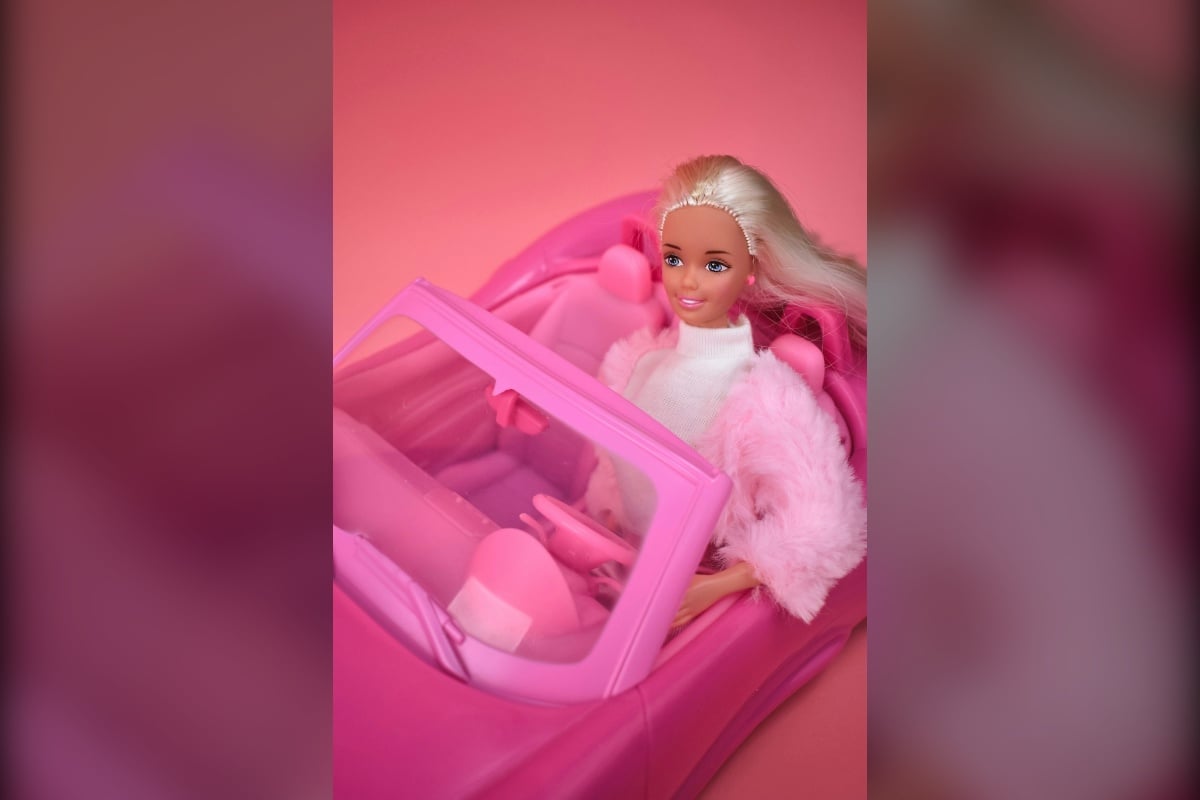
Ruth Handler, who co-founded Mattel, Inc., famously envisioned the doll as a way for girls to explore their own potential. “My whole philosophy of Barbie was that through the doll, the little girl could be anything she wanted to be,” Handler noted. "Barbie always represented the fact that a woman had choices." This philosophy is now central to the exhibition’s curation, which highlights how Mattel managed the inclusion of diverse body types, disabilities, and multicultural dolls, such as the introduction of Christie in 1968 and the first Black and Hispanic Barbies in 1980.
A Virginia-Centric Perspective
What distinguishes the Richmond engagement from other stops is a specific section dedicated to figures with Virginia roots. Visitors can view dolls inspired by mathematician Katherine Johnson—the “human computer” of NASA’s Langley Research Center—and Norfolk-born singer Ella Fitzgerald, whose actual World War II-era steel helmet is displayed alongside her Barbie counterpart. The exhibit also includes a George Washington figure accompanied by his own silver shoe buckles on loan from Mount Vernon.
The logistical effort behind these displays is significant. The exhibition was developed in partnership with Mattel Inc., created and toured by Illusion Projects Inc., and curated by Karan Feder, featuring immersive elements like a life-size recreation of a 1984 Corvette and a walk-in Barbie box. For those interested in the deeper history of the brand, the museum also highlights the economic reality of the doll’s inception. Mattel originally designed Barbie to drive ongoing garment sales, with the first range of clothing ensembles priced between $1 and $5.
The Cultural Mirror
While the exhibit leans into the nostalgia of the Dreamhouse and the signature pink aesthetic, it does not shy away from the broader historical context of gender roles. By placing these toys in conversation with the actual tools and artifacts of the women they represent, the museum invites a critique of how American culture has evolved its definition of success and capability. Tickets for the exhibit are included with general museum admission, which ranges from $10 to $15.
As the exhibition continues its run on North Arthur Ashe Boulevard, it forces a question about the longevity of icons. In an era where digital play and rapid technological shifts dominate the toy industry, the physical persistence of a doll designed in 1959 remains a point of fascination. Whether viewed as an empowering tool or a commercial product, Barbie’s presence in Richmond suggests that our cultural history is often found in the most unexpected of places.