Jacksonville Homeowners Face Financial Shift as Amendment 3 Passes
For more than 194,000 voters in Duval County, the passage of Amendment 3 changes local property taxes. With 56.5% of the local electorate throwing their support behind the measure, homeowners are looking toward a future of reduced property tax obligations. However, as the city prepares for the implementation of these changes, the ripple effect on municipal revenue has triggered an immediate and intense conversation at City Hall regarding the future of Jacksonville’s budget.
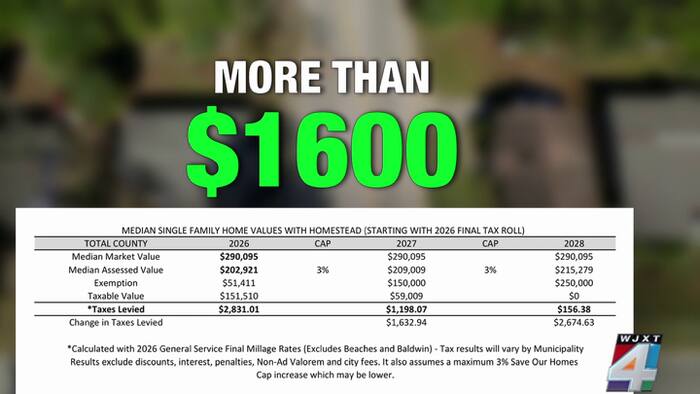
The core of the change lies in the expansion of the non-school property homestead exemption. Amendment 3 mandates a tiered increase, pushing that threshold to $150,000 in 2027 and further to $250,000 by 2028. For the average Jacksonville resident, this translates into tangible relief. According to figures provided by Duval County Property Appraiser Joyce Morgan, a homeowner with a median single-family home valued at $290,000 will see their tax burden drop by $1,632 in 2027, with those savings growing to $2,674 by 2028.
The Budgetary Pressure at City Hall
While the prospect of keeping more money in household pockets is a clear victory for many, the city’s ledger tells a more complicated story. The city auditor has projected that the amendment could result in a $300 million reduction in annual property tax revenue for Jacksonville by 2029. This forecast has forced the City Council to begin weighing difficult austerity measures, with tensions surfacing during recent finance committee meetings.
Rory Diamond has advocated for an aggressive approach to closing the projected revenue gap. During a recent committee discussion, Diamond called for an end to city funding for downtown developers and proposed an immediate reduction in the budgets of any city office currently carrying open, unfilled positions. This proposal for a hiring freeze is not without its detractors, however.
To blanketly say we are going to put a hiring freeze on the city — I will fight it with everything within me.
That opposition came from Councilman Rahman Johnson, highlighting the deep divide within the council over how to handle the upcoming budget. The debate reflects a broader challenge: how to maintain essential municipal services and infrastructure projects while adjusting to a significantly smaller tax base.
Mayor Deegan Calls for Stability
Amid the friction between council members, Jacksonville Mayor Donna Deegan has urged a measured response. Acknowledging the clear directive from the voters, she has emphasized that panic is not a viable strategy for city governance. Deegan maintains that while the coming years will necessitate difficult decisions, the city is capable of producing a balanced and responsible budget that honors its obligations to local neighborhoods.

The mayor’s stance centers on the need to continue infrastructure investments that have historically been neglected. Yet, the path toward that goal remains narrow. The city must balance the promise of tax relief for residents against the functional requirements of operating a large metropolitan government. As the city moves toward the 2027 implementation date, the question of exactly which programs or departments might face cuts remains the primary point of uncertainty for residents and officials alike.
For now, the city remains in a period of transition, waiting to see how the mathematical reality of a $300 million shortfall will be reconciled with the political priorities of a city council currently divided on the best way forward.