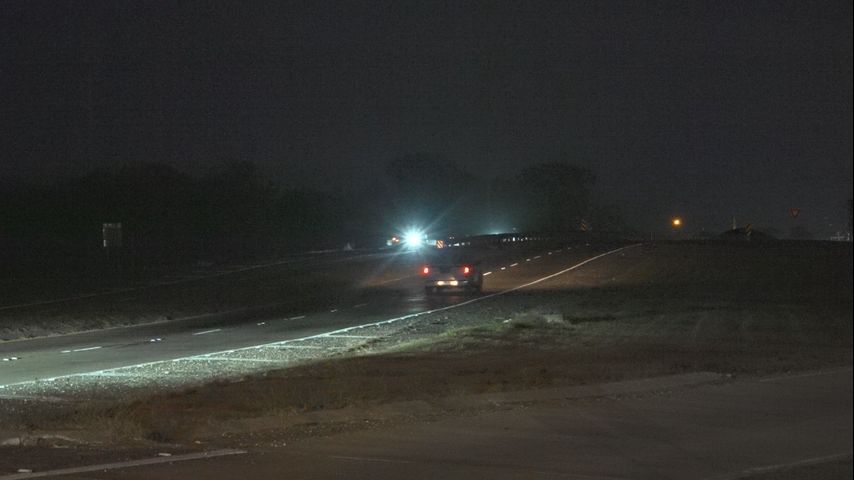
Three months after a fatal hit-and-run claimed the life of 39-year-old John Le Nguyen, the Greenwell Springs Road overpass remains in darkness. According to reporting by WBRZ, the city-parish has no immediate plans to restore the tower lighting, leaving the site of the tragedy as dim as it was the night of the incident.
The Human Cost of Delayed Infrastructure
In July, John Le Nguyen was struck by a vehicle while on the overpass where Greenwell Springs Road crosses Airline Highway. For his family, the absence of functional lighting is more than a bureaucratic frustration; it is a painful reminder of a life cut short in the shadows. “I just wish this was different, that this didn’t happen,” said Martina Brooks, Nguyen’s sister. “He’s not just another number. He’s a human being.”
The family’s plea for better illumination is rooted in safety, yet the path to repair has stalled. When WBRZ reporters visited the site three months ago, they discovered only one half-lit tower in operation. At that time, city-parish officials indicated that parts had been ordered through Entergy to facilitate repairs. Returning to the site last week, however, investigators found the overpass completely dark, with none of the tower lights functioning.
City Officials Prioritize Solar Power for Infrastructure
EBR Transportation and Drainage Director Fred Raiford describes the situation as technically and financially demanding. Replacing a single tower and its lighting array is estimated to cost $10,000. Rather than performing piecemeal repairs on the existing infrastructure, the city is pivoting toward a long-term strategy centered on solar power.
“Once we make the commitment to solar, then everything that would be on Airline Highway, even lights that are on local roadways, we would look at using solar for the future,” Raiford explained.
This vision for the future, however, offers little solace for those driving on the road today. Raiford noted that the department’s current priority is focused on the I-110 corridor from US 61 to the I-10 interchange. While he expressed confidence that the Greenwell Springs-Airline Highway overpass could eventually be included in a broader replacement project, he conceded that such a timeline is still years away.
The Gap Between Planning and Reality
The discrepancy between the city’s long-term solar ambitions and the immediate need for visibility highlights a common tension in municipal infrastructure management. While the city maintains that replacing the existing tower lights must be weighed against the broader goal of upgrading to solar, residents are left to traverse a dark corridor that has already been the site of a fatal accident.
For the family of John Le Nguyen, the wait for a resolution is compounded by the lack of closure regarding the driver who struck him. Beyond the mechanical failure of the lights, they continue to call for the person responsible to come forward. For now, the overpass remains a site of both active investigation and significant civic concern. “It’s still pitch black over there,” Brooks said. “It is just so unfair.”