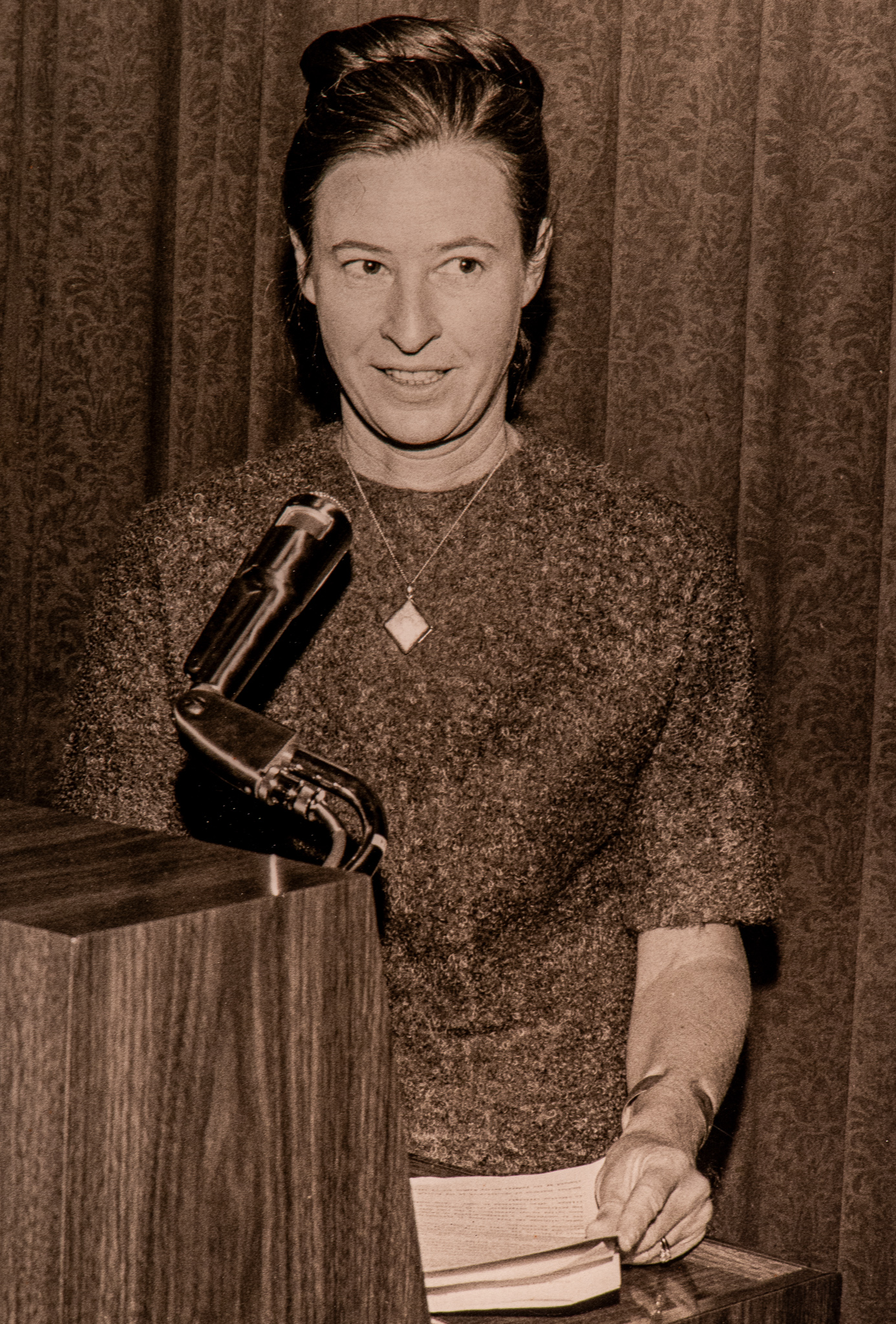
Every election brings concerns that the other team is going to cheat, but few modern observers face the raw physical hostility encountered in June 1973 by Elizabeth “Betty” Gallagher, who died in September at age 101, the Times Union reported in its “Lives Well Lived” series profiling individuals who lived extraordinary lives in upstate New York.
Working then as a poll inspector in Albany, Gallagher helped initiate scrutiny of an entrenched political apparatus. Her story offers a sharp window into an era when local political machines held sway over municipal voting booths.
The Confrontation at Pumper 11
Gallagher was designated as a monitor at the polling station by state Attorney General Louis Lefkowitz in June 1973, serving alongside Carol Wallace, a member of the League of Women Voters, and Sister Honora Kinney, where James A. “Jimmy” Ryan II, a prominent operative in Albany’s Democratic machine, was overseeing a primary in the 10th Ward’s Fourth Election District.
What the three women witnessed inside the Pumper 11 polling place violated fundamental election safeguards. Maureen Gallagher, of Cropseyville, recalled her mother’s account of the site.
There were improper distance markers from the poll, blatant handouts, bribes, and Ryan was observed leading several people into the voting booths at a time and telling them how to fill out ballots.
When Gallagher and her team challenged these actions, the confrontation turned physical. Ryan shouted obscenities, grabbed Gallagher’s election booklet, and threw it over his shoulder, declaring the observers had no right to be present. Police called to the scene demurred, with an officer stating he was under Mr. Ryan.

As the obstruction continued, Gallagher and her colleagues witnessed Ryan reaching into the ballot box and looking at the ballots. When the observers objected, Ryan and his brother rushed toward them, shoving them out the door. Gallagher recounted feeling as though she had been struck from behind by a fist or the palm of a hand before the fire station doors slammed shut.
Arrest, Trial, and the Downfall of O’Connell’s Machine
The altercation generated newspaper articles, editorials, and a Hy Rosen cartoon. Facing three counts of harassment alongside three felony infractions of election statutes, Ryan additionally had bail set in the amount of $1,000.
Seeking respite from the tension, Gallagher and her family went camping in Nova Scotia. While sitting in a Volkswagen, her son David tuned the radio to Capital Region station WPTR and heard a news bulletin. A warrant had been issued for Betty Gallagher’s arrest after Ryan countersued, though authorities could not locate her abroad.
Ultimately, a jury found Betty Gallagher not guilty. The attorney general covered her $200 in legal fees upon request, while Ryan pleaded guilty to a reduced charge of harassment and paid a $100 fine. In Gallagher’s estimation, her courageous act sparked intense investigation into Albany election misconduct, ultimately precipitating the collapse of the O’Connell Democratic Machine which the entrenched Ryan clan had previously upheld.

Relocating to Saratoga Springs After Museum Career
Born Elizabeth Jean Stephens in Minneapolis in 1925, Gallagher lived a life defined by curiosity and civic engagement. She earned a bachelor’s degree in geography and geology from McMaster University in 1945, becoming the first student to obtain that combined degree.
Having pursued graduate-level coursework at Montreal’s McGill University, she assumed the role of education director at the Science Museum located in St. Paul, Minnesota, where she met her husband, Roger Gallagher. Relocating to Saratoga Springs in 1960 when her husband began teaching anthropology and sociology at Skidmore College, she shaped regional advocacy for decades.
Having helped found the Saratoga County chapter of the League of Women Voters in 1964 as its inaugural leader, Gallagher later took on responsibilities as a director for the statewide New York organization. Her community footprint included board presidencies at Living Resources, board service with Planned Parenthood, and Soroptimist work aimed at securing daycare for low-income families.
Survived by three children, five grandchildren, and two great-grandchildren, Gallagher left behind a legacy defined by an uncompromising defense of fairness—whether challenging a political machine or advocating for her daughter Sheila, who was born with developmental challenges.