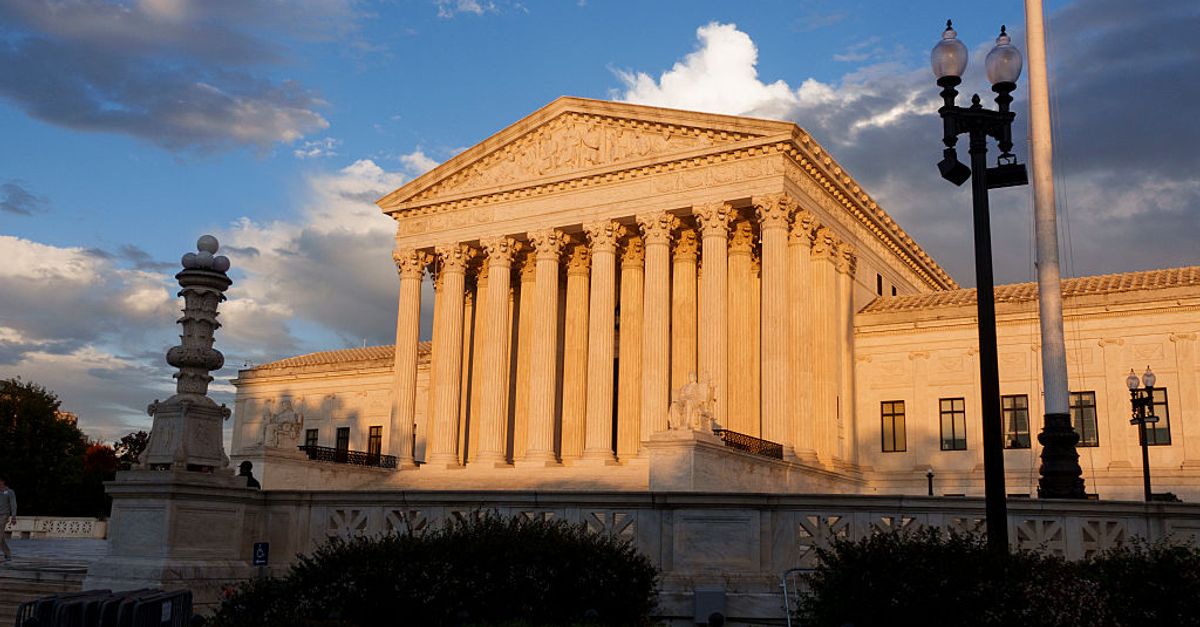
Canada’s Supreme Court upheld most of Quebec’s secularism law known as Bill 21 on Friday, affirming provincial powers to override constitutional protections for public servants in authority positions.
The 6-1 decision resolves months of legal scrutiny over the legislation enacted in 2019. The law bars public school teachers, police officers, prosecutors, and certain other public employees from wearing religious symbols on the job.
The court concluded that Quebec validly invoked the notwithstanding clause. This mechanism permits legislatures to bypass specific Charter rights such as religious freedom and equality.
Parce que c’est comme ça qu’on vit au Québec! Très fier de ce legs! https://t.co/rVf060kGQF
Court Splits on Oversight While Upholding Statute
The high court ruling introduced a split on judicial oversight while protecting the statute itself.
Three dissenting judges—Justices Nicholas Kasirer, Andromache Karakatsanis, and Michelle O’Bonsawin—concluded that the law violates freedom of religion, expression, and equality as outlined in the Charter. The majority maintained that courts retain the authority to issue declaratory relief. Judges can formally declare that legislation infringes upon Charter rights even when an override keeps the law active.

Justice Richard Wagner said the legislation reflects Quebec’s legitimate and historical commitment to keeping government institutions secular. Justice Kasirer said the five-year expiry period written into Section 33 places the choice of renewal directly into the hands of the electorate.
“The five-year expiry period set out in the notwithstanding clause, which corresponds to the maximum duration of the House of Commons or a legislative assembly under s. 4 of the Charter, is clearly intended to place in the hands of the electorate the choice of whether to renew the override provision,” wrote Justice Nicholas Kasirer in Friday’s ruling.
Exemptions for Legislators and English School Boards
The Supreme Court dismissed both the challenges brought by opponents of the law and a separate cross-appeal lodged by Quebec’s attorney general.
The ruling did, however, strike down a requirement that members of Quebec’s legislature perform their duties with their faces uncovered. The court upheld a lower-court decision that protected their democratic rights to participate in the legislative process without invalidating the wider ban.
The court left intact a lower-appeal ruling affecting minority-language education. It dismissed arguments that the law breached minority education rights under section 23 of the Charter.
Legal challenges from boards such as the English Montreal School Board—which spent more than C$1 million ($702,940 USD) challenging the legislation—failed to overturn the restrictions on English-language public school teachers.
Leaders Clash over Secularism Ruling
Political leaders across Canada expressed sharply contrasting views on the decision.
Quebec Premier Paul St-Pierre Plamondon welcomed the outcome as a victory for secularism and provincial autonomy. Prime Minister Mark Carney said that he respected the ruling while pledging that his federal government would never use the constitutional override.

Civil rights organizations and religious groups voiced deep disappointment.
The National Council of Canadian Muslims cited data indicating that nearly three-quarters of Muslim women in the province have considered leaving due to the legislation.
Since 2019, we have witnessed how Bill 21 has treated religious minorities, particularly Muslim women, as second-class citizens.
Howard Sapers, Executive Director of the Canadian Civil Liberties Association
Joe Ortona, chair of the English Montreal School Board, said that the judgment concludes the legal battle. The political fight continues ahead of the mandatory five-year legislative renewal scheduled for 2029.
Legal Arguments on Faith and Society
Phil Horgan, president and general counsel of the Catholic Civil Rights League, presented oral arguments to the Supreme Court. Horgan said that no citizen should face a choice between fulfilling their faith and serving society.
Mehramat Kaur of the World Sikh Organization of Canada said that the legislation forces qualified job seekers to abandon their beliefs or forgo career paths.
Stephen Brown, chief executive officer of the National Council of Canadian Muslims, said that the ruling carries far-reaching consequences for faith freedom, women’s rights, and the protection of fundamental liberties.
Murray Hopes Override Lapses; Kinew Condemns Tactic
Michael Murray, chair of the Eastern Townships School Board, added that he hopes a future provincial administration will eventually let the constitutional override lapse, though he does not expect that outcome anytime soon.
Manitoba Premier Wab Kinew criticized the use of the constitutional override. Kinew said that public officials who rely on targeting specific communities to win elections do not deserve office.

Ruling Sparks National Debate on Provincial Powers
The Supreme Court ruling generated widespread national debate regarding the scope of provincial legislative powers. Manitoba Premier Wab Kinew expressed disappointment with the top court’s decision, positioning his own province as an inclusive alternative for medical and public service professionals by welcoming doctors, nurses, and police officers to relocate to Manitoba.
Phil Horgan, president and general counsel of the Catholic Civil Rights League, argued through oral submissions that no person should face a choice between career opportunities and their religious convictions.
Mehramat Kaur of the World Sikh Organization of Canada said that the law continues to direct qualified candidates to set aside their faith. Stephen Brown, chief executive officer of the National Council of Canadian Muslims, said that the ruling opened the floodgates for attacks on foundational rights.
Lower-court proceedings leading to the high court’s decision included a ruling from the Quebec Court of Appeal in February 2024, which previously upheld the secularism legislation. Justice Marc-André Blanchard observed during earlier proceedings that the statute imposes a cruel consequence that dehumanizes targeted individuals, though he found himself bound to uphold it due to the notwithstanding clause.
In response to the latest judgment, Michael Murray, chair of the Eastern Townships School Board, expressed personal relief that the nation avoided a constitutional crisis while noting disappointment that the restrictions remain binding on educators within English-language public institutions. “I hope that a future government in Quebec will eventually let the constitutional override lapse,” Murray said.