Midterm elections left Democrats with full control of five key state legislatures and governorships on November 10, 2026, bringing a two-decade-old interstate agreement within striking distance of the 270 electoral votes needed to take effect.
The National Popular Vote Interstate Compact Mechanics
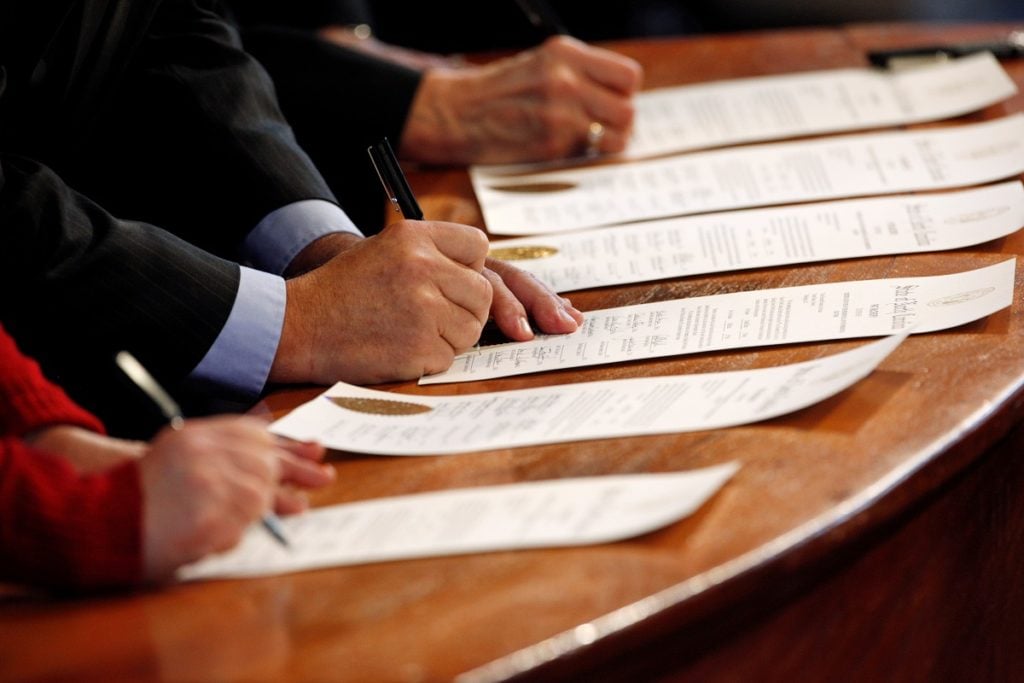
The agreement, known as the National Popular Vote Interstate Compact, would require participating states to allocate their electoral votes to the winner of the nationwide popular vote rather than the candidate who wins individual states under the traditional state-by-state system. Eighteen states and Washington, D.C., have already joined the compact, representing a combined 222 electoral votes.
Tuesday’s results gave Democrats unified control of state government in six states holding 71 Electoral College votes: Arizona, Michigan, Minnesota, Nevada, Pennsylvania, and Wisconsin. Minnesota previously joined the compact in 2023 when it was under full Democratic control.
Axios; Democrats poised to break GOP's 16-year grip on statehouses Democrats are on track to take control of a majority of legislative chambers, ending 16 years of Republican dominance over America's statehouses. If current leads hold, 75% of Americans will live in a state with… pic.twitter.com/90Duv5KLaC
If Pennsylvania, Michigan, and Wisconsin pass the legislation, the total would reach 266 electoral votes. Advocates would then need either Arizona or Nevada to sign on to surpass the 270-vote threshold.
Nationally, about 80% of Democrats and 46% of Republicans said they would prefer to use a popular vote system to elect the president, according to a 2024 Pew Research Center survey. At issue are the quirks of the United States’ Electoral College system, where states receive electoral votes equal to their two senators plus representatives based on population.

Governor Reactions Across Battleground States
We can do away with it,
David Crowley, Wisconsin’s new Democratic Gov.
Crowley said that he is interested in having those conversations with the state Legislature now that his party controls both chambers. In Pennsylvania, Gov. Josh Shapiro stated that his views on the matter remain unchanged.
I think that the national popular vote makes sense. My views on that have not changed,
Gov. Josh Shapiro
Shapiro added that he would work with lawmakers to figure out the right mechanism for moving forward. Arizona Gov. Katie Hobbs declined to say whether she favored her state joining the compact, pointing instead to cost of living and border security as her top priorities.
Meanwhile, Nevada’s governor-elect Aaron Ford told The Hill that he is focused on affordability and that there will be a time to talk about presidential elections.
Past Elections and Constitutional Challenges Drive Efforts to Bypass the Electoral College
The push to bypass the Electoral College stems from modern presidential elections where winners lost the popular vote, including the victories of George W. Bush in 2000 and Donald Trump in 2016. Historical instances also include John Quincy Adams in 1824, Rutherford B. Hayes in 1876, and Benjamin Harrison in 1888.
Critics from organizations like Save Our States argue the agreement violates the U.S. Constitution and disenfranchises voters in member states by letting external results override local choices. Harry Roth, director of opposition group Save Our States, criticized recent bills because they allow a candidate rejected by local voters to still receive those electoral votes.
This would undermine that balance and disenfranchise Wisconsin voters by letting results in other states override their choice.
Wisconsin Institute for Law and Liberty, via WLUK
The Wisconsin Institute for Law and Liberty has pledged to pursue litigation against the measure, asserting through deputy counsel Lucas Vebber that the Constitution is very clear that any compact or agreement among states requires prior congressional approval.

Earlier coverage: Democratic Wins Could Push National Popular Vote Compact Past 270-Vote Threshold
Shapiro: I think the national popular vote makes sense… I'll work with lawmakers to figure out what the right mechanism is for moving forward on that. But look, we're the ultimate swing state in Pennsylvania… I think Pennsylvania can still play a massive role even in a… pic.twitter.com/1ZW2TPpSYw