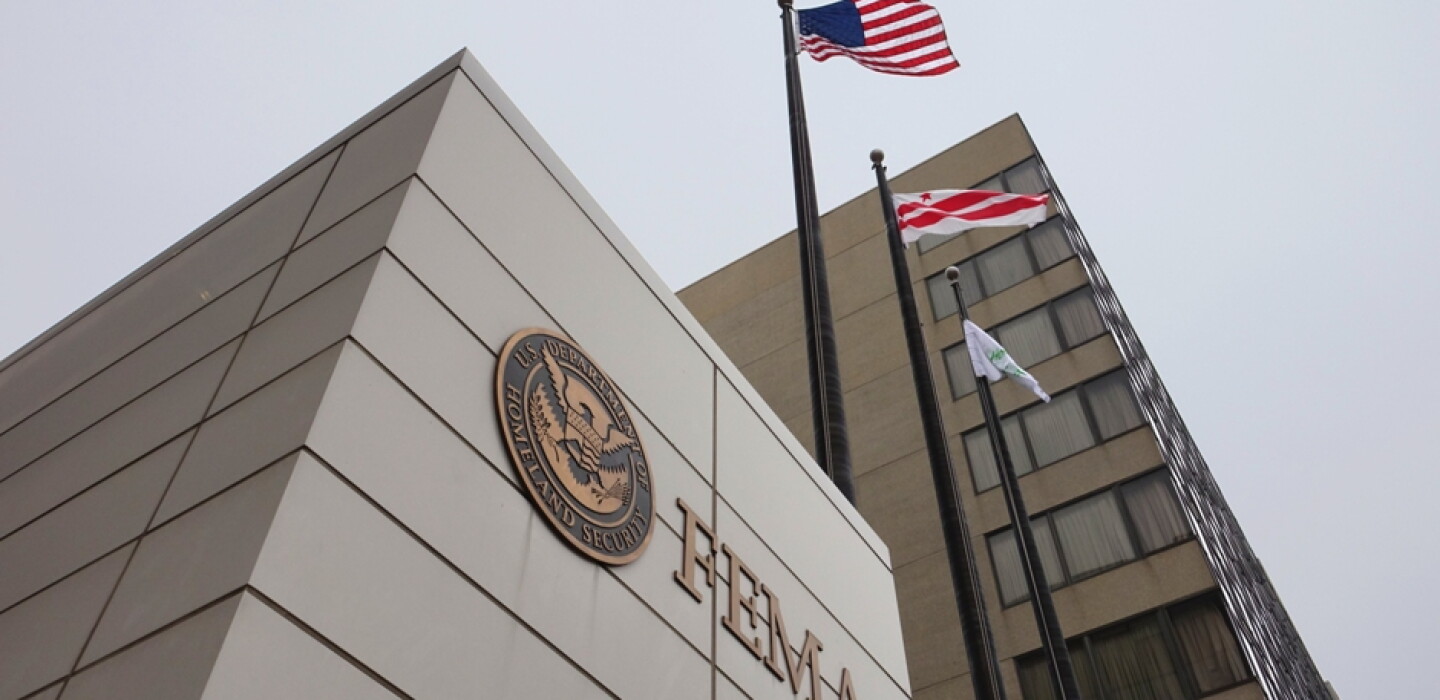
State capitals may soon find themselves shouldering a much heavier financial burden when natural disasters strike, as the federal government signals a sharp pivot in how it handles emergency management across the country.
Federal Emergency Management Agency Administrator Cameron Hamilton outlined these coming changes in a memo and a speech in Little Rock, marking the first concrete details on how the agency plans to operate in response to hurricanes, floods, and wildfires. Hamilton warned that states could soon be expected to go it alone during severe weather events, banking enough reserves to initiate immediate cleanup without waiting for federal authorization or funding.
The policy shift aligns directly with the strategic direction established at the start of President Donald Trump’s second term in January 2025, when the administration initially suggested that FEMA should close entirely and subsequently formed a review council to find federal efficiencies. While the agency would remain a backstop for catastrophes too immense for local and state authorities to handle, the overarching goal is to reduce federal dependency and foster a national view of resiliency.

The State Response and the Legislative Landscape
Louisiana National Guard Brigadier General Jason P. Mahfouz, who leads the Governor’s Office of Homeland Security and Emergency Preparedness, attended the National Emergency Management Association conference where Hamilton delivered his remarks. Mahfouz noted that the administrator’s memo and statements were full of a clear what but completely devoid of any concrete how.
The memo is very aspirational. I mean, it really doesn’t provide what you would call a crosswalk from how you go from encouraging greater state ownership to establishing minimum capacity requirements. — Brigadier General Jason P. Mahfouz
Legally, Hamilton cannot pivot as sharply as the rhetoric suggests without congressional action. While certain protocols can be altered via executive order, the core structure and activities of FEMA are governed by black-letter law. On the front line of that legislative battle is U.S. Rep. Troy A. Carter Sr., a New Orleans Democrat who co-chairs the bipartisan House Disaster Preparedness and Recovery Caucus.
Carter sharply criticized the rollout on social media and in formal statements immediately following Hamilton’s address.
FEMA is not perfect, but it was the backbone of our long-term recovery after Katrina, covering costs that would have bankrupted our state and our people. Stripping away FEMA’s workforce, funding, and essential programs would leave millions of Americans vulnerable and unprotected as natural disasters become more dangerous and frequent. — U.S. Rep. Troy A. Carter Sr.
To put the financial scale into perspective, the federal government spent more than $100 billion responding to hurricanes Katrina and Rita in 2005. By comparison, Louisiana’s entire state budget for fiscal year 2027 is roughly $51 billion, highlighting the stark gap between local revenue capabilities and catastrophic disaster recovery costs.
FEMA Workforce Drops by 7,000 Employees
The debate over future responsibilities unfolds as FEMA itself undergoes significant contraction. According to the U.S. Government Accountability Office, the agency’s workforce dropped dramatically since January 2025, losing about 7,000 of its roughly 29,000 employees in 2024. Meanwhile, House Majority Leader Steve Scalise’s office has emphasized that the Jefferson Republican is actively working with the administration and state partners to ensure local resources remain available when storms hit.
Practical tensions are already visible on the ground. FEMA recently rejected disaster assistance applications from California and Texas while raising questions regarding Maryland’s internal disaster policies. Yet, even as broader policy shifts loom, the agency continues active recovery operations in five parishes impacted by Tropical Storm Arthur, which made landfall near Galveston and dropped more than 29 inches of rain on Cottonport.
Whether broader legislative overhauls will advance remains uncertain. A reform bill reflecting recommendations from the FEMA Review Council sits in committees, but it is not expected to progress ahead of the November 3 congressional midterm elections, meaning any major structural rewrite will wait until the 120th Congress takes seat in January.



