
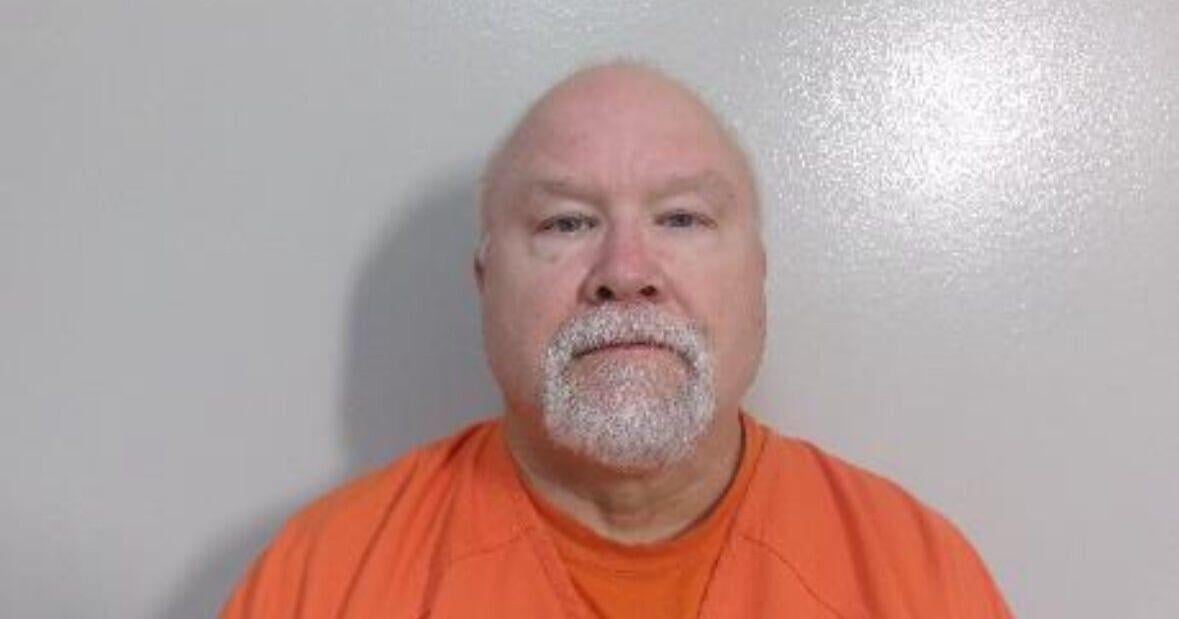
Hobert Rupe, the former executive director of the Nebraska Liquor Control Commission, has entered a guilty plea in federal court, bringing a dramatic turn to a public corruption and extortion case that has slowly untangled years of backroom deals involving state liquor licenses, cash payouts, and strip clubs.
Rupe, who led the regulatory agency from 2003 until his resignation in June 2025, appeared before Magistrate Judge Jacqueline M. DeLuca in Lancaster County, WOWT reported. Under the terms of the plea deal, Rupe pleaded guilty to extortion and one count of conspiracy to commit services fraud. Magistrate Judge DeLuca stated in court that she will recommend that Judge Susan Bazis accept the agreement at or before a sentencing hearing currently scheduled for Feb. 4.
How a Regulatory Office Fueled Private Operations
The federal indictment, originally filed last September, painted a picture of widespread regulatory capture. Prosecutors alleged that Rupe conspired with Brent Zywiec, a co-owner of two Lincoln strip clubs—The Office and The Night Before Lounge—to protect business interests in exchange for personal perks. According to court records, those benefits included access to dancers, free drinks, and sexual favors.
Instead of regulating the industry impartially, Rupe used his authority within the commission to shield Zywiec’s establishments from penalties for licensing violations. When authorities looked closely at the operation, they found that Rupe even directed law enforcement attention toward competing venues in Omaha, effectively weaponizing state oversight to clear the field for favored businesses.
Both Rupe and Zywiec initially pleaded not guilty to all charges. The legal web tightened months later when Dan Thomas and Shane Zywiec were added as co-defendants. At the outset, Rupe faced a daunting array of charges, including one count of extortion, two counts of wire fraud, three counts of services fraud, and one count of conspiracy to commit services fraud. If convicted on all counts, the defendants faced up to 20 years in federal prison.
The Investigation Spun Out of a Fatal Shooting
The depth of the conspiracy became clear during Wednesday’s hearing, where prosecutors revealed how investigators stumbled onto the scheme. Following a May 2024 double-homicide outside The Office Gentleman’s Club in Lincoln, investigators reviewing security footage uncovered a glaring conflict of interest.
Video from the business office showed a co-owner handing Rupe a bundle of cash under the table. Minutes later, surveillance captured Rupe in a private room receiving a dance that he paid for using that exact cash. Subsequent investigation revealed a pattern: co-defendants regularly provided Rupe with cash, cover charge waivers, and alcoholic beverages.
In return, Rupe used his access to sensitive criminal justice and law enforcement databases. He looked up information about dancers to provide to co-defendants and used the systems to help shield The Office from police scrutiny while helping direct undercover investigations by the Nebraska State Patrol and the Nebraska Attorney General’s Office toward competing venues.
A Statewide Scheme Involving Five-Figure Payments
The reach of the corruption extended well beyond Lincoln. In June 2025, an Omaha lounge owner told law enforcement about a 2021 encounter where he paid $40,000 to keep his liquor license at Throwback Lounge, according to WOWT reporting.
The owner recounted struggling with his license over a poker game when a co-defendant indicated he had contacts at the liquor control commission who could help. The man was coached on how to behave during upcoming hearings and instructed to deliver $40,000 in cash to a gas station along Interstate 80 between Omaha and Lincoln. Investigators determined that a portion of those funds went directly to Rupe and a co-defendant.
The protection was short-lived. When the Omaha City Council rejected the owner’s license request in 2023, he appealed to the state commission and again turned to Rupe and his associates. Court records show they demanded another $40,000, though the owner could only scrape together $25,000. At the subsequent state hearing, the liquor board restricted the bar’s closing time from 2 a.m. to 1 a.m. The business eventually closed.
As the legal process moves toward the February sentencing date before Judge Bazis, the fallout continues to ripple through Nebraska’s hospitality and regulatory sectors, leaving open questions about the extent of oversight failures during Rupe’s time at the helm of the commission.



