
Garth Brooks Returns to Tulsa for a High-Stakes Homecoming
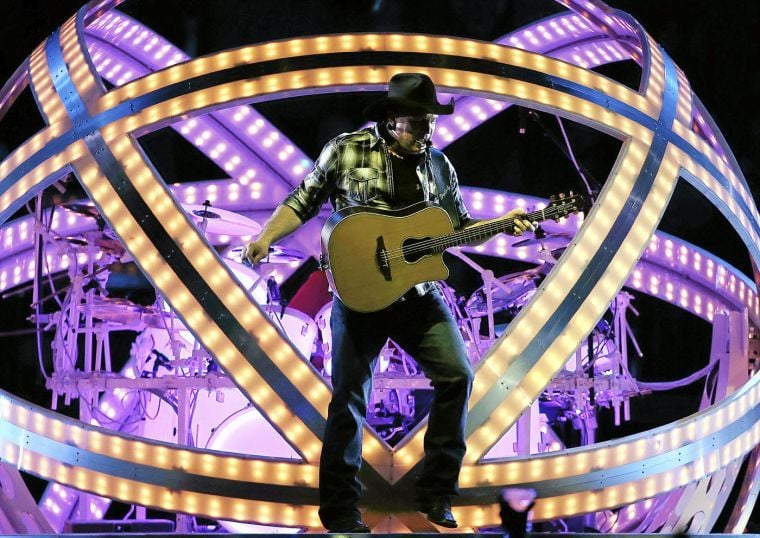
When Garth Brooks walked onto the stage at the BOK Center last Sunday afternoon, he wasn’t just performing for a crowd; he was conducting a homecoming. For the 10,000-plus fans packed into the downtown Tulsa arena, it was a moment of connection that felt more like a community gathering than a standard tour stop. This matinee was the third of three shows in as many days, a grueling pace that showed both the artist’s enduring stamina and the logistical realities of the modern live music industry.
The stakes of this tour, titled “Blame It All on My Roots,” extend far beyond the stage lights. Brooks is currently managing volatile ticket markets and shifting economic pressures, attempting to maintain his long-standing commitment to fan-friendly pricing in an era where automated bots and brokers often strip prime inventory from the hands of the public.
The Realities of the Road
Brooks has spent nearly 40 years championing accessible concert experiences, a mission that dates back to the $20 ticket caps of his 1996-98 World Tour. Today, his strategy involves a uniform pricing model—roughly $155 per seat, regardless of location—paired with a staggered announcement of tour dates. However, the current economic climate is proving difficult to ignore. While the Tulsa shows were energetic, they didn’t reach the nine-show run he commanded at the same venue in 2015. The Sunday performance, while strong, featured a visible smattering of empty seats in the upper deck.
The challenges aren’t limited to Oklahoma. In Kansas City, Missouri, the artist’s camp recently halted ticket sales and ultimately canceled a scheduled matinee at the Sprint Center for November 7. The decision followed the rapid sell-out of two prior shows and a subsequent surge in predatory bot activity that threatened the integrity of the ticketing process. These are the headwinds facing even the most legendary performers, illustrating that the friction between artists and the secondary ticket market remains a persistent, unresolved issue for the industry.
Brooks Draws on Oklahoma Roots During Tulsa Show
Despite these industry-wide pressures, the Tulsa show functioned as a masterclass in stage presence. Brooks, a native Oklahoman who once called the Tulsa suburbs home, leaned heavily into his history. He launched his career in Stillwater, 60 miles west of Tulsa, in the mid-1980s during the early years of Oklahoma’s Red Dirt scene.
That sense of belonging informed every segment of the two-hour concert. From the moment the light rigs lifted to the sound of rocket-ship effects, Brooks moved with the intensity of a linebacker, dousing the front rows with water during “Ain’t Goin’ Down (Til the Sun Comes Up)” and tearing up during “The Dance.” He even confirmed that his team is recording this tour for a future live album, noting that the crowd’s performance on “The Thunder Rolls” was of such high quality that it is destined to appear on the final record.

A Performance Defined by Connection
The climax of the afternoon arrived with the namesake of the tour, “Friends in Low Places.” Before the song, Brooks leaned into a bit of self-deprecation, telling the crowd, “I have no talent. I can’t play guitar. But I do know this one chord.” The audience, which had already been measured by a fan in the sixth row at over 110 decibels, erupted as the singer led them through the hit, including the fan-favorite, rewritten final verse. It was a calculated, triumphant moment that proved his ability to manipulate the energy of an arena remains undiminished after nearly 40 years.
The concert concluded with Brooks taking requests from hand-made signs in the crowd, including a performance of “Ireland”. It was clear that while the industry has changed since his 2015 tour, the core of the Garth Brooks experience—a relentless, grateful, and intensely personal engagement with his audience—remains the primary driver of his longevity.



