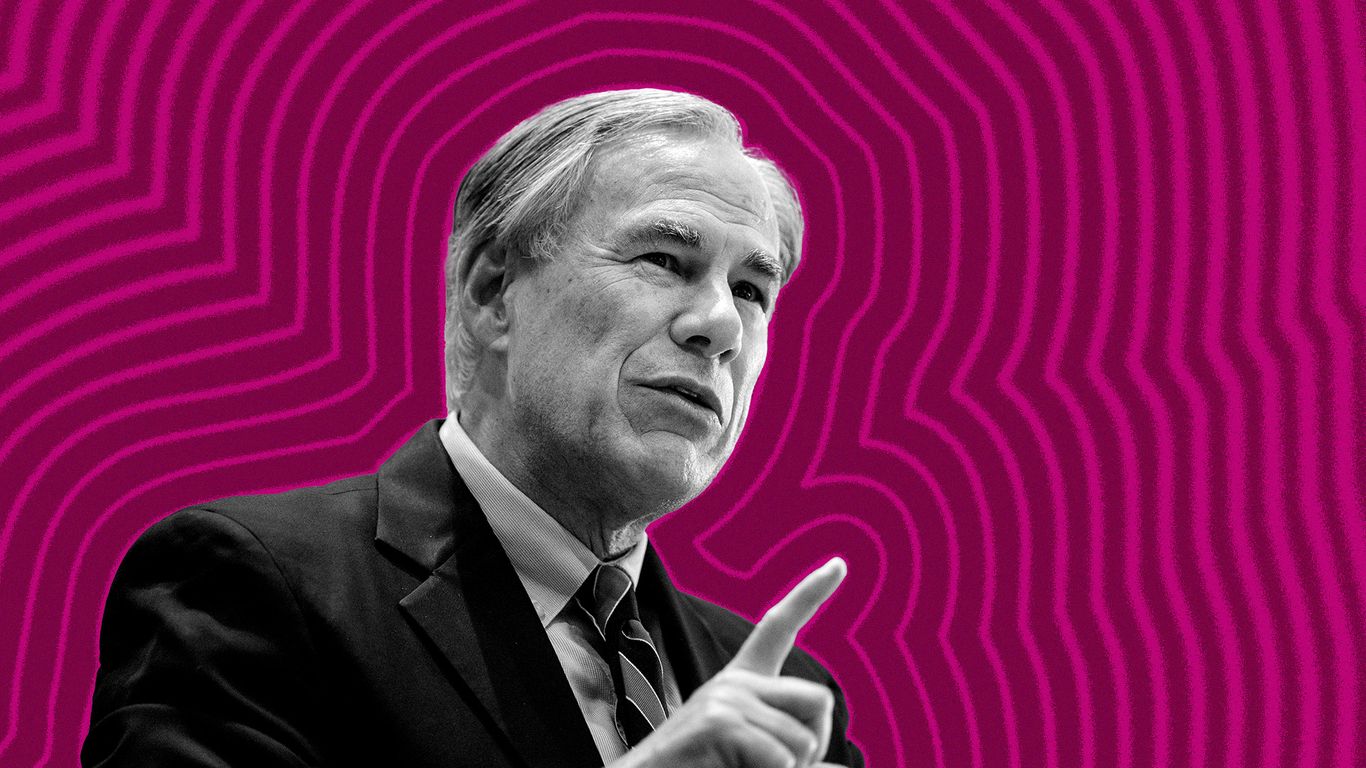
Governor Abbott Shifts Tactics as Texas Polling Tightens
The political ground beneath Texas Greg Abbott is shifting faster than the state's booming tech industry. Less than a year after standing proudly alongside corporate executives to champion massive data center investments, the state’s leader is adjusting his policy positions in the face of tightening poll numbers and an electorate recalibrating its priorities.
A Texas Public Opinion Research poll released on Friday shows Abbott holding a slim three-point lead over Hinojosa. That narrow margin follows a University of Texas/Texas Politics Project poll that previously placed Hinojosa ahead by a single point. Both surveys fall comfortably within the margin of error, signaling a competitive race that has forced a recalibration in Austin.
The tactical pivot stands in sharp contrast to the Governor’s posture less than a year ago. Back then, Governor Abbott called Texas the epicenter of AI development while joining Google to announce a staggering $40 billion investment in three new data center campuses across the state. Today, those high-tech ambitions are playing second fiddle to a more defensive political strategy designed to shore up his base.
State Board Directs Millions Toward Flock Cameras Despite Abbott Funding Ban
The policy shifts extend deeply into surveillance and infrastructure. In August, Abbott blocked state agencies from spending money on Flock license plate readers. Yet, an investigation by the Texas Tribune revealed that a little-known state board appointed primarily by Abbott has quietly directed $30 million in auto insurance fee revenues toward purchasing 3,200 of those exact Flock cameras since 2023.
Hinojosa did not mince words when discussing the sudden policy reversals with CNN in August.
These are political games. Abbott knows he’s in trouble, he sees the same polling that we see.
Neither Abbott’s campaign nor his official press office replied to interview requests regarding the shift in tone and policy.

Shoring Up Republican Engagement Through Familiar Playbooks
Political analysts tracking the race point out that these sudden policy turns are less about responding to Democratic momentum and more about securing the allegiance of conservative voters who have shown sluggish engagement throughout the current cycle.
“Abbott’s evolving positions have nothing to do with Democrats, but shoring up his position among Republicans who have shown weak engagement throughout this cycle,” Joshua Blank, research director for the Texas Politics Project, told Axios.
Blank noted that if Abbott manages to successfully reengage those skeptical Republicans, part of that success will stem from his adept handling of a difficult issue environment, pointing out that discussing data centers proves far easier than defending broader economic conditions.
The strategy closely mirrors political maneuvers from the past. Back in 2021, Abbott successfully co-opted several key positions from former state Don Huffines when facing a primary challenge from his right. During that cycle, Abbott barred private businesses from requiring COVID-19 vaccines, initiated plans for a state-funded border wall, and sought to classify gender-affirming health care for minors as child abuse—all stances originally popularized by Huffines. That playbook ultimately propelled Abbott to secure 66.5% of the vote in the 2022 Republican primary.
Distancing From Trump Amid National Economic Headwinds
While Abbott has historically maintained a public alignment with Donald Trump, his current campaign messaging tells a different story. Like many Republican incumbents across the nation facing tough reelection fights this cycle, Abbott has notably dialed back explicit mentions of Trump in his promotional materials.
“All partisan races are referendums on Trump and his policies,” Brian Smith, a political scientist at St. Edward’s University in Austin, told Axios. “This is why Abbott is distancing himself somewhat. An unpopular president, who is governing during a time of high inflation and gas prices, will help Democrats nationwide.”
Even with these headwinds, political analysts emphasize that the incumbent governor retains structural advantages that separate him from many of his national peers. His electoral margin remains sturdier than those of several fellow Republicans facing similar climate challenges.
Whether this calculated recalibration of tech investments, surveillance tech spending, and federal border narratives will be enough to energize the conservative base without alienating independent voters remains an open question as election day approaches.



