“the crime of crimes,” according to international legal filings, is what Myanmar faces accountability for as the United Nations’ highest judicial body prepares its historic decision.
The International Court of Justice is set to deliver its verdict on Thursday in a landmark case brought by The Gambia accusing Myanmar of committing genocide against the Muslim minority Rohingya.
The decision, scheduled to be read in The Hague from 10 a.m. local time for up to 90 minutes, marks the first time an international court will rule on whether a sovereign state is responsible for genocide under the 1948 Genocide Convention.
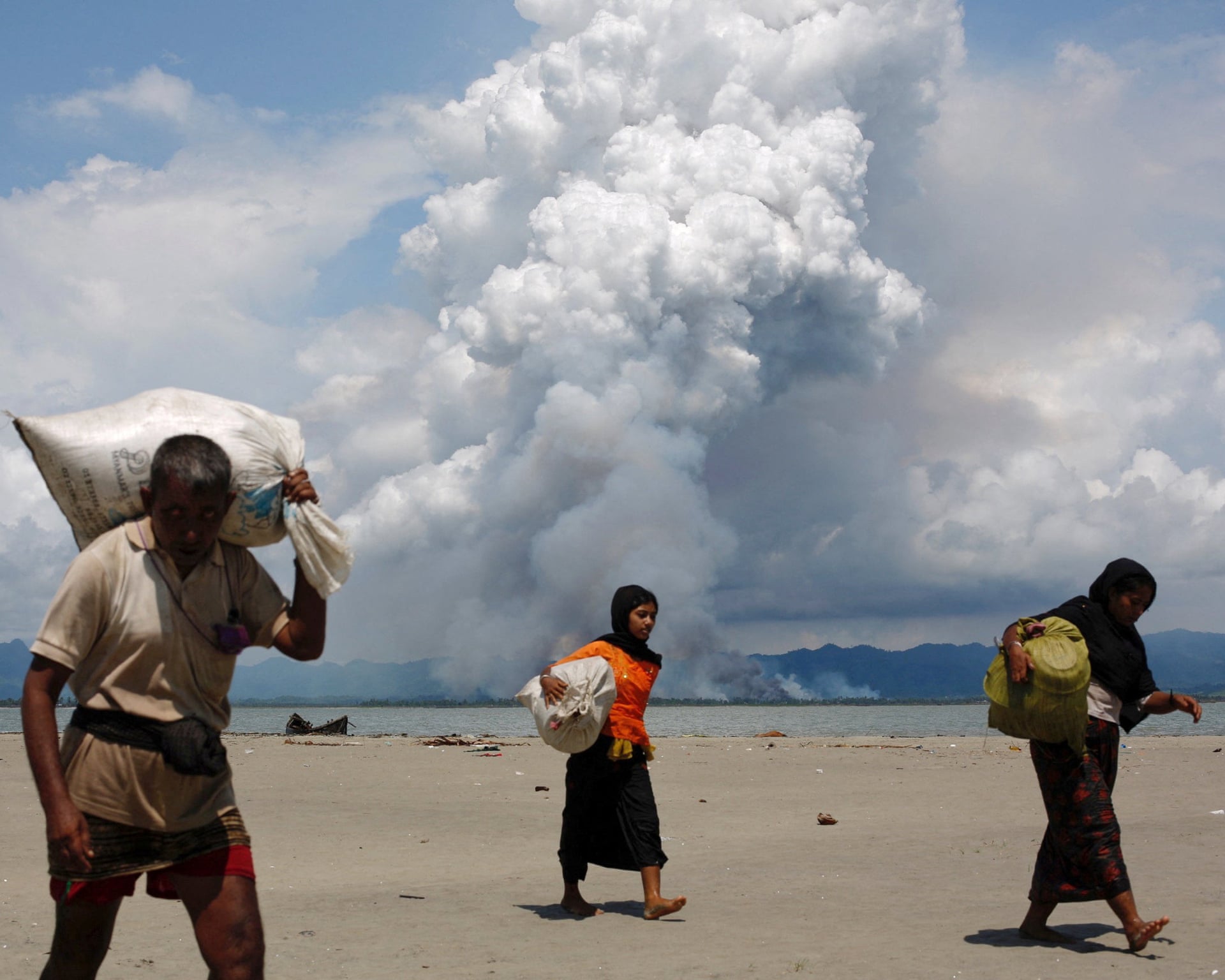
More than 1.2 million Rohingya refugees, who fled a brutal 2017 military campaign and now live in congested camps across Cox’s Bazar in Bangladesh, await a ruling that could reshape international jurisprudence.
The Legal Arguments and Evidence Before the Court
The case originates from a 2019 application submitted by The Gambia to the International Court of Justice, seeking a judgment that Myanmar has violated the 1948 Genocide Convention, a directive for the country to halt any unlawful actions directed at the Rohingya, and measures to guarantee that the perpetrators of genocide face punishment.

What we presented to the court was the long history of discrimination targeting the Rohingya, and how that history, and the policies connected with it, provide a background to understand the government’s language, rhetoric, propaganda, and policies that were part of the 2017 ‘clearance operations’.
Arsalan Suleman, lawyer leading the case against Myanmar
Legal experts note that proving intent remains the highest barrier in genocide cases. While courts have previously prosecuted individuals for atrocities in Rwanda, the former Yugoslavia, and Cambodia, no international court has ever held a state directly responsible. During its 2007 judgment addressing the Srebrenica massacre, the ICJ concluded that Serbia breached its duty to prevent genocide during the 1995 Srebrenica massacre—when Bosnian Serb forces slaughtered approximately 8,000 predominantly Muslim men and boys in the Bosnian area—though it determined there was insufficient evidence of genocidal intent on Serbia’s part.
Within the context of the Myanmar litigation, the panel of judges will evaluate whether genocide occurred and whether the unlawful acts attributed to Myanmar’s military or other government bodies violated the state’s responsibilities under the Genocide Convention, focusing on a roughly two-and-a-half-month period in 2017 when the Myanmar armed forces murdered thousands of individuals, carried out widespread and systematic sexual violence, and burned down nearly 400 settlements in northern Rakhine State, compelling upwards of 700,000 Rohingya to cross the Naf River into Bangladesh.
2/3 The International Court of Justice is scheduled to deliver its judgment on the merits on 19 November. Brought by The Gambia in 2019, the case concerns Myanmar’s alleged violations of the Genocide Convention against the Rohingya.
Diplomatic Fallout and Precedents for Gaza and Ukraine
Beyond the immediate plight of the Rohingya, the verdict carries profound implications for other politically charged international disputes.
Fears are growing that the US could impose sanctions on judges at the international court of justice if the court rules that the Myanmar government committed genocide against the Rohingya.

Severe penalties have already been levied by the United States against judges belonging to the International Criminal Court, situated just down the street from the ICJ in The Hague, which is currently conducting a criminal inquiry into the atrocities committed against the Rohingya.
Reparations and Enforcement Challenges
As part of its legal action, The Gambia has requested that the tribunal command Myanmar to disburse reparations and guarantee the secure repatriation of Rohingya refugees. Although the decisions rendered by the court are final and carry legal force, the ICJ possesses no mechanism to compel compliance beyond notifying the U.N. Security Council of any violations.
Were the necessary political backing present, the Security Council would transfer those accountable for the genocidal campaigns against the Rohingya to the International Criminal Court, but such support is absent.
For survivors, however, the symbolic weight of the verdict transcends practical enforcement limits. As UN Special Rapporteur Tom Andrews stated, the bottom line is that the international community must demonstrate that a finding of genocide carries consequences, requiring that states take strong, principled action because the Rohingya deserve no less.

As one refugee noted, the piece of paper doesn’t immediately change the ground reality, and a verdict failing to hold the state responsible for genocide wouldn’t define the decades-long suffering they have gone through.
Earlier coverage: ICJ to Rule on Myanmar Genocide Claim, The Gambia Says